
Hemipenthes
Hemipenthes
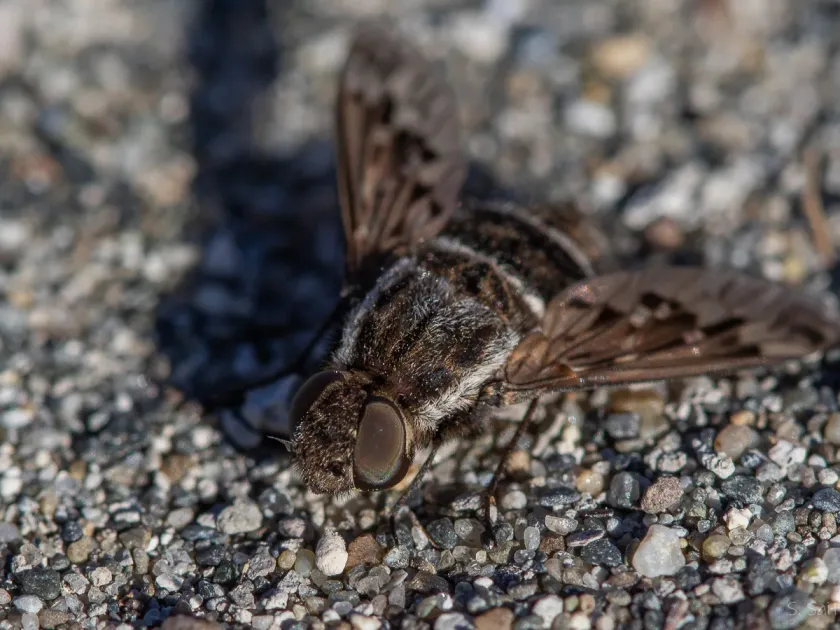
Description
How to identify
Hemipenthes is a genus of flies belonging to the family Bombyliidae, known as bee flies. They are characterized by their fuzzy bodies and, often, a specific wing pattern.
The wings typically feature dark, well-defined markings which are crucial for distinguishing these insects from other similar Diptera species in the field.
Adult bee flies are equipped with long proboscises used to sip nectar, making them frequent visitors to flowers and effective pollinators in natural habitats.
Their life cycle involves complete metamorphosis: the larva, pupa, and adult stages are distinct and adapted to specific environmental niches.
These insects are generally robust and heat-tolerant, often found basking on warm ground or feeding in open, sunny meadows during the peak of summer.
What it damages
Hemipenthes species are not considered pests of agricultural crops because they do not feed on plant tissues, stems, or fruits at any stage of their life.
However, their larval stages are hyperparasitoids, meaning they develop inside the larvae or pupae of other insects, including primary parasitoids.
This ecological interaction can be complex, as they may indirectly reduce the efficiency of biological control by parasitizing beneficial insect populations.
From an agricultural standpoint, the damage is negligible as the species does not pose a direct threat to crop yield or plant health.
It is important to evaluate their presence in the context of the overall insect community, as they represent a part of the natural trophic network.
When it appears
Adult Hemipenthes are most active during the warm summer months, aligning with the peak flowering period of nectar-providing plants.
They are strictly day-active (diurnal) insects that rely on high temperatures to maintain their metabolic activity and flight capability.
The development of the larvae is synchronized with the life cycles of their host insects, which are often found in the soil or in sheltered nesting sites.
Depending on the region, these insects overwinter in a quiescent stage, often as larvae or pupae buried in the substrate to survive harsh weather.
Their emergence corresponds with the availability of suitable hosts, ensuring the successful continuation of their complex reproductive cycle.
Control measures
There are no specific control measures implemented against Hemipenthes, as they are not classified as agricultural pests in standard agronomic practices.
Maintaining a healthy ecosystem with diverse insect populations is recommended, as it allows natural checks and balances to regulate all species present.
The use of broad-spectrum pesticides is generally discouraged, as it can disrupt beneficial insect communities and affect the long-term health of the field.
Integrated Pest Management (IPM) strategies typically account for these insects as part of the neutral or beneficial components of the agroecosystem.
- Encouragement of diverse floral buffers to support beneficial insects.
- Avoidance of indiscriminate insecticide application during flight periods.
- Periodic scouting to monitor for potential shifts in the local insect balance.
Taxonomy
- Latin name
- Hemipenthes
- Order
- Diptera (flies)
- Family
- Bombyliidae
- EPPO code
- HEMNSP
Discussion
No discussions yet — be the first.