
Helophilus pendulus
Helophilus pendulus
Description
How to identify
Helophilus pendulus, commonly known as a hoverfly, belongs to the family Syrphidae. These insects are famous for their ability to hover motionless in the air before darting away at high speed.
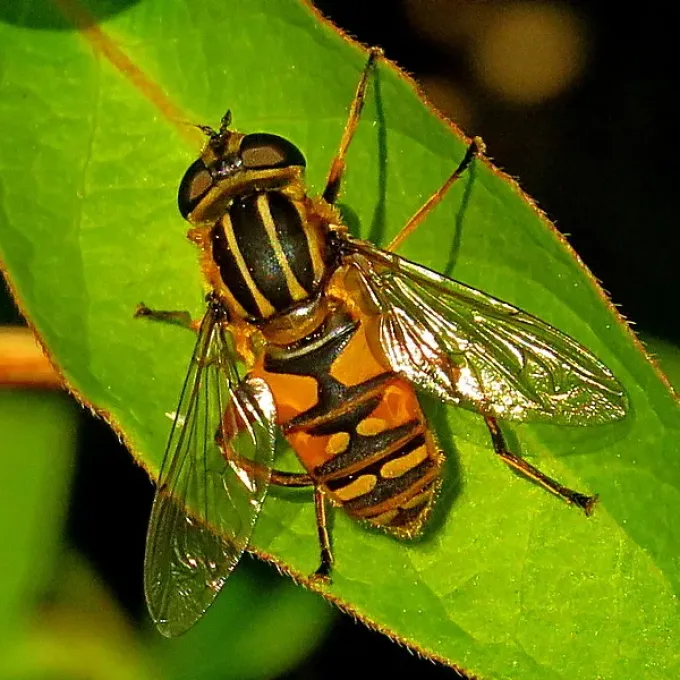
The adult fly features a distinctive black and yellow striped abdomen, mimicking wasps and bees to deter predators. It has characteristic yellow lines on its thorax, which distinguish it from other related species.
The larvae, known as rat-tailed maggots, possess a unique long posterior breathing tube. This appendage allows them to breathe air while remaining submerged in shallow, stagnant water or mud.
The life cycle involves complete metamorphosis, moving through egg, larval, pupal, and adult stages. The adult stage is primarily focused on nectar feeding and pollination.
These insects are widespread across Europe and parts of Asia, typically found in damp areas, near ponds, and in gardens where flowers are abundant.
What it damages
Helophilus pendulus is not considered an agricultural pest. The larvae live as saprophages, feeding on decaying organic matter within water or wet soil, and do not damage living plant tissues.
There are no recorded instances of this species causing harm to crops or garden plants. They do not feed on roots, stems, leaves, or fruits of cultivated vegetation.
Instead, adult hoverflies are significant pollinators. By visiting various flowers, they contribute to the pollination process, which is essential for the productivity of many fruit and vegetable crops.
Their presence on farmland is often viewed as a positive sign of a healthy ecosystem. They indicate that the environment provides suitable water sources and flowering plants.
Consequently, no crop protection measures are directed against this species, as the ecological benefits they provide outweigh any minor nuisance of their presence.
When it appears
The flight period for adults typically spans from late spring through early autumn, with peak activity observed during the warmer months of June and July.
Larval development takes place throughout the summer season. Given suitable conditions and high organic content in their habitat, several generations can develop in a single year.
Overwintering occurs at the larval or pupal stage. They hide in sheltered, damp environments such as leaf litter or moist silt, which protects them from extreme cold during winter.
As spring temperatures rise, the insects emerge to begin their cycle. This timing coincides with the blooming of many important nectar-producing plants.
The abundance of the species is strictly correlated with the availability of stagnant or slow-moving water, which is necessary for the survival of the larvae.
Signs of infestation
Because Helophilus pendulus is not a phytophagous insect, there are no signs of feeding damage such as leaf holes, wilting, or root tunneling found on plants.
Gardeners may occasionally observe adults hovering near flowers, which is a standard behavior for the species and does not indicate an infestation.
In water containers or garden ponds, the presence of rat-tailed maggots might be noticed. These larvae look quite distinct due to their long tail-like respiratory siphons.
There is no need to worry about crop health if these insects are seen. Their activities are entirely separate from any destructive processes impacting farm yield.
Monitoring for this species is generally unnecessary as they are considered part of the natural biological diversity of the farm or garden.
Control measures
No chemical or biological control measures are required or recommended for Helophilus pendulus. They are beneficial components of the natural ecosystem.
If the presence of larvae in artificial water features becomes a concern, simple mechanical removal or cleaning of the stagnant water will naturally reduce their population.
The use of insecticides to target these flies should be strictly avoided. Chemical treatments can kill beneficial pollinators and predatory insects that control actual pests like aphids.
Maintaining good drainage and keeping the garden free of stagnant, polluted water can discourage large populations if desired, but this is a matter of sanitation rather than pest control.
The best approach is to welcome these hoverflies as effective pollinators, contributing to the overall health and productivity of the garden or agricultural plot.
Taxonomy
- Latin name
- Helophilus pendulus
- Order
- Diptera (flies)
- Family
- Syrphidae
- EPPO code
- HLPHPE
Discussion
No discussions yet — be the first.