
Helophilus
Helophilus
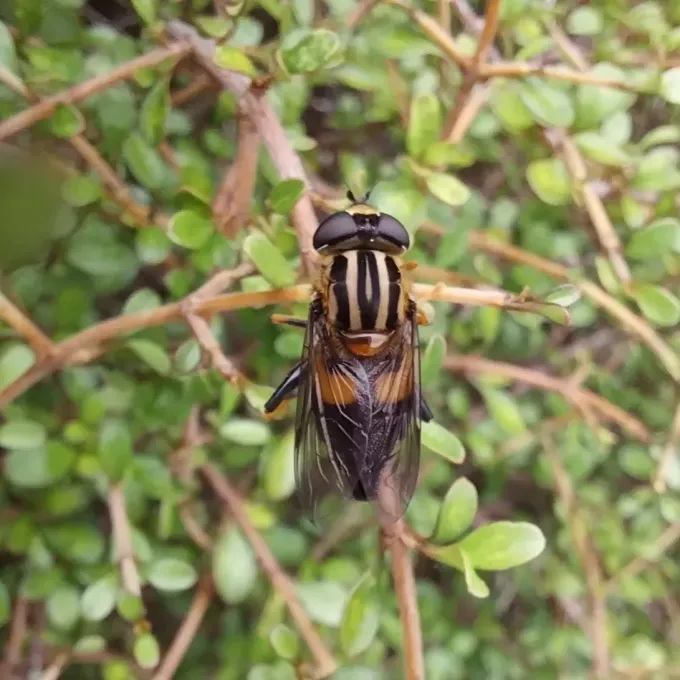
Description
How to identify
Helophilus is a genus of hoverflies belonging to the family Syrphidae, order Diptera. Adults are brightly colored flies, often featuring striped abdomens and resembling bees or wasps as a form of Batesian mimicry.
The larvae, commonly known as "rat-tailed maggots," have a unique appearance with a cylindrical body and a long, telescopic breathing tube at the rear, allowing them to breathe air while submerged in water or liquid mud.
Adults are easily identified by their yellow abdominal markings and the characteristic buzzing sound they make while hovering over flowers. They are important pollinators in nature.
Development involves complete metamorphosis, including egg, larva, pupa, and adult stages. The adult flies feed on nectar and pollen and do not cause damage to crops.
The genus is widespread across the Holarctic region. From an agronomic standpoint, the focus is on the larval stage, which typically thrives in saturated organic substrates.
What it damages
Direct damage to crops occurs only when larvae accumulate in large numbers within rotting organic matter or in the roots of plants kept in waterlogged and decaying conditions.
Vegetable crops and seedlings planted in soils with poor drainage and high organic content are the most susceptible to infestation.
The larvae can damage root systems by feeding on decaying tissues. This weakens the plant and often leads to secondary infections by fungal pathogens.
While larvae play a beneficial role in nature by decomposing organic matter, they can become facultative pests in greenhouse environments or commercial nurseries.
Massive infestations indicate poor agronomic practices, such as water stagnation in the root zone or the use of non-composted manure.
When it appears
Adult flight activity occurs from late spring through early autumn. They are most active during sunny days when they visit flowering plants.
Egg-laying takes place in areas with liquid organic matter, such as manure heaps, puddles with rotting leaves, or drainage ditches.
Larvae or pupae typically overwinter in the upper soil layers, protected by vegetation or organic debris.
The period of highest risk for crops coincides with phases of excessive soil moisture, which provides ideal conditions for the larvae's development.
In greenhouses, the development cycle can be continuous if the substrate remains saturated and organic waste is present in the drainage system.
Signs of infestation
The primary sign of larval presence is the rotting of the plant's root collar, often accompanied by an unpleasant odor of decomposing organic matter.
Plants appear stunted or wilted, with yellowing leaves that fail to recover even after irrigation, indicating severe root damage.
Inspecting the soil around the roots may reveal the presence of the larvae's characteristic "breathing tails" protruding from the substrate.
A high population of hoverflies in a greenhouse, coupled with unexplained seedling decline, is a strong indicator of a substrate-related issue.
Upon detection of damage, it is essential to inspect the drainage efficiency and the chemical composition of the growing medium.
Control measures
The main control measure is strict adherence to agronomic standards: the use of fresh manure for vegetable cultivation is strongly discouraged.
Ensuring proper soil drainage and preventing water stagnation in greenhouses and garden plots effectively eliminates the larvae's habitat.
Regular soil cultivation and the removal of organic residues reduce the likelihood of egg-laying and larval survival.
In cases of significant seedling infestation, replace the substrate with disinfected soil and normalize the watering regime.
- Improve soil aeration.
- Compost all organic fertilizers before use.
- Maintain and clean drainage channels.
- Promptly remove plant debris.
Taxonomy
- Latin name
- Helophilus
- Order
- Diptera (flies)
- Family
- Syrphidae
- EPPO code
- HLPHSP
Discussion
No discussions yet — be the first.