
Pennsylvania ground beetle
Harpalus pennsylvanicus
Description
How to identify
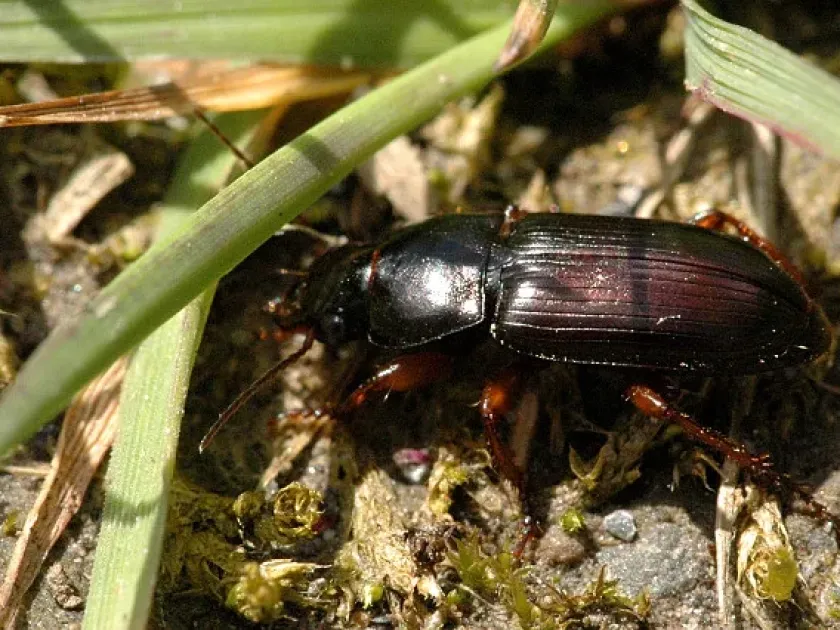
The Pennsylvania ground beetle (Harpalus pennsylvanicus) belongs to the Carabidae family of the Coleoptera order. Adult beetles measure between 12 to 16 mm and possess a distinct dark or metallic sheen.
The body is oval-shaped, typical for the Harpalus genus, with legs designed for rapid movement. This speed allows them to navigate across soil surfaces efficiently during their active hours.
Larvae of this species live in the soil and have elongated bodies with well-developed mouthparts. Their color ranges from pale to brownish, depending on the instar stage they are in.
Identifying this species requires examining specific morphological features such as the shape of the pronotum and antenna structure, as they often resemble other non-pest carabids.
They are primarily nocturnal insects. During the day, they remain hidden under crop residues, surface debris, or inside soil cracks, making them difficult to detect without nighttime monitoring.
What it damages
While many ground beetles are beneficial predators, the Pennsylvania ground beetle is known for its seed-feeding habits, which can cause significant economic losses in cereal crops.
These beetles primarily target developing seeds and grains of crops like corn, wheat, and sorghum. They feed on kernels in the milk or dough stages by chewing through the protective hull.
Feeding damage results in reduced grain weight, poor quality, and loss of seed germination potential if the embryo is consumed. This affects both yield quantity and market value.
When populations reach high densities, the damage can become widespread across a field, particularly in areas with heavy tillage practices or abundant surface litter that provides shelter.
The injury is often localized but can expand as beetles move through the field, leaving behind empty grain shells that are characteristic of their specific feeding behavior.
When it appears
The life cycle involves overwintering as adults deep within the soil or under dense crop debris. They emerge from dormancy as temperatures rise in the early spring.
Peak activity and damage occur during the mid-to-late summer months, coinciding with the grain-filling stage of cereal crops, which provides the necessary nutrients for the beetles.
Eggs are laid in the soil, where larvae subsequently develop. The number of generations per year is heavily dependent on regional climate conditions and soil temperature patterns.
As autumn approaches and temperatures drop, the adult beetles seek shelter for hibernation. This transition period marks the end of the primary damage season for that year.
Monitoring should be concentrated during the grain-fill period, using bait traps or visual inspections of the soil surface to assess population levels before damage becomes severe.
Signs of infestation
The most visible sign of infestation is the presence of hollowed-out kernels on ears or in grain heads. Often, one can find the leftover hulls showing neat, chewed-out cavities.
Nighttime field scouting is the best method to confirm the presence of these beetles. Using flashlights in the evening can reveal them actively foraging on the soil or plants.
Soil excavations in the spring can help detect the presence of larvae before planting, allowing farmers to predict potential problems for the upcoming season.
Fields showing decreased stand density or ragged-looking grain heads often warrant a closer inspection for signs of beetle feeding, which differs from bird or rodent damage.
- Empty grain husks remaining on the cob or head.
- Reduced seedling emergence due to seed predation.
- Direct observation of adults in crop debris during night patrols.
Control measures
Effective cultural control includes deep autumn plowing. This practice disrupts the hibernation sites of adults and exposes larvae to unfavorable conditions, significantly reducing their numbers.
Crop rotation is a recommended strategy to break the beetle's life cycle. Avoiding continuous planting of the same cereal crops helps limit the available food source for the population.
Seed treatments using systemic insecticides are highly effective in protecting seeds from larval feeding during the critical germination phase, ensuring better stand establishment.
In cases of high adult populations during the growing season, foliar applications of registered insecticides can be used to suppress beetle numbers and prevent excessive damage.
Managing field weeds is essential, as these plants can support beetle populations throughout the season, providing a bridge of nutrition even when the primary crop is not yet susceptible.
Taxonomy
- Latin name
- Harpalus pennsylvanicus
- Order
- Coleoptera (beetles)
- Family
- Carabidae
- EPPO code
- HARPPE
Discussion
No discussions yet — be the first.