
Desert ground beetle
Harpalus desertus
Description
How to identify
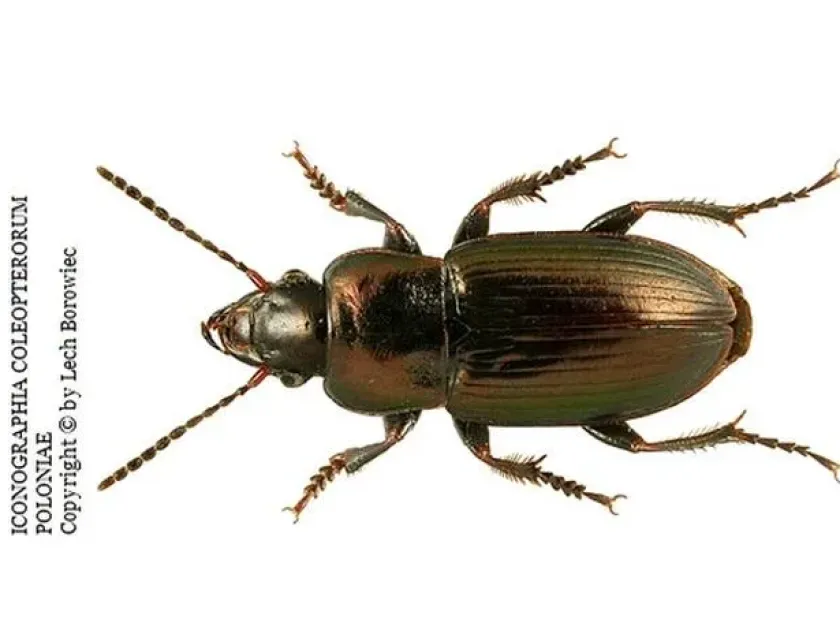
The adult Harpalus desertus is a member of the Carabidae family, typically ranging from 10 to 14 mm in length. Its body is dark brown to black, often displaying a faint metallic sheen.
The head is relatively large and equipped with strong mandibles, which are used to process both plant seeds and small insect prey. The pronotum and elytra shapes are distinctive diagnostic features.
Larvae are campodeiform, featuring a dark head and well-developed thoracic legs. They are agile and are typically found in the soil profile near cereal crops.
Like most ground beetles, these insects are predominantly nocturnal, remaining inactive under soil clods or crop debris during the daylight hours to avoid heat and predation.
This species is highly adapted to arid and semi-arid environments, making it a persistent pest in various dryland agricultural regions.
What it damages
The desert ground beetle causes significant economic damage to grain crops, particularly wheat and barley. Both larvae and adults act as pests in different crop stages.
Larvae primarily damage the crop by consuming germinating seeds in the soil. This results in poor crop establishment and the need for field reseeding in severe cases.
Adult beetles can also feed on developing grain heads during the milk and dough stages, causing direct yield losses and reducing the overall quality of the harvest.
The destruction of seedlings leads to thin, patchy stands. This patchy distribution is a hallmark of ground beetle activity in cereal production fields.
High infestation levels are particularly dangerous during dry autumns when delayed germination extends the period during which seeds are vulnerable to larval feeding.
When it appears
The biological cycle of the beetle is closely synchronized with the phenology of cereal crops. Adult flight periods typically occur during the summer months.
Eggs are deposited in the soil, where the larvae hatch and proceed through several growth stages. Overwintering occurs either as larvae or adults, depending on climate.
In early spring, larvae resume activity as soil temperatures rise, coinciding with the germination and early growth of spring cereals and the green-up of winter crops.
Pupation takes place within the soil, usually inside small, earthen chambers. The synchronization between crop development and beetle activity determines the risk levels.
The most critical window for crop protection is the autumn period, during which larvae are highly aggressive toward newly sown winter cereal seeds.
Signs of infestation
The most evident sign of infestation is the emergence of gaps or thin patches in the field where seedlings have failed to establish due to seed consumption.
Soil excavations around damaged plants often reveal the presence of beetle larvae in the immediate vicinity of the seed remnants or root zones.
In the field, the presence of adult beetles can be monitored using pitfall traps, which help estimate population density and the need for chemical intervention.
Mechanical damage to ripening grain heads, such as partially consumed kernels, indicates the activity of adult beetles during the grain-filling phase.
Presence of excrement and soil disturbances near the base of young plants serves as an additional diagnostic indicator for field agronomists.
Control measures
Integrated Pest Management (IPM) practices are essential, starting with crop rotation to break the beetle's life cycle in infested fields.
Tillage practices, including stubble management and deep plowing, effectively disrupt the soil-dwelling stages of the larvae and reduce the overall population.
Systemic insecticide seed treatments are currently the most effective method for protecting seeds and young seedlings from early-season larval damage.
- Optimizing sowing dates to avoid peak larval activity.
- Using seeds with high vigor to ensure rapid germination.
- Applying foliar insecticides when population levels exceed economic thresholds.
Monitoring the adult population during the summer allows for well-timed insecticide applications to protect the crop during the grain-filling stage.
Taxonomy
- Latin name
- Harpalus desertus
- Order
- Coleoptera (beetles)
- Family
- Carabidae
- EPPO code
- HARPDE
Discussion
No discussions yet — be the first.