
Harpalus capito
Harpalus capito
Description
How to identify
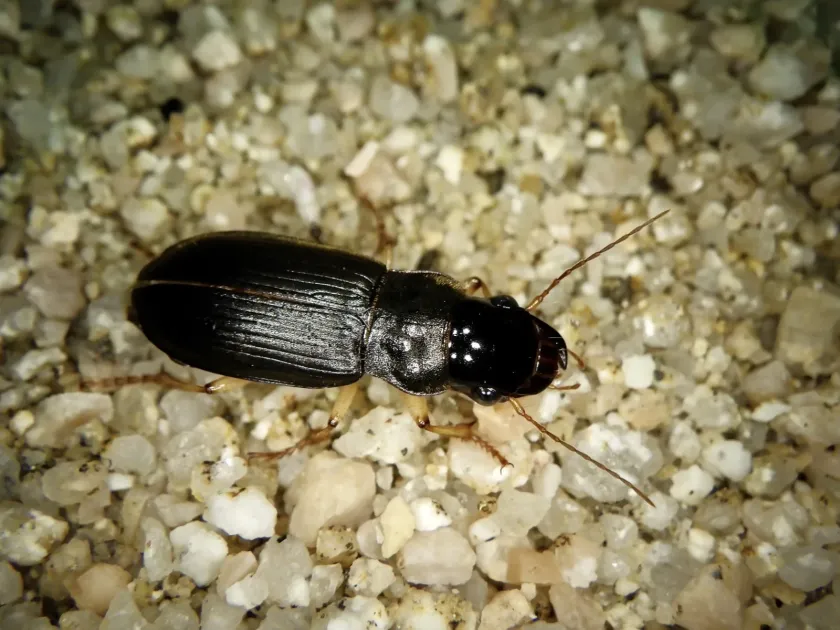
Harpalus capito is a species of ground beetle belonging to the family Carabidae within the order Coleoptera. It is distinguished by its robust build and a large, broad head, which is its most prominent morphological feature.
The body is typically dark, often brownish-black or black, possessing a characteristic metallic sheen. The elytra feature distinct longitudinal striae, which serve as a primary diagnostic trait for identifying this specific species.
Larvae of this beetle are elongated and possess functional thoracic legs and cerci at the tip of the abdomen. They typically reside within the upper soil layer, where they develop until reaching the pupal stage.
Unlike many other carabids, which are primarily carnivorous, Harpalus capito is known for its phytophagous tendencies, causing it to shift its feeding preference towards the grains of cultivated plants.
These beetles are strictly nocturnal, spending their days hidden in soil cracks or under plant debris, which makes direct field observation challenging during daylight hours.
What it damages
The adult beetles are the primary life stage causing agricultural damage. They feed on ripening grain kernels, significantly impacting the yield of wheat, barley, rye, and oats.
Feeding typically occurs during the milky and dough stages of grain development, when the endosperm is soft enough for the beetle's mandibles to penetrate the grain husk.
Infested crops often display empty or partially eaten spikelets, which can lead to substantial yield losses in terms of both volume and overall grain quality for future sowing.
In high-density populations, the beetles can cause severe localized damage, leaving fields looking patchy and significantly reducing the marketable value of the harvested produce.
Secondary damage can occur during grain storage if beetles are transported along with the harvested mass, potentially continuing their feeding activity within the bins.
When it appears
The seasonal activity of Harpalus capito is closely aligned with the developmental stages of cereal crops. Overwintered adults emerge from the soil as temperatures rise in the spring.
Initially, they feed on weed seeds and foliage, but as the grain crops develop and enter the milky stage, the beetles migrate to the fields to feed on the maturing ears.
Activity peaks during the summer months when heat and crop maturation favor their feeding behavior. This is the period when the risk of economic damage is at its highest.
Following the feeding period, adults prepare for hibernation, retreating into the soil profile to survive the colder months until the next season begins.
The life cycle is largely influenced by soil moisture and temperature, with dry summers often contributing to larger, more active populations of the pest.
Signs of infestation
Field identification is primarily based on the appearance of damaged ears, which may look frayed or exhibit missing grains that have been gnawed away by the beetles.
Finding the beetles during the day is difficult, but searching beneath soil crusts or under dense weed cover in the field margins often reveals their hiding spots.
The presence of empty glumes and crushed husk remnants on the soil surface under the plants is a tell-tale sign that these ground beetles have been active in the area.
Soil-dwelling population levels can be monitored using pitfall traps, which help agronomists determine whether the number of individuals justifies control intervention.
Large quantities of weeds near grain fields act as reservoirs, and a high density of beetles in these areas is a clear indicator of potential upcoming damage to the crops.
Control measures
Integrated Pest Management (IPM) is the most effective approach, focusing on cultural practices such as deep plowing to disturb the soil and reduce beetle overwintering success.
Weed management, both within the fields and along the margins, is crucial to minimize the available food sources for the beetles before the grain crops reach the susceptible stage.
Crop rotation should be practiced to prevent the buildup of local beetle populations that would otherwise remain in the same area from one season to the next.
If the population density exceeds the economic threshold, targeted insecticide applications during the grain filling phase are necessary to prevent significant yield reduction.
- Deep autumn plowing.
- Rigorous weed control.
- Strategic crop rotation.
- Application of insecticides during grain maturity.
Taxonomy
- Latin name
- Harpalus capito
- Order
- Coleoptera (beetles)
- Family
- Carabidae
- EPPO code
- HARPCP
Discussion
No discussions yet — be the first.