
Harpalus amputatus
Harpalus amputatus
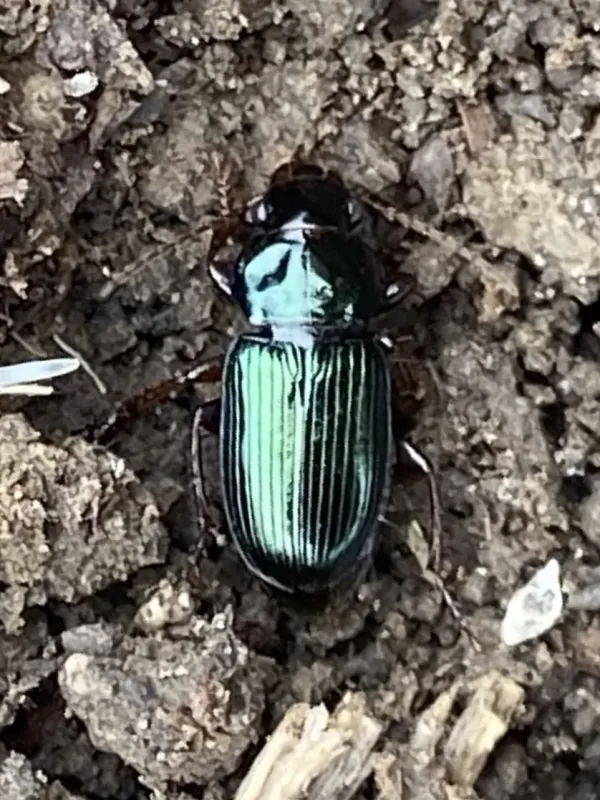
Description
How to identify
Harpalus amputatus is a species of ground beetle belonging to the Carabidae family, known for its opportunistic feeding habits in agricultural landscapes.
The adult beetle typically measures between 9 and 12 mm in length and possesses a dark brown to black body, often with a subtle metallic or bronze reflection.
The morphological structure of this beetle includes a robust pronotum and elytra, allowing it to navigate efficiently through soil cracks and dense organic debris.
Larvae are campodeiform, pale in color, and feature well-developed legs, which enable them to move actively within the soil profile to locate food sources.
These insects are primarily nocturnal, spending daylight hours hidden under surface residues, soil clods, or in crevices, which makes them difficult to monitor during the day.
What it damages
The primary economic damage is caused by adult beetles, which feed on the developing kernels of small grains during the milky and dough stages of maturation.
By gnawing into the kernels, the beetles significantly reduce the weight and quality of the yield, often leaving behind empty hulls that are susceptible to secondary pathogens.
While primarily a consumer of weed seeds, high population densities of Harpalus amputatus can force them to shift their focus to crop seeds, causing measurable losses.
Larvae primarily act as predators of smaller soil-dwelling organisms, yet they may occasionally cause damage to the roots or stems of young cereal seedlings if prey is scarce.
Damage is often most concentrated along the edges of fields or in areas with high weed pressure, where the beetles find initial shelter and food before moving into the crop.
When it appears
The life cycle of this species is annual, with both adults and mature larvae capable of overwintering deep within the soil profile to avoid freezing temperatures.
Activity commences in the spring when soil temperatures reach optimal levels, allowing the beetles to resume feeding and initiate the reproductive process.
The peak activity of the new generation of adults typically aligns with the ripening period of cereal crops, posing the greatest threat to grain production.
Females deposit eggs directly into the soil, often near food sources such as grasses or weed seeds, which ensures the survival of the larvae upon hatching.
As the season draws to a close, the insects transition into a quiescent state, moving deeper into the ground to survive the winter months successfully.
Signs of infestation
Signs of infestation include the appearance of damaged ears, where grains are partially or fully consumed, resulting in uneven kernel development.
Field inspections at night using flashlights can reveal the presence of adult beetles, confirming their activity levels and potential risk to the crop.
Seedling damage, characterized by wilting or thinning stands, may indicate larval activity in the soil, particularly in fields with intensive cropping history.
The accumulation of empty glumes and glume remains in the ears is a reliable visual indicator that the crop has been subjected to feeding by ground beetles.
Soil sampling during the late summer or autumn is an effective way to assess the population density and plan for necessary pest management interventions.
Control measures
Integrated pest management strategies should focus on crop rotation to disrupt the life cycle of the beetle and limit its ability to establish large populations.
Deep fall plowing remains an essential practice, as it exposes overwintering larvae and adults to adverse environmental conditions, significantly reducing their survival rate.
Maintaining clean fields by removing weed hosts throughout the season reduces the availability of secondary food sources, making the fields less attractive to the pest.
Chemical intervention should be considered only when population thresholds are exceeded, utilizing insecticides compatible with existing crop protection programs.
- Monitor field edges where populations often migrate from neighboring non-crop areas.
- Utilize high-quality seed treatments to provide early protection for emerging seedlings.
- Incorporate integrated weed management to eliminate alternative food sources for the beetles.
- Time harvest appropriately to minimize the window of opportunity for adult beetle damage.
Taxonomy
- Latin name
- Harpalus amputatus
- Order
- Coleoptera (beetles)
- Family
- Carabidae
- EPPO code
- HARPAM
Discussion
No discussions yet — be the first.