
Common ground beetle
Harpalus affinis
Description
How to identify
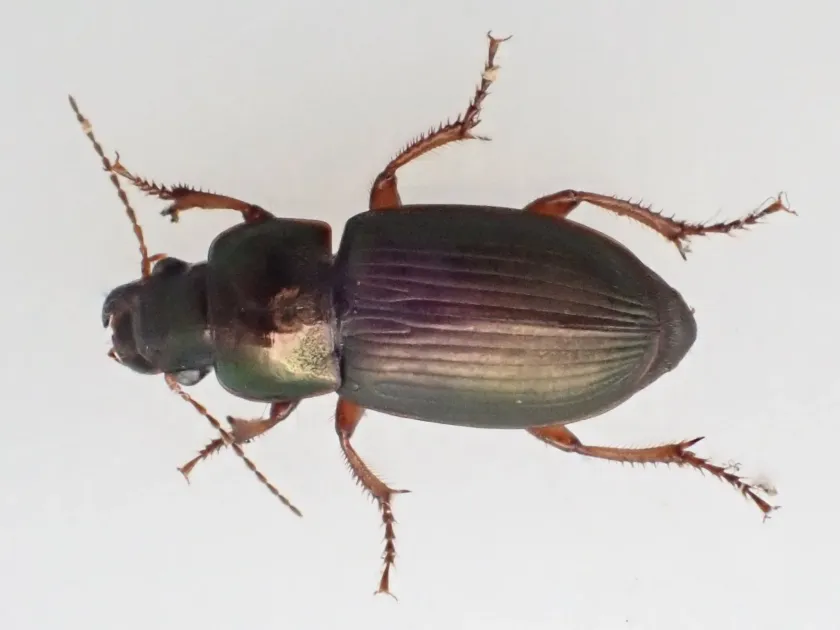
The Harpalus affinis, commonly known as a ground beetle, belongs to the family Carabidae within the order Coleoptera. Adult beetles typically measure between 9 and 11 mm in length and possess a characteristic elongated body shape with a metallic black or bronze-black luster.
One of the primary identifying characteristics of this species is its light brown or reddish-yellow legs, which distinguish it from many other ground beetle species found in agricultural fields.
The larvae are campodeiform, elongated, and possess well-developed thoracic legs and mandibles. They are generally dirty white to yellow in color, with a darker, chitinized head capsule suitable for their subterranean lifestyle.
These beetles are primarily nocturnal, preferring to hide beneath soil clods, crop debris, or stones during the daylight hours, making them difficult to spot during standard field inspections.
The life cycle involves complete metamorphosis (egg, larva, pupa, and adult). Depending on environmental conditions, the insect typically completes one generation per year, overwintering as both adults and larvae within the soil profile.
What it damages
Adult Harpalus affinis are known to feed on the seeds of various cereal crops. During the milk stage of grain development, these beetles climb onto the ears and actively consume the contents of the kernels.
Economic damage is most significant in wheat, barley, rye, and oat crops. In areas with high population densities, the loss of grain yield can be substantial, leading to decreased market value and production efficiency.
While the larvae are predominantly predatory, feeding on small invertebrates, they can occasionally transition to feeding on germinating seeds or young seedlings when preferred prey is scarce, contributing to crop thinning.
The impact of this pest includes reduced plant vigor and direct loss of grain biomass. By consuming the developing seeds, they disrupt the normal maturation process of the plant's reproductive organs.
As they also consume weed seeds, their presence in the agro-ecosystem is complex; however, when populations exceed economic thresholds, active management becomes necessary to protect the harvest.
When it appears
Activity of the adult beetles begins in early spring as soil temperatures rise. Their presence becomes increasingly noticeable throughout the summer months as they reach their mature reproductive stage.
The critical period for cereal crops coincides with the grain-filling phase, particularly during late spring and mid-summer. During this time, adults migrate to the ears of cereal plants to forage.
As autumn approaches, adult activity declines significantly. The insects begin to seek overwintering sites, often digging deeper into the soil or finding refuge under dense crop residues to survive the winter season.
Temperature and moisture play a crucial role in their population dynamics. Mild, moist conditions generally favor higher survival rates and more successful breeding cycles compared to extreme heat or drought.
Agronomists should prioritize monitoring efforts during the period when grains are transitioning from the milk to the dough stage, as this is when the beetles are most detrimental to the crop.
Signs of infestation
The most reliable sign of a Harpalus affinis infestation is the presence of damaged, hollowed-out grains within the ear. Empty glumes (chaff) remain on the spike, providing clear evidence of the beetle's feeding.
Ground-level observations may reveal grain remnants or discarded fragments underneath the infested plants. During nocturnal hours, direct observation of beetles on the ears is possible with a flashlight.
Reduced plant stands in the spring may indicate early-season larval damage to seeds or seedlings. Such seedlings often show stunted growth or irregular feeding marks on their stems and roots.
Heavier damage is often concentrated along field edges, especially those adjacent to permanent vegetation or uncultivated land that provides shelter for the beetle population throughout the year.
Increased activity of avian predators or other natural enemies in the field during the grain-filling stage can sometimes serve as an indirect indicator of a significant pest population being present.
Control measures
Integrated pest management (IPM) is the most effective approach to control Harpalus affinis. Cultural practices, such as proper crop rotation and thorough soil tillage, are essential for disrupting the beetle's life cycle.
Timely harvesting of cereal crops helps to remove the food source before the beetle population can maximize its feeding impact, thereby limiting potential damage to the grain harvest.
Using high-quality seed treatments containing systemic insecticides provides a necessary layer of protection for germinating seeds against potential larval feeding in the soil.
If population counts exceed the economic threshold, targeted application of approved insecticides (such as pyrethroids) can be used to manage adult beetles during the critical grain development phase.
- Rotate cereal crops with non-host plants to break the pest cycle.
- Perform deep autumn tillage to destroy overwintering sites.
- Maintain clean field borders to reduce refugia for the pest.
- Monitor field edges closely for early signs of infestation.
- Apply insecticides only when necessary based on economic threshold levels.
Taxonomy
- Latin name
- Harpalus affinis
- Order
- Coleoptera (beetles)
- Family
- Carabidae
- EPPO code
- HARPAE
Discussion
No discussions yet — be the first.