
Ground beetle
Harpalus
Description
How to identify
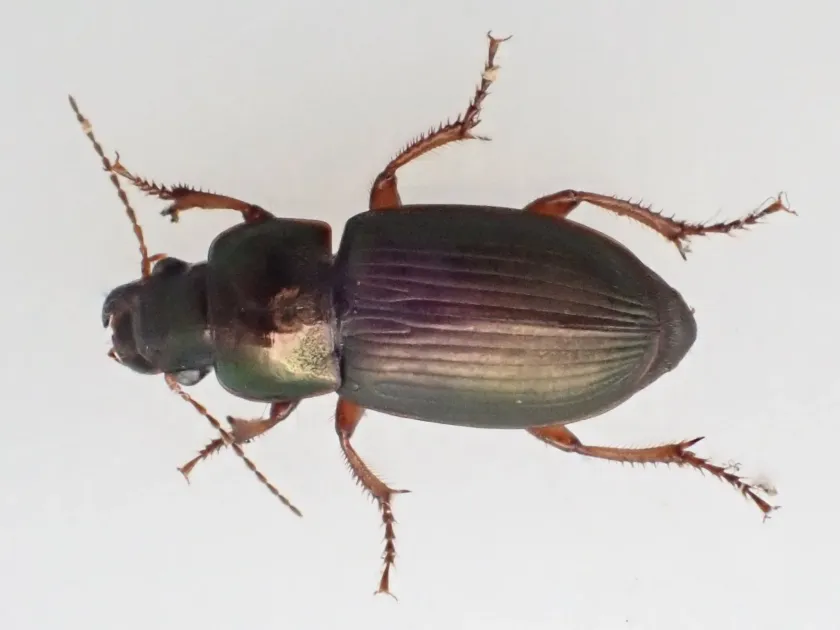
The ground beetle (Zabrus tenebrioides) is a major pest belonging to the order Coleoptera and family Carabidae. Adult beetles are 12–16 mm long, with a convex, black body showing a subtle metallic or bronze luster.
The larvae, known as the primary damaging stage, are spindle-shaped and grow up to 25 mm long. They are typically grayish-white or yellowish with a dark brown head and sclerotized thoracic plates.
Unlike most predatory carabids, this specific species is a primary herbivore. They possess robust mandibles adapted for grinding plant tissues, which allows them to consume young cereal shoots and grains.
The life cycle is univoltine, meaning one generation per year. It progresses through egg, three larval stages, pupa, and adult beetle stages.
Their life cycle is highly synchronized with the growth phases of cereal crops, which ensures their survival and high potential for infestation in agricultural areas.
What it damages
This beetle primarily affects cereal crops, with winter wheat being the most susceptible host. Barley, rye, and oats can also suffer significant damage during infestation.
The larvae cause the most severe destruction by feeding on winter crop seedlings in the autumn. They chew the young leaves and can completely wipe out fields.
In the spring, larvae continue to feed on the root collar and stems, preventing plants from tillering properly and leading to high plant mortality.
Adult beetles damage the crop during the grain-filling stage. They climb up the stems to eat the developing grain, leading to significant yield loss and lowered grain quality.
Fields infested with ground beetles show sparse, uneven stands, often requiring farmers to perform expensive reseeding of the affected areas.
When it appears
Adult beetles typically emerge in late spring or early summer, following which they mate and lay eggs in the soil at a depth of up to 10 cm.
The first larval instar appears in late summer or early autumn. This is the period when winter cereals are sprouting, providing the larvae with an immediate food source.
Larvae overwinter deep in the soil (20–30 cm). As temperatures rise in early spring, they migrate to the surface to resume feeding on young tillers.
Pupation occurs in the soil within protective earthen chambers during May. The pupal stage lasts approximately two weeks, depending on soil moisture and temperature.
The annual cycle is strictly tied to the seasonal growth of cereals, making the autumn and spring periods the highest risk times for crop damage.
Signs of infestation
Visible patches of bare or severely thinned areas in a cereal field are the primary indicator of ground beetle larval activity.
Infested plants show leaves that look frayed or shredded, a result of the larvae's method of grinding the vegetation rather than just biting off chunks.
The presence of small holes or tunnels in the soil near the base of the plants, accompanied by plant debris and larval excrement, confirms an infestation.
During the heading phase, look for damaged ears where the glumes may be splayed, revealing hollowed-out or partially consumed grains.
A lack of plant regrowth in the spring after the snow melts, despite favorable weather, often indicates significant subterranean larval feeding.
Control measures
Crop rotation is the most effective cultural method to prevent infestation; avoiding continuous cereal cropping helps break the beetle's life cycle.
Deep plowing and proper soil cultivation in the summer and autumn disrupt the larvae's habitat and can cause significant mortality during the pupal stage.
Seed treatment with systemic insecticides is a standard and necessary practice to protect the young seedlings from larval damage during the autumn emergence.
In cases of high pest density, foliar applications of insecticides (pyrethroids or organophosphates) are applied to control larvae in spring or adults during the heading stage.
Integrated Pest Management (IPM) practices, including the use of pheromone traps, assist in monitoring adult population levels to optimize the timing of chemical interventions.
Taxonomy
- Latin name
- Harpalus
- Order
- Coleoptera (beetles)
- Family
- Carabidae
- EPPO code
- HARPSP
Discussion
No discussions yet — be the first.