
Asian lady beetle
Harmonia axyridis
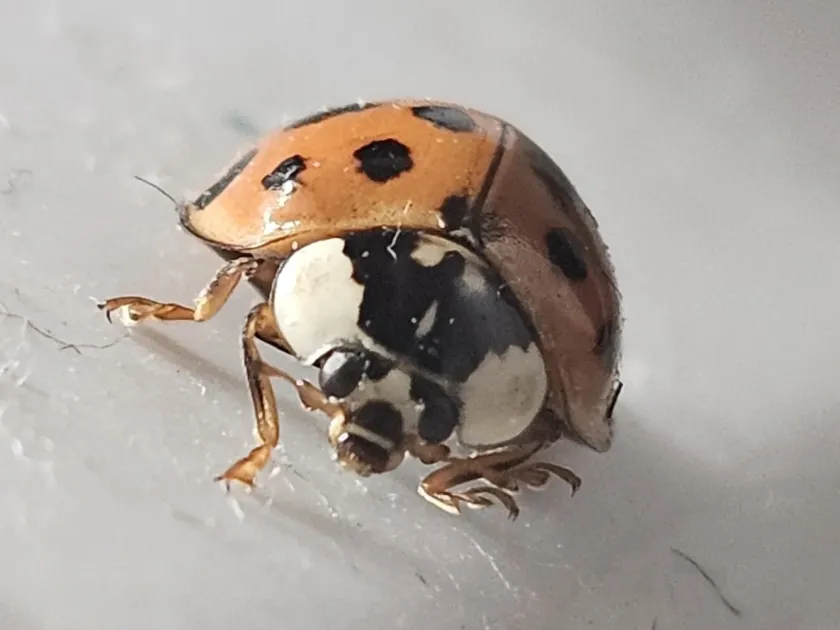
Description
How to identify
The Asian lady beetle (Harmonia axyridis) is a member of the Coleoptera order and the Coccinellidae family. This invasive species is known for its high phenotypic plasticity, appearing in various shades of yellow, orange, and black, with a variable spot pattern.
Adult beetles typically measure between 5 and 8 mm in length and exhibit a characteristic dome-shaped body. A key diagnostic feature is the white, M-shaped marking on the pronotum, which serves as a reliable identification point.
The species is highly prolific and aggressive, which has allowed it to outcompete native lady beetle populations in many regions. A single female can produce thousands of eggs during her lifespan.
Larvae pass through four developmental stages (instars) and look like tiny, spiky, dark-colored creatures with prominent orange or yellow lateral markings. They are highly mobile and voracious predators.
The life cycle of this beetle is temperature-dependent and extremely fast. Under favorable conditions, the species can complete its development in just a few weeks, allowing for multiple generations within a single growing season.
What it damages
While originally introduced as a biological control agent for aphids, the Asian lady beetle has become a significant agricultural pest. Its role shifts as it begins feeding on fruit crops during the maturation stage.
Vineyards are particularly susceptible to damage. Beetles feed on the juice of ripening grapes, causing direct loss and introducing fungal pathogens that lead to fruit rot and spoilage.
A major concern for the wine industry is the contamination of grapes during harvest. If beetles are crushed with the fruit, they release defensive compounds, including methoxypyrazines, which impart a foul, peanut-like odor to the wine.
Other fruit crops, including peaches, nectarines, and apples, are also at risk. The beetles take advantage of existing wounds on the fruit surface, further accelerating the degradation process.
The lack of specific natural enemies in many introduced habitats allows the population of this beetle to reach densities that pose a chronic threat to sustainable farming practices.
Signs of infestation
The primary sign of infestation is the presence of large numbers of adult beetles aggregating on fruit clusters or harvest-ready produce in late summer and autumn.
Small, puncture-like wounds on the skin of ripening fruits, often surrounded by developing mold or yeast, are strong indicators of beetle activity within the crop canopy.
A distinctive, pungent odor emanating from the harvested fruit is a clear sign that Harmonia axyridis individuals have been harvested along with the crop, requiring immediate quality control.
Clusters of beetles found on building walls, fences, or tree bark during autumn represent the population’s preparation for overwintering, signaling a high risk for the following season.
Observing larvae on foliage, even if they are feeding on aphids, can be a warning sign, as high densities will inevitably lead to fruit feeding once their primary prey becomes scarce.
Control measures
Managing the Asian lady beetle is challenging because the peak period of its damage coincides with the harvest season, limiting the use of traditional chemical insecticides.
Cultural control is essential. This includes keeping orchards and vineyards clean, removing crop residues, and controlling weeds that might serve as refuges for the beetles before the overwintering period.
Monitoring using pheromone or light traps is a critical step in assessing population pressure, allowing growers to make informed decisions about timing and necessity of interventions.
In cases of severe infestation, using physical exclusion methods, such as netting or specialized traps during the pre-harvest period, can prevent significant economic loss without chemical contamination.
- Regular monitoring of beetle density in vineyard margins.
- Early harvest strategies to minimize exposure to migrating beetles.
- Maintenance of clean perimeters to reduce overwintering success.
Taxonomy
- Latin name
- Harmonia axyridis
- Order
- Coleoptera (beetles)
- Family
- Coccinellidae
- EPPO code
- HARNAX
Discussion
No discussions yet — be the first.