
East Asian bush tick
Haemaphysalis longicornis
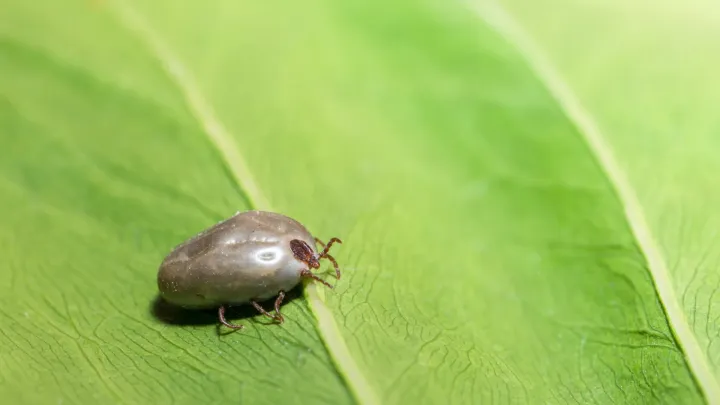
Description
How to identify
The East Asian bush tick, scientifically known as Haemaphysalis longicornis, is a species of tick in the family Ixodidae. This species has gained significant attention due to its rapid spread and unique biological reproductive capabilities.
A distinctive feature of this species is that females can reproduce through parthenogenesis, meaning they do not require males to produce viable offspring. This allows the population to expand rapidly even from a single introduced individual.
Adult ticks are typically reddish-brown to dark brown in color. The larval and nymphal stages are very small, often resembling tiny grains of sand, which makes them easy to overlook during visual field checks.
The tick is highly resilient and thrives in various environments, including grasslands, shrublands, and forested areas, where they quest for potential hosts by climbing onto vegetation.
Their mouthparts are evolved for long-term attachment, allowing them to remain embedded in the host's skin for several days to successfully complete their blood meal.
What it damages
Haemaphysalis longicornis is a major pest for livestock, including cattle, sheep, goats, and horses. While they do not damage crops directly, they pose a severe threat to the viability and profitability of agricultural operations.
The primary damage is caused by the heavy infestation of animals, leading to extreme blood loss, decreased milk production, reduced weight gain, and physical stress.
Beyond the direct physical toll, these ticks are efficient vectors for several viral and bacterial pathogens, such as the SFTS virus, which can cause significant morbidity and mortality in livestock herds.
Economic losses arise not only from animal health decline but also from the high costs associated with veterinary care, quarantine protocols, and constant pesticide applications.
In infested areas, land managers may be forced to abandon certain pastures, significantly impacting the efficiency of grazing rotations and land use planning.
When it appears
The activity period of the East Asian bush tick is heavily influenced by seasonal temperature changes, typically beginning in early spring as ground temperatures rise.
Peak infestation levels usually occur during the warm summer months, providing the necessary environmental conditions for rapid development across all lifecycle stages.
The species is known for its ability to overwinter in leaf litter or topsoil, emerging as soon as favorable conditions return, which can vary depending on local geography.
Due to its broad climate tolerance, the species is capable of maintaining activity over a longer portion of the year in warmer climates compared to other tick species.
Autumn marks a decline in activity, as individuals retreat to protected environments near the soil surface to survive the colder dormant months.
Signs of infestation
Visual identification of an infestation involves observing animals for signs of excessive itching or rubbing against structures, which is a common behavioral response to tick attachment.
Closer examination of the animal's hide, particularly around the ears, groin, and ventral areas where skin is thin, will reveal the presence of the parasites.
Animals suffering from heavy tick loads may exhibit signs of anemia, such as pale mucous membranes, weakness, and a general lack of vitality.
In the field, farmers can monitor tick density by dragging a white cloth across the vegetation; if ticks are present, they will readily cling to the fabric.
Any signs of fever or unexplained illness in the herd should prompt an immediate veterinary assessment to rule out tick-borne disease transmission.
Control measures
Effective management requires an integrated approach that combines chemical control, pasture management, and proactive livestock monitoring.
- Application of acaricides through dips, sprays, or pour-on treatments on a regular schedule.
- Use of insecticide-impregnated ear tags to provide long-lasting protection for individual animals.
- Mowing or clearing tall grass and brush in grazing areas to remove the tick's habitat.
- Maintaining strict quarantine protocols for new animals entering the farm to prevent the introduction of the pest.
- Utilizing biological controls, such as pasture-poultry systems, which can help reduce the local tick population.
It is essential to rotate the types of acaricides used to prevent the development of pesticide resistance within the local tick population.
Continuous monitoring and keeping detailed records of infestation levels assist in optimizing control timing and improving overall livestock health outcomes.
Taxonomy
- Latin name
- Haemaphysalis longicornis
- Family
- Ixodidae
- EPPO code
- HAEALO
Discussion
No discussions yet — be the first.