
Rabbit tick
Haemaphysalis leporispalustris
Description
How to identify
The rabbit tick, Haemaphysalis leporispalustris, is a species of hard tick belonging to the family Ixodidae. It is a common ectoparasite that primarily targets lagomorphs.
Adult ticks are brownish in color and possess a scutum on their dorsal side. The species is characterized by specific morphological features of the gnathosoma, which help differentiate it from other Haemaphysalis species.
The life cycle is three-host based, meaning the tick larvae, nymphs, and adults each seek out different individual hosts to complete their development stages.
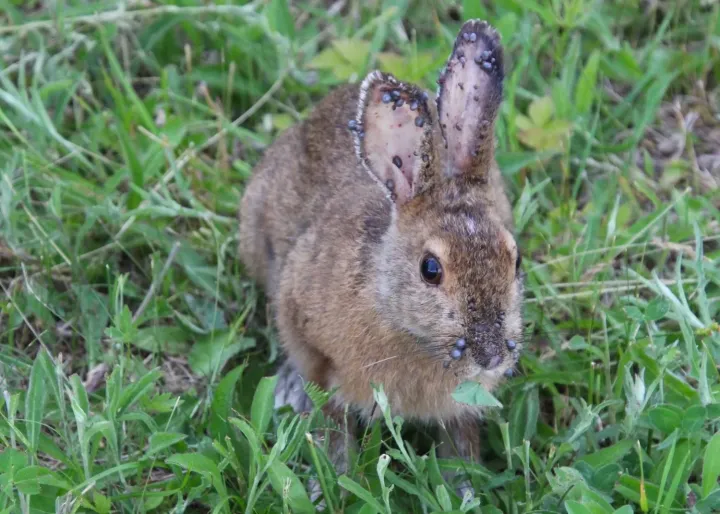
These ticks are morphologically adapted to attach firmly to the host's skin, often clustering in areas with thin hair or near orifices like the ears and eyes.
Environmental conditions, particularly humidity and temperature, play a crucial role in the development and survival of the tick during its off-host stages.
What it damages
While this tick does not feed on plants, its presence significantly impacts agricultural operations, specifically rabbit farms. It affects both wild and domestic populations.
The primary damage is caused by blood-feeding, which leads to physical weakness, anemia, and reduced production rates in rabbit livestock.
These ticks serve as vectors for serious pathogens, including the bacteria causing tularemia and various rickettsial diseases, posing a risk to both animals and farm workers.
Repeated bites cause localized skin inflammation, tissue damage, and secondary bacterial infections, which can result in the loss of fur and persistent health issues.
Economic losses in the agricultural sector are driven by the costs of veterinary interventions, increased mortality, and the necessary labor for farm sanitation.
When it appears
The activity of Haemaphysalis leporispalustris is highly seasonal, typically peaking during the spring and summer months when weather conditions are optimal.
Spring marks the period of increased questing behavior, as ticks emerge from overwintering sites in the soil or vegetation to find their first hosts of the season.
Summer is the period of highest infestation risk, as the adult tick population is at its peak and actively seeks hosts to complete the reproductive cycle.
Activity tapers off as temperatures drop in the autumn, though the ticks may remain active during mild winters in certain geographical regions.
Overwintering occurs in a state of diapause, with ticks surviving in soil debris, rabbit burrows, or sheltered areas within farm structures.
Signs of infestation
Infestation is most easily detected by visually inspecting the rabbit's ears, eyelids, and other thin-skinned areas where the ticks tend to attach.
Signs of irritation are evident in the host's behavior, including excessive grooming, scratching, and restless activity due to the persistent presence of parasites.
Inflammatory spots, sores, and scabs at the site of attachment are common clinical signs, often resulting in localized hair loss and skin damage.
In cases of heavy infestation, rabbits may show signs of systemic fatigue, lethargy, and pale mucous membranes indicative of iron-deficiency anemia.
The presence of ticks often leads to a visible decline in the general body condition and overall health of the affected rabbits.
Control measures
Effective control of Haemaphysalis leporispalustris requires an integrated approach focusing on both animal health and environmental management.
Applying veterinarian-approved acaricidal agents to infested animals is the most direct method to mitigate the parasite population.
- Topical applications, such as sprays or spot-on treatments, for rabbits.
- Sanitation of rabbit hutches and periodic replacement of bedding materials.
- Clearing tall grass and vegetation around livestock enclosures to reduce tick habitats.
- Rigorous quarantine procedures for newly introduced rabbits.
Managing the surrounding environment to discourage wild rabbits and small rodents from entering farm facilities is essential to prevent re-infestation.
Regular monitoring of animal health and environment sanitation standards significantly lowers the risk of large-scale tick outbreaks on the farm.
Taxonomy
- Latin name
- Haemaphysalis leporispalustris
- Family
- Ixodidae
- EPPO code
- HAEALE
Discussion
No discussions yet — be the first.