
European elm scale
Gossyparia spuria
Description
How to identify
The European elm scale (Gossyparia spuria) is a species of scale insect in the Eriococcidae family. It is a notorious pest known for the distinct white, fuzzy egg sacs produced by females.
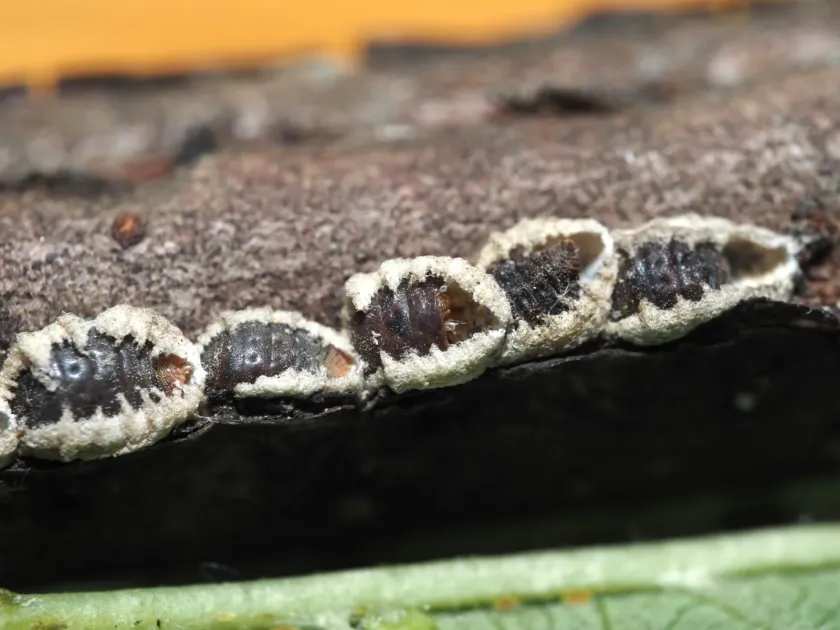
Adult females are dark red to purple, oval-shaped, and are surrounded by a white, cottony wax fringe, making them easily identifiable on the bark of infested trees.
While males are rare and winged, allowing them to search for females, the female scale is sedentary, remaining attached to the bark once she has settled in a suitable feeding site.
The immature stage, known as a crawler, is small, yellow-brown, and highly mobile. These crawlers are the primary means by which the pest spreads to new branches or nearby trees.
These insects prefer protected areas such as bark crevices, the undersides of branches, and leaf axils, which allows them to remain shielded from environmental conditions and predators.
What it damages
The primary host for this pest is the elm tree (Ulmus species), including American, Siberian, and European elm varieties frequently used in urban landscapes.
Feeding by piercing-sucking mouthparts drains the tree's sap, which depletes energy reserves and stresses the host plant, often leading to decline.
Heavy infestations cause yellowing of leaves (chlorosis), stunted growth of young shoots, and in severe cases, dieback of branches and even the death of the tree.
The pest excretes large amounts of honeydew, a sugary liquid that covers leaves and bark, promoting the growth of black sooty mold that interferes with photosynthesis.
Trees weakened by scale infestation become increasingly susceptible to other environmental stressors, diseases, and wood-boring insects, further endangering the tree's longevity.
When it appears
The insect overwinters as second-instar nymphs, huddled in bark cracks and other protected niches on the tree trunk and branches until the onset of spring.
In spring, as temperatures rise, the nymphs migrate to the smaller twigs and leaves to resume feeding and mature into adults.
Egg-laying occurs in early summer, typically in June, when the white, cottony sacs become most visible and widespread along the branches.
Crawlers emerge throughout the summer months, actively wandering across the tree canopy to establish new feeding sites before seeking shelter for the winter.
The species has only one generation per year, so identifying the timing of crawler emergence is crucial for timing chemical or biological treatments effectively.
Signs of infestation
The most visible sign of an infestation is the presence of white, woolly egg sacs along the branches and in the crevices of the bark during late spring and early summer.
Leaves often appear sticky due to honeydew deposits, which may eventually turn black due to the colonisation of sooty mold fungi.
Affected trees often show signs of overall decline, including sparse canopy, yellowing foliage, and early leaf drop during the summer season.
- Presence of white, cottony fringes on bark.
- Black, sooty mold covering twigs and leaves.
- Sticky honeydew residue on lower branches.
- Stunted shoot growth and branch tip dieback.
Severe infestations give the tree an unhealthy appearance, with many smaller branches potentially dying and the overall vigor of the elm tree significantly reduced.
Control measures
Dormant oil applications in late winter or early spring are highly effective at smothering overwintering nymphs before they become active.
Systemic insecticides can be applied during the growing season, specifically targeting the crawler stage to provide effective control without harming the entire canopy.
Pruning out heavily infested branches is a practical cultural control method that reduces the overall population density of the pest within the tree.
Maintaining healthy tree vigor through proper irrigation and soil management helps the elm tree better withstand the damage caused by scale insect feeding.
Encouraging natural predators such as lady beetles and parasitic wasps can help keep scale populations in check, reducing the need for broad-spectrum chemical interventions.
Taxonomy
- Latin name
- Gossyparia spuria
- Order
- Hemiptera (bugs, aphids, leafhoppers)
- Family
- Eriococcidae
- EPPO code
- ERIOSU
Discussion
No discussions yet — be the first.