
Azalea bark scale
Acanthococcus azaleae
Description
How to identify
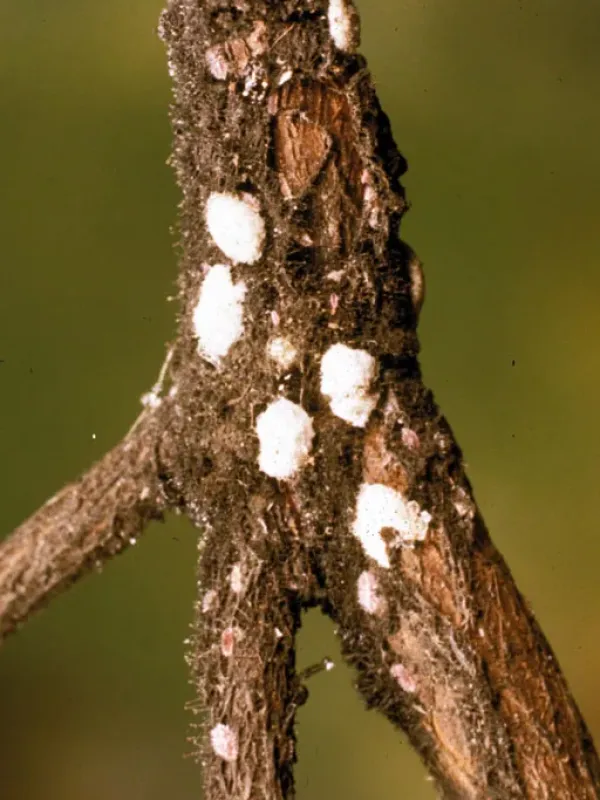
The azalea bark scale (Acanthococcus azaleae) is a member of the Eriococcidae family. Adults are typically identified by the white, cottony, or felt-like waxy sacs they produce to protect themselves and their eggs, which are often found on stems.
Females are sedentary for most of their lives, focusing on feeding and reproduction, while males are winged and quite rare, designed primarily for mating. The females undergo significant changes as they reach maturity, forming the characteristic ovisac.
Newly hatched nymphs, known as crawlers, are the most active stage of the insect. They are small, oval-shaped, and brownish-yellow, possessing legs that allow them to migrate to tender new growth on the host plant.
The life cycle involves incomplete metamorphosis. They typically overwinter as second-instar nymphs or fertilized females tucked into bark crevices, bud scales, or the crotches of twigs, making them difficult to detect.
Depending on the environment, the number of generations varies. In greenhouses, they may breed year-round, whereas in outdoor settings, there is usually one major generation per year, peaking during the spring growth season.
What it damages
This pest primarily affects Ericaceous plants, with a strong preference for azaleas and rhododendrons. It is a common nuisance in ornamental landscapes and commercial nurseries where these specific shrubs are cultivated.
Scale insects feed by inserting their stylets into the plant's vascular tissue to extract sap. This constant feeding weakens the plant, drains its energy reserves, and stunts overall growth performance.
Aside from sap extraction, the insects inject saliva into the plant, which can lead to leaf yellowing, tissue necrosis, and distortion of new shoots. This stress leaves the plant highly susceptible to secondary environmental or pathogen attacks.
The insects excrete a sticky substance known as honeydew, which accumulates on leaves and stems. This substance is a prime substrate for the growth of sooty mold, a fungus that covers plant surfaces in black, unsightly layers.
Heavy infestations lead to a decline in aesthetic quality, failure to bloom, and eventual branch dieback. If left unmanaged, the cumulative damage can result in the death of the entire shrub over several growing seasons.
Signs of infestation
The most distinctive sign is the presence of white, fuzzy, cotton-like masses clustered on twigs and branches. These are the protective covers of the females, often concentrated in the forks of branches.
Honeydew accumulation is a major indicator; leaves may feel sticky or glossy. Following this, the rapid development of black sooty mold on the foliage is a clear symptom of a large infestation of scale insects.
Stunted growth or leaves that appear chlorotic (yellowish) are common signs that the plant is under stress from feeding. In advanced cases, the foliage may look wilted or begin to drop prematurely.
- White cottony or felt-like masses on bark.
- Sticky residue on foliage (honeydew).
- Black sooty mold covering leaves and stems.
- Yellowing and early drop of leaves.
- General lack of vigor and failure to produce blooms.
Control measures
Integrated pest management is essential for success. Dormant season applications of horticultural oils can effectively suffocate overwintering scales by sealing off their air supply.
During the growing season, systemic insecticides are the most effective choice. Since the insects are shielded by waxy layers, contact sprays often fail; systemic chemicals are absorbed into the sap, reaching the pests directly through their feeding.
Mechanical removal is a viable strategy for light infestations on small plants. Gently scrubbing the infested areas with a soft brush and mild soap or alcohol can effectively reduce the population before it spreads.
Cultural practices include ensuring proper plant health through balanced fertilization and adequate hydration. Avoid heavy nitrogen applications that cause rapid, succulent growth, which is highly attractive to scale insects.
Timing is critical when applying insecticides. Treatments should be timed to coincide with the crawler stage, as eggs are protected by the waxy sac and resistant to most pesticides. Multiple applications are often required to manage successive hatching.
Taxonomy
- Latin name
- Acanthococcus azaleae
- Order
- Hemiptera (bugs, aphids, leafhoppers)
- Family
- Eriococcidae
- EPPO code
- ERIOAZ
Discussion
No discussions yet — be the first.