
Heather scale
Acanthococcus devoniensis
Description
How to identify
The Heather scale (Acanthococcus devoniensis) belongs to the family Eriococcidae (felt scales), which includes a variety of sap-sucking insects affecting woody plants.
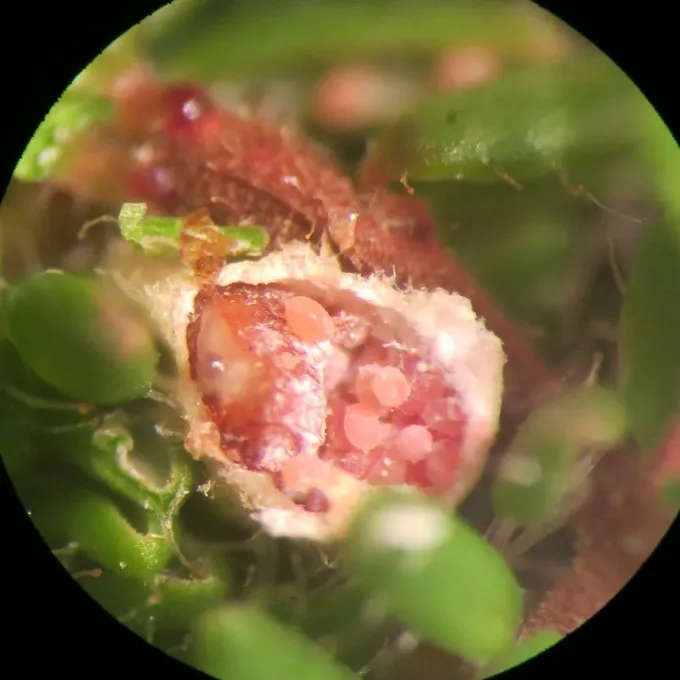
This pest is easily identified by the white, cotton-like wax sacs produced by the females to protect their eggs, which are found on the stems of heather plants.
The adult females are oval-shaped and often hidden beneath these protective wax layers, making them difficult to detect during the early stages of infestation.
The life cycle involves the production of small crawlers (nymphs), which are the mobile phase responsible for spreading the infestation to neighboring branches or plants.
Males are rarely observed in the field due to their short lifespan and winged form, whereas the sessile females remain attached to the host for most of their lives.
What it damages
The primary host for Acanthococcus devoniensis is the common heather (Calluna vulgaris), but it can also parasitize other related ericaceous species.
By inserting their stylets into the plant tissues, these scales extract vital sap, which deprives the plant of necessary nutrients and leads to severe physiological stress.
Heavy infestations cause the stems to become brittle, stunted, and distorted, often resulting in the dieback of shoots and a significant decline in plant vitality.
The presence of scales creates entry points for various pathogens, including fungal and bacterial infections, which further compromise the health of the plant.
In ornamental settings, the visible damage and yellowing of foliage lead to a significant loss of aesthetic value and may eventually cause the death of the heather shrubs.
Signs of infestation
The most distinctive sign of infestation is the presence of white, felt-like masses attached to the main stems and branches of the heather plant.
Plants often exhibit symptoms of decline, such as slowed growth, chlorosis (yellowing of the foliage), and the drying out of smaller branch tips.
The secretion of honeydew by the scales leads to the development of sooty mold, a dark fungal growth that covers the plant and inhibits photosynthesis.
Distortion of new growth is common, as the feeding activity disrupts the normal development of the plant cells, leading to twisted or curled stems.
A general lack of vigor in the shrub, especially during the peak growing season, often indicates a hidden population of scales deep within the dense canopy.
Control measures
Effective management begins with regular visual inspections, focusing on the base and inner structure of the heather plants to detect early signs of scale.
Pruning and destroying heavily infested plant parts is a crucial mechanical control measure to reduce the immediate population pressure.
Systemic insecticides are the most effective chemical approach, as they are absorbed by the plant and provide protection against the sap-sucking stages of the insect.
It is recommended to apply horticultural oils during the dormant season to suffocate overwintering scales, which significantly reduces the initial spring population.
- Monitor plants for white wax patches in early spring.
- Use systemic insecticides to manage active infestations.
- Prune and dispose of dead or heavily affected branches.
- Maintain optimal soil moisture and fertility to improve plant resilience.
Taxonomy
- Latin name
- Acanthococcus devoniensis
- Order
- Hemiptera (bugs, aphids, leafhoppers)
- Family
- Eriococcidae
- EPPO code
- ERIODE
Discussion
No discussions yet — be the first.