
Cactus mealybug
Acanthococcus coccineus
Description
How to identify
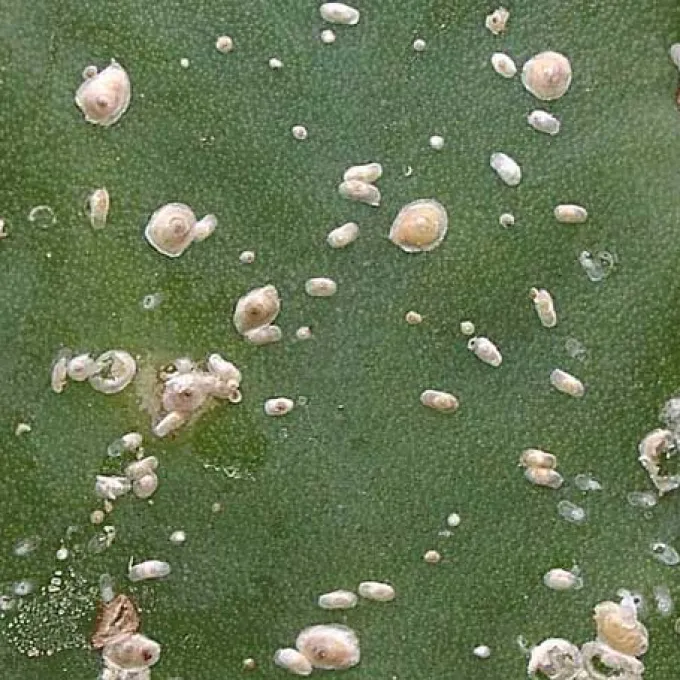
The Cactus mealybug (Acanthococcus coccineus) is a small scale insect from the Eriococcidae family. Adult females are oval-shaped and typically covered in white, cotton-like wax secretions.
Males are rarely seen; they are winged and short-lived, while females remain sessile for most of their lives, feeding on the host plant. The wax coating provides significant protection against environmental threats.
Colonies often resemble fungal patches or general dust, making them difficult for beginners to identify. However, under magnification, the segmented body of the insect becomes visible beneath the wax.
When the waxy layer is removed, the female body appears deep red or purple. These insects thrive by anchoring themselves firmly to the epidermis of the cactus.
The mobile crawler stage is extremely small. These young nymphs move across the plant surface to locate the most suitable site to settle and begin their feeding cycle.
What it damages
The primary hosts for Acanthococcus coccineus are various Cactaceae species. Soft-skinned cacti, such as Mammillaria and Lobivia, are particularly susceptible to heavy infestation.
These insects damage the plant by piercing the epidermis and extracting cell sap. This feeding process results in severe plant exhaustion and loss of turgor pressure.
Toxic saliva injected during feeding causes localized necrosis, plant deformation, and stunted growth. Secondary infections often occur at the site of the puncture wounds.
In greenhouses, this pest spreads rapidly, potentially devastating entire collections. The aesthetic value of the plants is ruined, and in advanced stages, the cactus may die.
The pest often hides in protected areas such as between ribs or at the base of spines, making detection difficult until significant damage has already occurred.
When it appears
Under indoor or greenhouse conditions, the Cactus mealybug can reproduce throughout the year, provided temperatures remain favorable for the insect life cycle.
Peak activity generally occurs during the spring and summer months when rising temperatures accelerate metabolic processes and nymph development.
Dry air and poor ventilation are major catalysts for outbreaks. In these conditions, the time between generations is reduced, leading to a population explosion.
While cold temperatures in winter may slow their development, the insects do not enter a true diapause and continue to feed at a reduced rate.
Crawlers are most active during the peak growth season of the host plants, as the fresh epidermis is more succulent and easier to pierce.
Signs of infestation
The first sign of infestation is the appearance of white, cotton-like fluff tucked away in rib depressions, areoles, or near the base of spines.
Discolored patches—yellow or brown—often appear on the cactus skin. These indicate areas where the plant tissue has died due to constant sap extraction.
- Stunted growth and distorted plant shape.
- Sticky "honeydew" residue on the surface of the cactus.
- Yellowing of the epidermis.
- Black sooty mold growth on the honeydew.
- Visible white insect clusters in hidden spots.
The presence of honeydew often attracts ants or promotes the growth of sooty mold, which can further impede the plant's ability to photosynthesize.
Careful inspection of the root collar and deep spine crevices is essential, as these are the primary nesting sites for the colonies.
Control measures
For minor infestations, manual removal using a soft brush dipped in isopropyl alcohol is an effective way to clear the visible insects and their wax cocoons.
In cases of severe infestation, systemic insecticides (neonicotinoids) are recommended. These chemicals travel through the plant's vascular system, poisoning the insects as they feed.
Treatment should be repeated every 10–14 days to catch any nymphs that hatch from eggs after the initial application, ensuring the entire life cycle is broken.
Quarantine all new plants for at least 3-4 weeks before introducing them to an established collection to prevent the spread of the pest.
Good cultural practices, including adequate ventilation, avoiding over-humidity, and regular plant inspection, are the best defense against this persistent pest.
Taxonomy
- Latin name
- Acanthococcus coccineus
- Order
- Hemiptera (bugs, aphids, leafhoppers)
- Family
- Eriococcidae
- EPPO code
- ERIOCC
Discussion
No discussions yet — be the first.