
Elm scale
Gossyparia
Description
How to identify
Elm scale (Gossyparia spuria) is a member of the Eriococcidae family and is a significant pest primarily affecting various elm species.
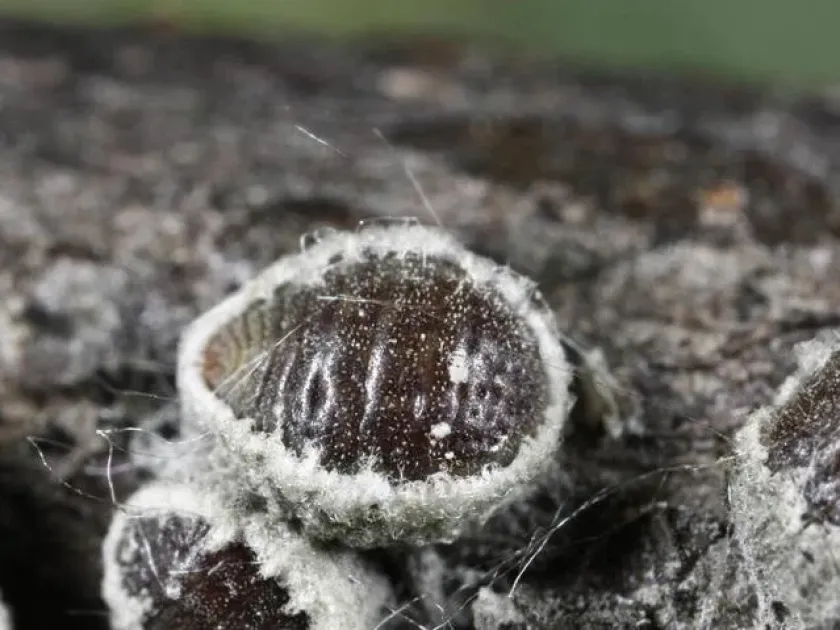
Adult females are recognizable by their reddish-brown bodies, which are surrounded by a white, cottony fringe of waxy filaments.
The males are winged and appear much later in the season, focusing entirely on reproduction to ensure the continuation of the next generation.
The nymphs, or crawlers, are the most mobile stage of the insect’s life cycle, measuring less than a millimeter and appearing bright orange-red.
They overwinter as second-instar nymphs within the protective crevices of the bark, which helps them survive harsh winter conditions.
What it damages
The insects feed by inserting their stylets into the phloem of young twigs and branches, draining essential nutrients from the tree.
Heavy infestations lead to yellowing leaves, premature leaf drop, and the gradual dieback of twigs and smaller branches.
The excretion of honeydew serves as a substrate for the growth of sooty mold, which can cover leaves and impede photosynthesis.
Chronic infestation weakens the tree’s structural integrity, making it more susceptible to other diseases and environmental stress factors.
In urban landscapes, elm scale can cause significant aesthetic damage and, in severe cases, the eventual death of young, vulnerable saplings.
When it appears
In spring, nymphs migrate from their overwintering sites on the bark to the leaves and twigs to resume active feeding.
Mating usually occurs in early summer, followed by the female producing her characteristic white, waxy egg sac on the underside of branches.
The crawler stage emerges in mid-summer, representing the most critical time for monitoring and implementing management strategies.
As autumn temperatures drop, the nymphs crawl back into the bark crevices, where they will remain dormant until the following spring.
Understanding this life cycle is essential for timing insecticide applications to achieve the highest possible efficacy against the pest.
Signs of infestation
A prominent white, cotton-like fringe around the females along the twigs and small branches is the most diagnostic sign of the pest.
Sticky honeydew buildup on the leaves and branches beneath the colonies often attracts large numbers of ants and wasps.
The presence of black sooty mold on the foliage and stems is a clear indicator that a sap-sucking insect population is present.
Wilted, yellowing leaves and stunted growth on twigs are symptomatic of significant moisture and nutrient loss caused by the infestation.
Close inspection of the bark reveals small, dark clusters of insects tucked away in the crevices of the branches.
Control measures
Cultural control involves pruning and disposing of heavily infested branches to reduce the overall population pressure in the tree.
Chemical control is most effective when targeted at the crawler stage using systemic or contact insecticides during the early summer.
Horticultural oils can be applied in the dormant season to smother overwintering nymphs on the trunk and primary branches.
- Regular monitoring of tree canopy during late spring and early summer.
- Encouraging natural predators such as lady beetles and lacewings.
- Maintaining tree vigor through proper irrigation and balanced fertilization.
Integrated pest management strategies should focus on minimizing chemical use by precisely timing interventions during the vulnerable crawler phase.
Taxonomy
- Latin name
- Gossyparia
- Order
- Hemiptera (bugs, aphids, leafhoppers)
- Family
- Eriococcidae
- EPPO code
- GOSSSP
Discussion
No discussions yet — be the first.