
Goniozus procerae
Goniozus procerae
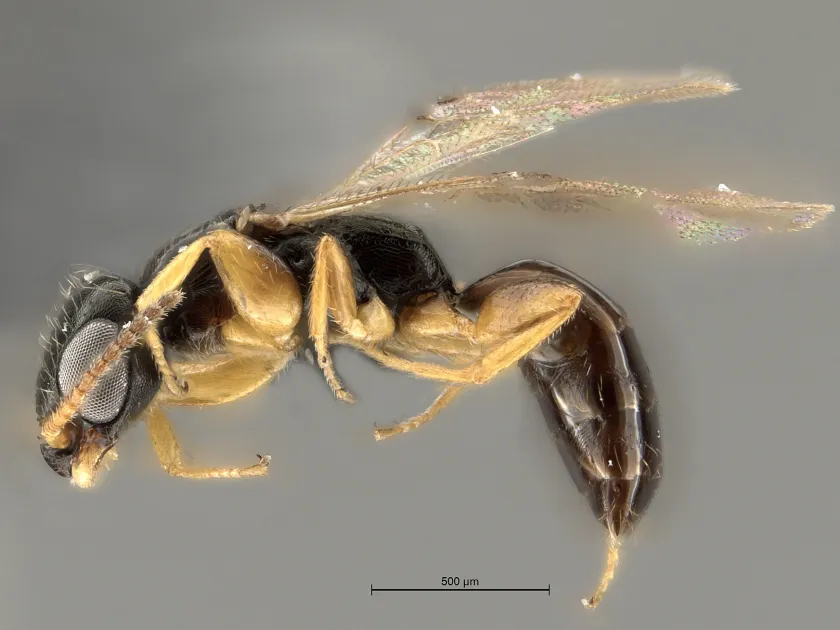
Description
How to identify
Goniozus procerae is a specialized parasitoid wasp belonging to the Bethylidae family. These insects are known for their ability to parasitize larvae of various stem-boring pests, playing a crucial role in agricultural ecosystems as natural regulators.
The adult wasp has a slender, dark-colored body typical of its family. Its highly developed antennae are adapted to detect chemical and vibrational cues emitted by hosts that are often hidden deep within plant stems, making them very efficient hunters.
Biology of this species involves a complex searching behavior. The female wasp locates a suitable host larva inside the plant tissue, paralyzes it, and deposits eggs on its body, ensuring a constant food supply for its developing larvae.
Identifying this species requires microscopic examination of structural features, such as wing venation and abdominal setation. Entomologists use these criteria to distinguish Goniozus procerae from other related parasitoid species.
The lifecycle is highly synchronized with the host pest’s development. This synchronization ensures that the wasp population increases in response to host availability, effectively mitigating potential outbreaks of agricultural pests.
What it damages
The damage caused by the pests that Goniozus procerae parasitizes is significant. These pests often bore into the stems of grain and forage crops, disrupting nutrient flow to the grain and potentially causing lodging or death of the plant.
By effectively parasitizing these larvae, Goniozus procerae prevents the damage from reaching critical economic levels. The wasp acts as a living shield, reducing the number of active larvae that would otherwise consume plant biomass.
The impact of these parasitoids is most visible in areas where integrated pest management practices are followed. Their presence helps maintain a low density of pests, which protects the overall health and yield of the harvest.
In cases where host populations explode due to climatic conditions, even the most efficient parasitoids might struggle to keep up. This is where agronomists must carefully assess whether additional intervention is required without disrupting natural biological control.
The economic value of this parasitoid is high because it provides free, sustainable, and eco-friendly control of pests. Relying on such natural mechanisms is a cornerstone of modern, sustainable agriculture.
Control measures
To preserve Goniozus procerae populations, farmers should avoid the indiscriminate use of broad-spectrum insecticides. Such chemicals are lethal to beneficial parasitoids and can often trigger secondary pest outbreaks by removing natural enemies.
Implementing a refuge zone or flower strips around fields is highly recommended. These areas provide adult wasps with nectar and shelter, significantly increasing their lifespan, fecundity, and searching capacity in the adjacent crops.
Integrated Pest Management (IPM) protocols should prioritize monitoring before deciding on chemical applications. If monitoring reveals a significant presence of Goniozus procerae, chemical treatments should be delayed or limited to selective products.
Agronomic practices, such as proper crop residue management, can also influence the survival of parasitoids. Keeping soil management in line with the lifecycle of these insects ensures that they remain present in the field season after season.
- Reduce broad-spectrum insecticide usage.
- Establish nectar-rich flower strips as refuges.
- Monitor parasitoid and pest population dynamics.
- Adopt sustainable and integrated pest management strategies.
Taxonomy
- Latin name
- Goniozus procerae
- Order
- Hymenoptera
- Family
- Bethylidae
- EPPO code
- GONZPR
Discussion
No discussions yet — be the first.