
Common Brimstone
Gonepteryx
Description
How to identify
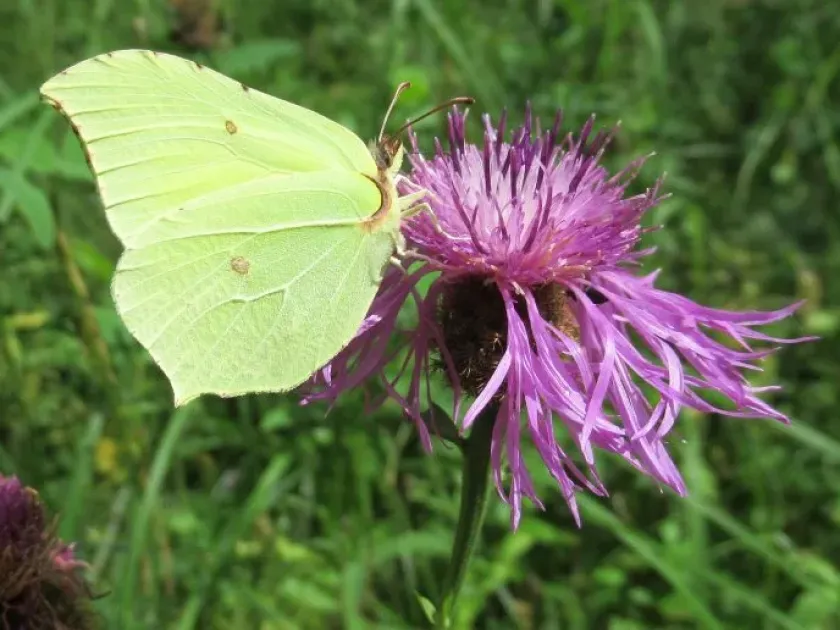
The Common Brimstone (Gonepteryx rhamni) is a butterfly from the Pieridae family, easily recognized by the unique angular shape of its wings.
Males exhibit a vibrant lemon-yellow color, while females display a more subtle, greenish-white hue, often with distinctive orange spots on each wing.
The larvae are bright green with a lateral white stripe, providing excellent camouflage while resting on the veins of host plant leaves.
Adults are among the longest-lived butterflies, capable of surviving for nearly a year by entering a dormant state during winter months.
The chrysalis is shaped like a rolled leaf and is attached to twigs, making it exceptionally difficult to spot in dense foliage.
What it damages
The primary host plants for Brimstone larvae are species within the Rhamnaceae family, specifically the common buckthorn (Frangula alnus).
Larvae consume the leaf blades of these shrubs, which can result in localized defoliation if populations are sufficiently high.
While the aesthetic appearance of the host plant may be temporarily affected, the Brimstone is not considered a significant agricultural pest.
The damage is restricted to the vegetative parts of the plant and does not impact the fruit yield or tree health in a critical way.
Economic damage is essentially negligible, and the species is often valued by gardeners for its contribution to local biodiversity.
When it appears
Common Brimstone butterflies are some of the first to emerge in early spring, often seen on warm days before many other insects are active.
The reproductive cycle occurs during late spring and early summer, coinciding with the peak foliage development of host shrubs.
Larval development typically lasts for several weeks, depending on ambient temperatures and the availability of fresh foliage.
Adults of the new generation appear in late summer and autumn, often engaging in feeding before seeking suitable hibernation sites.
Overwintering occurs in the adult stage, usually hidden within evergreen foliage or in sheltered spots in garden sheds and woodpiles.
Signs of infestation
Evidence of infestation is usually found by observing irregular notches along the margins of buckthorn leaves during the summer months.
Larvae are sedentary during the day and are typically found resting on the underside of leaves, which helps them avoid detection.
The accumulation of frass (larval waste) on lower leaves is a reliable indicator that a caterpillar is feeding directly above that area.
Adult butterflies feeding on flowers are a common sight, but they do not cause any harm to the plants they visit for nectar.
A careful inspection of twigs in late spring may reveal the presence of a pupa, which resembles a small, dormant leaf attached by silk.
Control measures
No systematic control is necessary for the Common Brimstone, as it does not pose a threat to crops or significant garden health.
If caterpillars are excessively damaging decorative buckthorn, manual removal is the most efficient and ecologically sound method of control.
Avoid broad-spectrum insecticides, which can indiscriminately harm beneficial pollinators and natural predators of other, more serious pests.
Encouraging garden birds and predatory insects provides natural regulation of the population without the need for manual or chemical intervention.
Maintaining healthy, well-pruned shrubs reduces the vulnerability of the plant to excessive feeding and promotes faster recovery from minor defoliation.
Taxonomy
- Latin name
- Gonepteryx
- Order
- Lepidoptera (butterflies)
- Family
- Pieridae
- EPPO code
- GONESP
Discussion
No discussions yet — be the first.