
Four-spotted sap beetle
Glischrochilus quadrisignatus
Description
How to identify
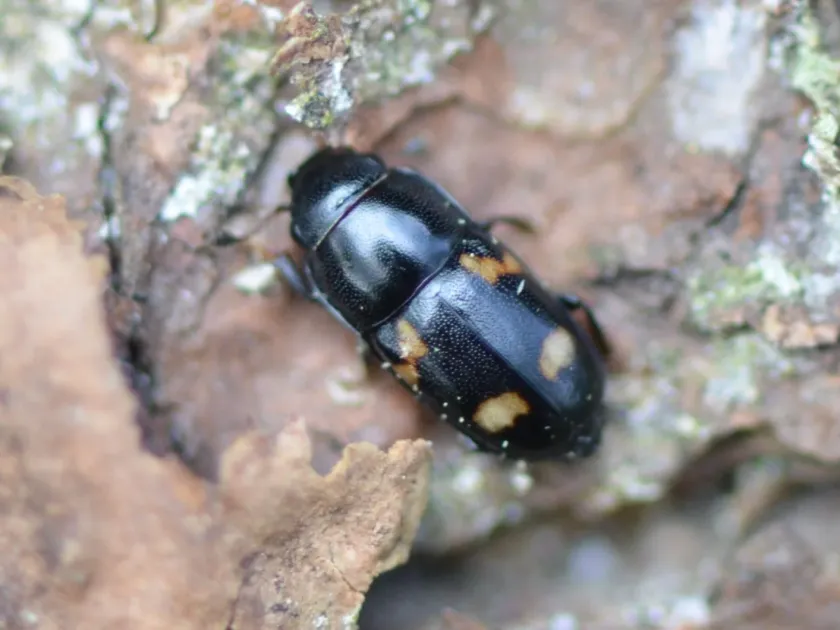
The Four-spotted sap beetle belongs to the family Nitidulidae, order Coleoptera. Adult beetles typically measure between 3 and 5 mm in length and have a distinct oval-shaped body.
The defining feature of this species is the presence of four orange or reddish spots on the elytra, arranged symmetrically, which provides a key diagnostic trait for identification.
The body surface of the adult is smooth and shiny, appearing black or dark brown, which helps them blend into their surroundings or hide within plant crevices.
Larvae are cream-colored with an elongated body and well-developed mouthparts, specialized for feeding on decaying plant material and fruit tissues.
Beetles are highly mobile and capable of sustained flight, allowing them to rapidly colonize fields where crops are maturing or have already been damaged.
What it damages
This beetle is a significant pest of corn, particularly during the milk and dough stages, as it feeds on kernels and facilitates the entry of fungal pathogens.
Beyond corn, the pest commonly targets various fruits and vegetables like strawberries, raspberries, and tomatoes, especially those already damaged by weather or other pests.
They are highly attracted to the scent of fermenting plant juices, which draws them to wounded or decaying produce, where they then cause further structural damage.
Feeding activity not only results in direct yield loss but also leads to increased contamination by molds and mycotoxins, reducing overall quality and marketability.
Heavy infestations can lead to substantial financial losses, particularly in regions with high humidity that promotes the rapid decay of plant tissues.
When it appears
Adults emerge from overwintering sites in early spring, becoming active as soon as temperatures rise sufficiently to initiate their search for food.
Populations typically peak in late summer, coinciding with the maturation of many crops and the availability of abundant, high-sugar food sources.
Depending on the climatic conditions of the region, the beetle may complete one or two generations per season, increasing the pest pressure on agricultural fields.
Weather conditions like prolonged rain increase the amount of fermenting organic matter in the field, which provides an ideal breeding environment for these beetles.
As autumn approaches, beetles seek out protected locations, such as leaf litter or soil, to undergo diapause and survive the upcoming winter months.
Signs of infestation
Visible signs of infestation include irregular feeding holes or pits on the surface of corn ears, often accompanied by visible mold growth and fermentation odors.
Inspecting the inner husks or damaged fruit often reveals the presence of adult beetles, which tend to congregate in these sheltered, moist environments.
Discoloration or decaying patches surrounding the feeding sites are common indicators that the pest has breached the skin or husk, exposing the plant to infections.
A sharp, acidic smell of fermentation emanating from the crop is a reliable indicator that sap beetles are actively colonizing the damaged produce.
- Feeding cavities in corn kernels.
- Adult beetles found inside fruit or husks.
- Fungal spores or mycelium around entry points.
- Frass or debris near the feeding damage on crops.
Control measures
The primary control strategy involves cultural practices, such as timely harvesting and the removal of crop residues that serve as overwintering sites for the beetles.
Reducing mechanical injury to fruits and stalks during cultivation is critical, as wounded plants serve as beacons that attract the beetles to the field.
Food-based traps utilizing fermenting baits can be used to monitor population levels and may help reduce the beetle count in small-scale garden settings.
Chemical control is generally reserved for severe outbreaks, focusing on insecticides applied before major crop damage occurs to prevent secondary fungal infections.
Integrated Pest Management (IPM) practices, including the control of primary fruit-damaging insects, are essential to preventing sap beetle colonization.
Taxonomy
- Latin name
- Glischrochilus quadrisignatus
- Order
- Coleoptera (beetles)
- Family
- Nitidulidae
- EPPO code
- GLICQU
Discussion
No discussions yet — be the first.