
Sap beetle
Glischrochilus
Description
How to identify
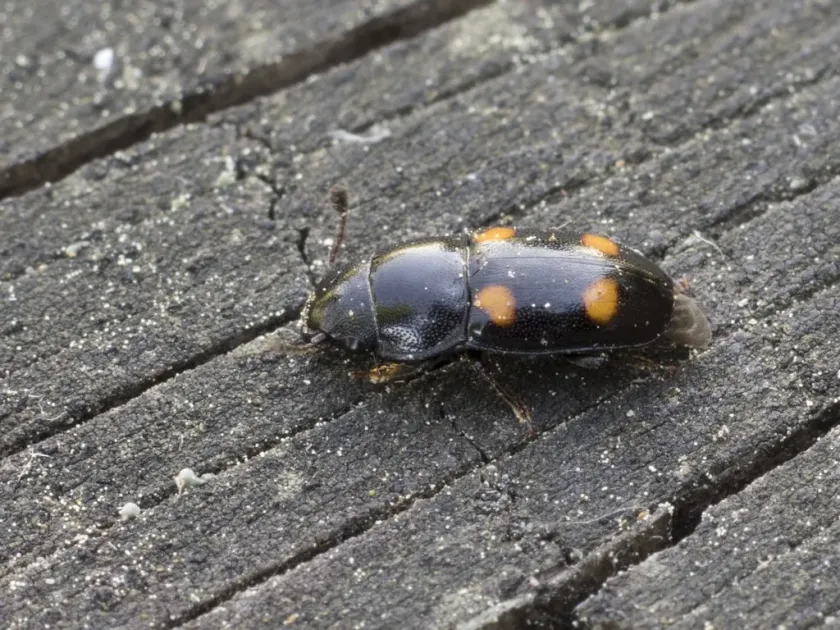
Sap beetles (family Nitidulidae, order Coleoptera) are small insects, typically measuring between 3 to 10 millimeters in length. They are easily identified by their glossy, often shiny elytra (wing covers), which are frequently marked with characteristic yellow or red spots.
The body of these beetles has a flattened, oval shape, allowing them to penetrate damaged fruit surfaces with ease. The antennae of this genus are clubbed, which serves as a critical diagnostic feature for accurate identification of the species.
The coloration of most species is primarily black or dark brown, providing camouflage in shaded areas or inside fruit casings. Sap beetles possess well-developed wings and are capable of active flight over significant distances in search of food sources.
The larvae have an elongated, flattened body, usually white or yellowish in color with a dark head. They lead a cryptic lifestyle, developing inside fermenting plant tissues, which makes their early detection quite difficult during inspections.
The insect life cycle includes four stages: egg, larva, pupa, and adult. Adults overwinter in leaf litter, soil, or under tree bark, becoming active as soon as temperatures rise steadily during the spring season.
What it damages
The primary damage is caused by both adults and larvae, which feed on the juices of ripe or overripe fruit. Sap beetles are considered secondary pests, as they most frequently attack crops already compromised by birds, wasps, hail, or fungal diseases.
Berries and orchard fruits are the most affected, including raspberries, strawberries, cherries, peaches, plums, and grapes. Beetles can also cause damage to corn ears, especially where husks are loose or damaged by other insects.
These insects are attracted by the scent of fermentation emitted by ripe or decaying fruit. In orchards, they often congregate in areas where fruit has started to spoil, spreading rapidly across the harvest under favorable climatic conditions.
Beyond direct mechanical damage to the tissue, sap beetles facilitate the spread of fungal and bacterial infections. They carry pathogen spores on their limbs and bodies, accelerating rot processes and rendering the harvest unsuitable for commercial sale.
In years with high humidity and warm weather, sap beetle infestations can escalate quickly, leading to substantial losses in product quality. Damaged fruit loses flavor and visual appeal, which is critical for the profitability of berry farming.
When it appears
The period of peak sap beetle activity coincides with the fruit ripening phase in gardens and orchards, usually occurring in the second half of summer. During this time, the strong aroma of maturing crops permeates the air, effectively attracting the beetles.
The first adults appear in spring when soil temperatures reach approximately 10-12 degrees Celsius. After overwintering, they initially feed on floral parts and tree sap before transitioning to maturing fruit crops at the height of the season.
Population density peaks during hot and humid spells when fruit fermentation occurs more rapidly. This environment creates ideal conditions for feeding and oviposition within the soft fruit tissue of the host plants.
Multiple generations can develop within a single season, depending on the local climatic zone. In warmer southern regions, the reproductive cycle is more intense, requiring closer monitoring of fruit health throughout the entire harvest period.
By autumn, as average daily temperatures decrease, beetles gradually move to overwintering sites. This movement is influenced by a combination of changing weather patterns and the availability of food sources in unharvested garden remnants.
Signs of infestation
The primary sign of sap beetle presence is the appearance of depressions or internal tunnels within the fruit flesh. Upon inspection, you may spot the insects themselves hiding in the damaged areas or buried within the fruit.
A characteristic symptom is premature fruit rot accompanied by a pungent, sour smell. Colonies of mold spores are often visible in these spots, as the insects act as vectors for various fungal pathogens.
In corn, the sign of infestation is damage to the tips of the kernels, where the beetles are often found congregating. The husk leaves surrounding the ears may appear chewed or deformed in areas where the adults have been feeding.
Visual inspection of fallen fruit beneath trees often reveals large clusters of sap beetles. If a fruit that looks healthy at first glance releases a fermented-smelling juice when squeezed, it may contain hidden larvae inside.
Utilizing pheromone traps or food-based lures allows for quick assessment of pest population levels in the garden. This monitoring helps in making informed decisions about protective measures before the harvest sustains massive damage.
Control measures
Effective management of sap beetles requires a comprehensive strategy rooted in cultural practices. First and foremost, timely harvesting is essential to avoid leaving ripe fruit on bushes or trees for extended periods.
It is necessary to meticulously remove fallen fruit and damaged crops from the garden, as these serve as potent lures for the beetles. Composting or deep burial of plant debris helps reduce the number of overwintering populations.
- Deploying traps with fermenting juice or beer for monitoring and mass trapping of adults.
- Proactive control of primary pests to prevent the initial fruit damage that attracts sap beetles.
- Protecting fruit from bird damage, which is a common precursor to beetle infestation.
- Implementing crop rotation and ensuring spatial isolation from known breeding hotspots.
Chemical control measures are only justified in extreme cases, as treatment windows often overlap with the harvest period, severely limiting pesticide usage. Biological controls and manual gathering of infested fruits are strongly recommended alternatives.
Maintaining garden hygiene by removing dead branches and damaged bark, where beetles may seek shelter, is crucial. Preventive actions are consistently more effective than attempting to manage a fully established population of these pests.
Taxonomy
- Latin name
- Glischrochilus
- Order
- Coleoptera (beetles)
- Family
- Nitidulidae
- EPPO code
- GLICSP
Discussion
No discussions yet — be the first.