
Southern flying squirrel
Glaucomys
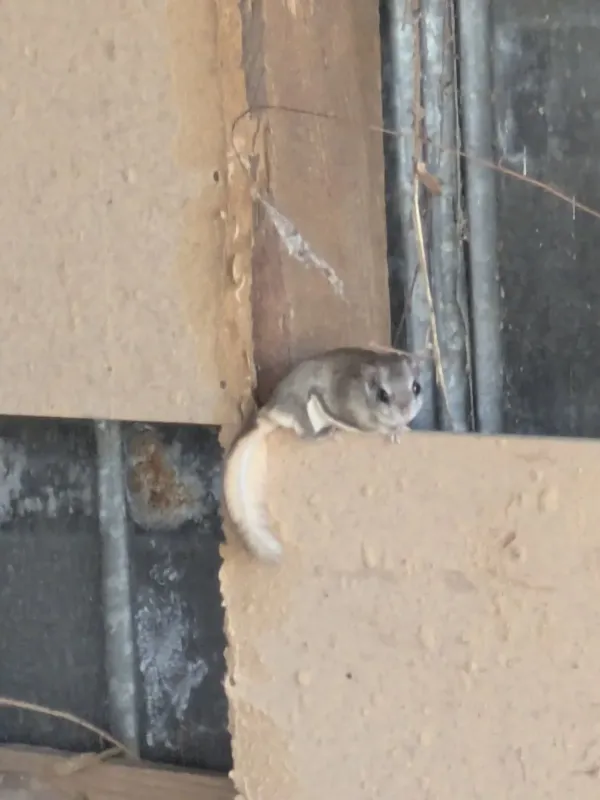
Description
How to identify
The Southern flying squirrel (Glaucomys volans) is a small rodent belonging to the Sciuridae family, primarily nocturnal in its habits.
It possesses a membrane called a patagium, which extends between its front and hind legs, enabling it to glide between trees with ease.
Their fur is generally soft and dense, with a brownish-gray dorsal side and a white ventral side, providing camouflage against the night sky.
These rodents are highly social and often congregate in nests constructed in tree cavities, which they sometimes claim from birds or other animals.
They have large, dark eyes which are vital for their nocturnal activity, allowing them to navigate and forage effectively in dim light.
What it damages
Southern flying squirrels can cause significant economic losses by damaging fruit crops, particularly apples, peaches, and various nut trees.
They are known to hollow out fruits to reach seeds, often consuming large portions of the harvest and rendering the remainder unsellable.
In addition to fruit, they consume the bark of young trees, which stresses the plant and creates entry points for diseases and insect infestations.
When nesting in artificial structures like birdhouses, they displace native cavity-nesting birds, which are essential for natural pest control.
They can also damage tender buds and terminal shoots of young saplings, causing stunted or irregular growth in ornamental and orchard trees.
When it appears
Flying squirrels remain active year-round as they do not hibernate, making them a persistent issue for garden owners across all seasons.
Peak feeding activity occurs from late summer through autumn when they are aggressively foraging and storing food for winter survival.
Winter months see them shifting to a diet of bark, buds, and conifer seeds, which can be particularly damaging to young nursery stock.
During the spring, the consumption of opening flower buds significantly impacts the fruit set for the upcoming summer season.
The breeding season, which often occurs twice a year, increases the local population size, leading to higher pressure on garden resources.
Signs of infestation
Visible signs of infestation include partially eaten fruits left on branches or found discarded at the base of trees.
Gnaw marks on the bark of twigs and branches, especially on the periphery of the tree, indicate regular foraging visits.
The accumulation of droppings or nesting materials, such as twigs and moss, near tree cavities is a strong indicator of an active nest.
Nocturnal high-pitched chirps or rustling sounds in the canopy are classic behavioral signs that flying squirrels are present in the area.
- Discarded fruit husks or skins with teeth marks.
- Damaged flower buds in early spring.
- Active nests located in tree hollows or bird boxes.
Control measures
Installing smooth metal bands around the trunks of trees can physically prevent flying squirrels from climbing into the canopy.
Removing potential nesting sites, such as dead trees with holes or clearing out unused birdhouses, helps discourage them from staying.
Keeping tree branches trimmed back from roofs and fences eliminates the jumping paths they use to enter your fruit-bearing trees.
Securing harvested produce in rodent-proof containers is essential to prevent attracting these pests to your property in the first place.
Encouraging natural predators such as owls to inhabit the area through the installation of nest boxes can naturally manage the population.
Taxonomy
- Latin name
- Glaucomys
- Order
- Rodents
- Family
- Sciuridae
- EPPO code
- GLMSSP
Discussion
No discussions yet — be the first.