
Bee fly
Geron gibbosus
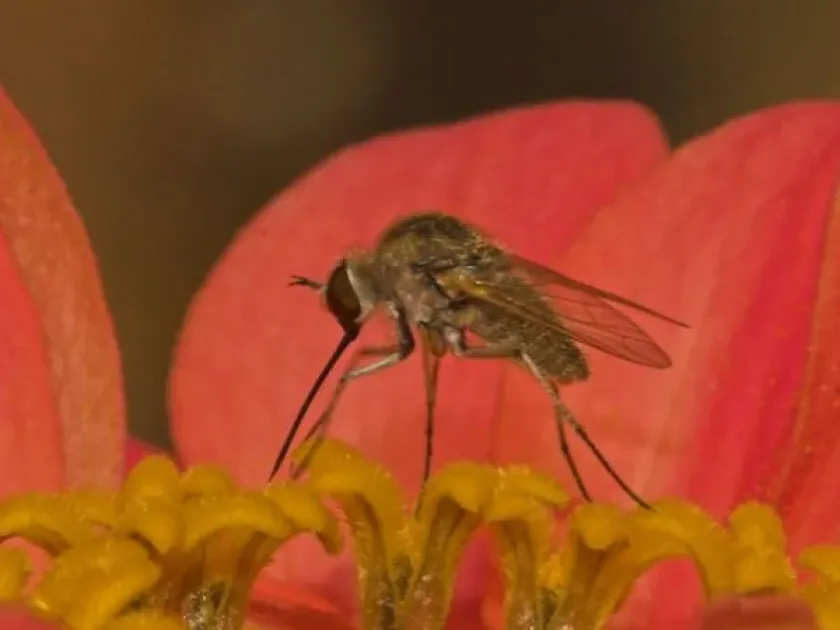
Description
How to identify
The bee fly Geron gibbosus belongs to the family Bombyliidae in the order Diptera. Adult flies are characterized by a distinct humpbacked appearance and dense hairs covering the body, making them resemble small bees or wasps.
They possess a long, rigid proboscis that is extended to feed on the nectar of various flowering plants. Their wings are often clear, sometimes showing a slight tint at the base, which aids in field identification.
The larvae of this species act as parasitoids. They are typically spindle-shaped and adapted for a cryptic lifestyle, developing either within the soil or inside the tissues of host insects.
The coloration of the adults ranges from grayish-brown to golden, a form of mimicry that allows them to blend in with pollinators and avoid predators while foraging.
The life cycle involves complete metamorphosis, including egg, larva, pupa, and adult stages. These flies are heat-loving and show the highest activity levels during warm, sunny days.
What it damages
Damage caused by Geron gibbosus is primarily indirect, as the larvae act as parasitoids, often targeting beneficial insects including pollinators and natural enemies of other crop pests.
In agricultural settings, the larval stage may interfere with the balance of local entomofauna by reducing the numbers of beneficial parasitoids that manage primary crop pests.
Direct damage to crops is minimal; however, the movement of larvae through soil or plant material during the search for hosts can occasionally result in localized tissue trauma.
A decline in pollination rates may occur if the bee fly population significantly impacts the local bee and pollinator communities near blooming fields.
The species is most commonly found in habitats where host populations are high, often associated with neglected fields or areas with low crop rotation diversity.
When it appears
Adult flight activity typically begins in late spring and persists throughout the summer, often continuing into early autumn depending on regional temperatures.
Peak activity is observed during the mid-summer months when blooming nectar sources are most abundant, supporting the energy needs of the foraging adults.
The biological cycle is synchronized with the development of their specific hosts, making their seasonal occurrence predictable based on local ecological conditions.
Overwintering occurs primarily in the larval or pupal stage, buried deep within the soil or protected within plant debris from the previous growing season.
Adverse weather conditions, such as prolonged cold snaps or excessive rainfall during the flight season, can significantly reduce the adult population and reproductive success.
Signs of infestation
Identifying the presence of Geron gibbosus is challenging due to the hidden nature of the immature stages, which are not easily detected by visual field inspections.
The presence of high numbers of adult flies foraging on flowers during sunny weather is the most reliable indicator of a breeding population in the vicinity.
A noticeable decline in other beneficial insect species, specifically those that provide pollination or biological control, may indicate parasitism by this fly.
Careful inspection of the soil surface or plant stalks may reveal small emergence holes left behind by pupae that have completed their metamorphosis into adults.
Monitoring the overall ecological balance on the farm is the most effective way to detect if a population outbreak of these parasitoid flies is occurring.
Control measures
Direct chemical control against Geron gibbosus is rarely recommended, as they do not typically cause significant economic damage compared to other primary pests.
Cultural practices, such as deep soil cultivation and regular field sanitation, are the most effective methods to disrupt their overwintering sites.
Maintaining diverse vegetation and field margins encourages a healthy population of predators that help keep bee fly populations in check naturally.
When applying pesticides, it is crucial to use selective products to prevent collateral damage to the beneficial insects that this species may otherwise affect.
- Implement deep autumn plowing to disturb pupation sites.
- Practice crop rotation to minimize host availability.
- Remove excess plant debris where larvae might overwinter.
- Use selective insecticide applications to protect natural enemies.
Taxonomy
- Latin name
- Geron gibbosus
- Order
- Diptera (flies)
- Family
- Bombyliidae
- EPPO code
- GERNGI
Discussion
No discussions yet — be the first.