
Geron bee fly
Geron
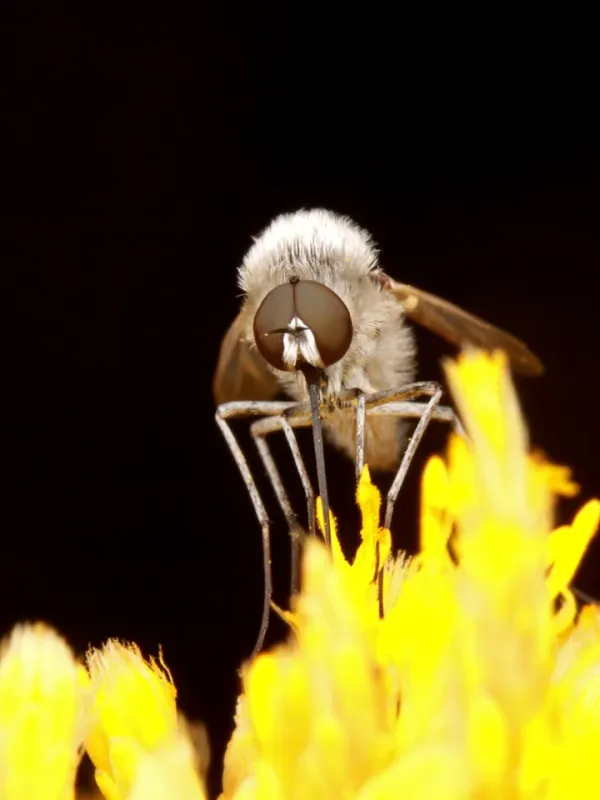
Description
How to identify
The genus Geron belongs to the Bombyliidae family, commonly known as bee flies, which are known for their distinct hovering flight patterns.
These insects are typically small to medium-sized and are covered in fine, dense hairs, giving them a superficial resemblance to bees or wasps.
A diagnostic feature of the Geron genus is the presence of a long, needle-like proboscis, which is specifically adapted for feeding on floral nectar.
The body is often characterized by a grayish or brownish velvety coating, providing effective camouflage among vegetation.
The larvae are morphologically distinct from adults, usually being subterranean and having evolved to live within the soil or as parasites of other insects.
What it damages
The agricultural impact of Geron bee flies is multifaceted, as they often oscillate between being beneficial entomophagous agents and minor pests.
Their larvae typically parasitize ground-dwelling insects, including certain soil-borne agricultural pests, thereby providing natural biological control.
However, adult flies can cause damage to floral tissues while feeding, which may interfere with successful pollination and seed set in sensitive crops.
In seed production fields, high concentrations of these flies might cause enough tissue damage to result in flower abortion or decreased quality.
While they are not generally considered primary pests, their presence can act as a vector for secondary infections by creating small puncture wounds in petals.
When it appears
The seasonal activity of Geron adults is tightly synchronized with the blooming period of host flowering plants, typically occurring in late spring and summer.
Developmental cycles are highly dependent on soil temperature and humidity, as larvae and pupae spend the majority of their lives in the soil.
Adult emergence typically happens during warm, sunny days, which are ideal for their high-speed hovering and nectar-foraging activities.
In many regions, these insects complete their lifecycle within a single season, though some species may show overlapping generations in temperate climates.
Crop management should focus on the peak flowering stage, as this is when the interaction between the flies and the plants is most intense.
Signs of infestation
The most common sign of a Geron presence is the auditory buzzing sound produced by their rapid wing beats while hovering near blossoms.
Close inspection of flower petals may reveal minute punctures or necrotic spots, which are indicative of nectar feeding by adult flies.
Given the parasitic nature of the larvae, their impact on host insects often goes unnoticed unless a detailed soil analysis is conducted.
Reduced crop vigor in specific patches might correlate with high levels of parasitic larvae, though this is rarely the only factor involved.
Mass sightings of these flies in an open field are a clear indicator of a thriving ecosystem and potential interaction with flowering crops.
Control measures
Strict control measures are rarely necessary for Geron species, as they provide valuable ecosystem services that outweigh their minor negative impact.
If management is required, mechanical disturbance of the soil, such as shallow tilling during the pupal phase, can effectively reduce local populations.
The use of broad-spectrum insecticides should be avoided to prevent accidental mortality of these beneficial flies and other important pollinators.
Maintaining diverse field borders can help divert the activity of adult flies away from critical crop phases toward more attractive non-crop nectar sources.
- Use IPM (Integrated Pest Management) to avoid over-reliance on chemical controls.
- Conduct soil cultivation before planting to disrupt the subterranean lifecycle.
- Monitor adult populations using colored traps to assess the need for action.
Taxonomy
- Latin name
- Geron
- Order
- Diptera (flies)
- Family
- Bombyliidae
- EPPO code
- GERNSP
Discussion
No discussions yet — be the first.