
Big-eyed bug
Geocoris pallens
Description
How to identify
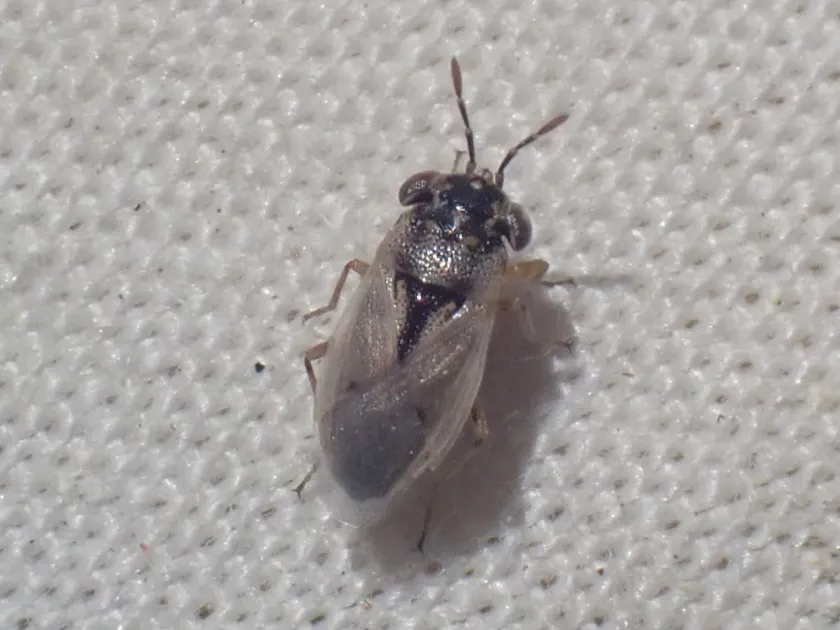
Geocoris pallens, commonly known as a type of big-eyed bug, belongs to the family Geocoridae within the order Hemiptera. These insects are easily recognized by their distinct, large, and bulging eyes positioned on the sides of their heads.
The adults typically measure between 3 to 4 millimeters in length. Their coloration ranges from pale yellow to gray, providing excellent camouflage against soil and dry vegetation, which is their preferred habitat.
Nymphs of this species resemble smaller, wingless versions of the adults. They are highly mobile and start feeding shortly after hatching, actively searching for suitable food sources on host plants.
These bugs are known for their fast, erratic movement when disturbed, often jumping or flying short distances to escape. This behavior makes manual monitoring in field conditions somewhat challenging.
The life cycle progresses through five nymphal instars before reaching the adult stage. The duration of this development is highly sensitive to ambient temperature and moisture levels in the field.
What it damages
While often considered beneficial due to their predatory habits, Geocoris pallens can become a pest when their population densities surge. They are known to cause damage to various crops, including cotton, soybeans, and legumes.
The damage occurs when the bugs pierce plant tissues to feed on cell sap. During this process, they inject salivary enzymes that cause localized necrosis and disrupt the physiological processes of the plant.
Seedlings and developing reproductive organs are the most vulnerable parts of the plant. Feeding on these areas can lead to fruit abortion, deformed seed pods, and a overall reduction in crop quality and yield.
Secondary infections by pathogens can occur at the feeding sites, exacerbating the damage and causing premature decay of flowers and young fruit. This makes the pest's presence particularly dangerous during the flowering stage.
Economic damage is typically associated with high-density outbreaks. Growers must distinguish between their predatory role and their potential to cause direct damage to seeds and fruit tissues.
When it appears
Activity usually begins in early spring as temperatures rise. The bugs emerge from their overwintering sites, which include leaf litter, crop residues, and grassy areas surrounding agricultural fields.
Summer months represent the peak of their seasonal activity. During this time, they undergo rapid reproduction, with multiple generations possible in warmer climates where the season is extended.
Population levels generally climb as the host plants enter the flowering and fruiting stages. This is the period when they are most likely to aggregate on crops and cause noticeable damage.
As autumn approaches and temperatures drop, the metabolic rate of the insects decreases significantly. They begin searching for protected overwintering sites to enter diapause.
Proper timing of field monitoring during these seasonal shifts is crucial for successful pest management and minimizing potential economic losses before damage occurs.
Signs of infestation
The primary indicators of infestation include minute chlorotic spots or necrotic lesions on leaves and stems. These are the direct physical results of the bugs' piercing-sucking mouthparts.
Visual observation of the bugs on the underside of leaves or within dense plant foliage is a common sign. Their presence is often correlated with wilting or stunted growth in specific clusters of the crop.
Deformed pods or shriveled seeds are strong indicators of significant feeding activity. If crops are sampled during the fruit-set phase, one may find empty egg shells attached to plant surfaces.
The presence of exuviae (cast-off skins) on leaves suggests that the nymph population is actively developing and growing within the field environment.
- Stippling or small spots on leaves caused by feeding.
- Flower or fruit drop due to structural damage.
- Presence of live nymphs or adults on flowering heads.
Control measures
Integrated Pest Management (IPM) is essential for controlling this species. Cultural practices such as cleaning up crop residues and controlling nearby weed reservoirs can significantly reduce population levels.
Promoting the presence of natural enemies is a key strategy, as various predatory insects and birds naturally keep big-eyed bug populations in check during most of the season.
Chemical control should be considered only when economic thresholds are met. Selective insecticides are preferred to maintain the balance of the local beneficial insect community.
Implementing a monitoring program using sweep nets or pheromone-based traps allows for early detection. Timely intervention can prevent the population from reaching levels that cause direct economic damage.
Maintaining strong crop health through balanced fertilization and irrigation helps plants withstand minor damage, ensuring that potential losses remain within acceptable limits.
Taxonomy
- Latin name
- Geocoris pallens
- Order
- Hemiptera (bugs, aphids, leafhoppers)
- Family
- Geocoridae
- EPPO code
- GEOCPA
Discussion
No discussions yet — be the first.