
Black-headed geocoris
Geocoris atricolor
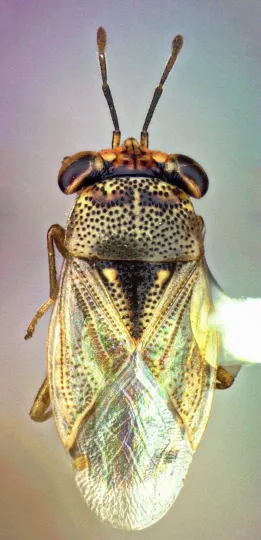
Description
How to identify
The black-headed geocoris (Geocoris atricolor) is a member of the order Hemiptera and the family Geocoridae. These are small bugs, typically ranging from 3 to 5 millimeters in length.
They are characterized by a wide head with large, bulging kidney-shaped eyes that protrude significantly. Their body color is generally dark, ranging from dark gray to solid black, giving the species its common name.
The nymphs resemble the adults but lack wings and are proportionally smaller. They undergo several molts through various developmental stages before reaching adulthood.
These insects prefer a secretive lifestyle, often hiding in the base of plants or within the upper layer of the soil, making detection difficult without careful scouting.
The species demonstrates high ecological plasticity, allowing it to thrive in diverse agricultural landscapes and adapt to changing climate conditions throughout the season.
What it damages
The black-headed geocoris feeds on a wide range of agricultural crops, including cereals, legumes, and several technical crops important for commercial farming.
Both adults and nymphs cause damage by utilizing their piercing-sucking mouthparts to extract vital sap from the plant tissues, weakening the overall structure.
As they feed, they inject saliva containing enzymes into the leaf, stem, or reproductive tissues, which disrupts the host plant's metabolic processes and nutrient transport.
Feeding typically occurs on young, succulent parts of the plant, leading to stunted growth, leaf deformation, and a reduction in the plant's overall photosynthetic capacity.
In cases of severe infestation, particularly during dry spells, the cumulative damage can lead to substantial yield losses and reduced quality of the harvested produce.
When it appears
The life cycle of the black-headed geocoris is heavily dependent on temperature and the availability of suitable host plants within the agricultural environment.
They typically overwinter as adults, finding shelter in plant debris, leaf litter, or in cracks and crevices in the soil along field margins and fence lines.
With the arrival of warmer spring temperatures, the bugs emerge from their overwintering sites to begin feeding on early weeds or newly emerging crop seedlings.
The female lays eggs directly into plant tissue or the soil; after hatching, the nymphs develop through several stages, usually completing the cycle in a few weeks.
Depending on the regional climate, there may be multiple generations per year, with population peaks often coinciding with the mid-summer growth stages of major crops.
Signs of infestation
The first signs of infestation are small chlorotic spots or stippling on the leaves, which are the direct result of the bug piercing the epidermis during feeding.
If the infestation level is high, one may observe general wilting, leaf curling, and the appearance of necrotic brown patches along the stems and petioles.
Attacks on the reproductive organs, such as flower buds or developing ears, often lead to abortion of buds, shriveled grains, or poor seed development at harvest time.
Scouting for the presence of this pest involves examining the lower leaf canopy and the soil surface around the plant base during the cooler parts of the day.
The presence of insect excrement on the foliage is another indicator, often encouraging the growth of secondary saprophytic fungi that further compromise plant health.
Control measures
Effective management begins with robust crop rotation, which disrupts the pest's life cycle by eliminating its preferred food sources for subsequent seasons.
Cultural practices, such as deep plowing and thorough weed management, are essential to remove overwintering sites and reduce the initial spring population.
Biological control options, including the encouragement of natural predators or the use of entomopathogenic fungi, can help keep populations below the economic threshold.
Chemical intervention should be considered a last resort, applied only when monitoring data confirms that the population has reached levels that threaten crop profitability.
- Application of selective systemic insecticides.
- Maintenance of field hygiene by clearing crop residues.
- Monitoring population trends using specialized insect traps.
Taxonomy
- Latin name
- Geocoris atricolor
- Order
- Hemiptera (bugs, aphids, leafhoppers)
- Family
- Geocoridae
- EPPO code
- GEOCAT
Discussion
No discussions yet — be the first.