
Big-eyed bug
Geocoris bullatus
Description
How to identify
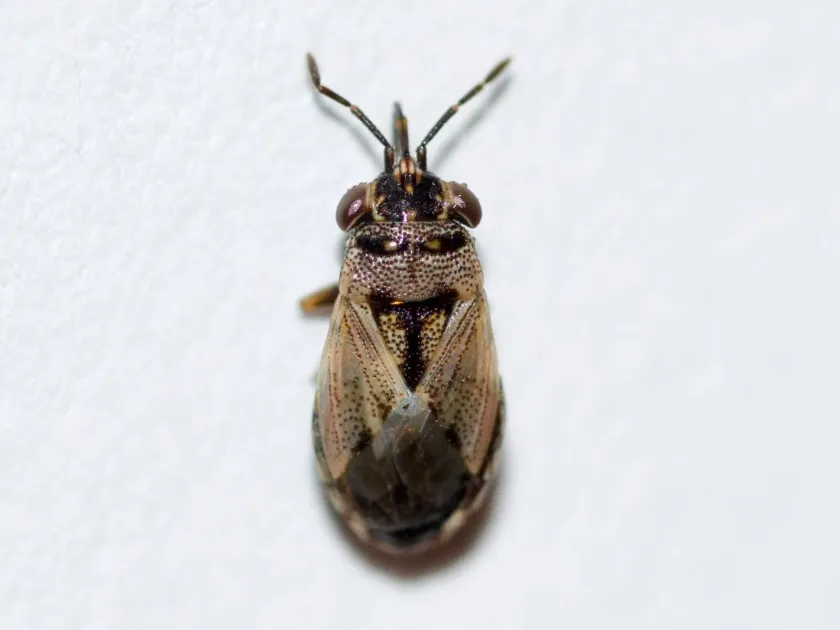
The big-eyed bug (Geocoris bullatus) belongs to the order Hemiptera and the family Geocoridae. These are small insects, typically measuring between 3 and 4 millimeters in length.
As the common name suggests, the most distinguishing feature of this species is its disproportionately large eyes, which protrude from the sides of the head.
The coloration of adults is usually dark brown to black, often with a slight metallic sheen, which helps them blend into soil and debris environments.
They possess an oval, robust body with wings that lie flat against the back, providing protection and agility while moving through dense vegetation.
Nymphs resemble smaller, wingless versions of the adults, often showing a lighter or yellowish-brown color before reaching their final instar.
What it damages
While many species in the genus Geocoris are known as beneficial predators, Geocoris bullatus can act as a pest when populations are dense, feeding on plant sap.
Primary target crops include sugar beets, potatoes, various legumes, and diverse vegetable crops during their early growth stages.
The bug uses its piercing-sucking mouthparts to penetrate plant tissues, extracting vital fluids that are necessary for the plant's metabolic processes.
Feeding damage is particularly critical during the seedling phase, where punctures can kill the growing tip or result in stunted, deformed growth of young plants.
Beyond physical damage, the feeding wounds create entry points for opportunistic pathogens, leading to secondary infections such as fungi or bacteria.
When it appears
Adults overwinter in protected areas, including soil debris, leaf litter, or dense weeds, emerging as temperatures begin to rise in the early spring.
Upon emergence, they actively colonize fields where host plants are present, typically coinciding with the germination and early vegetative development of crops.
Peak population levels usually occur in late spring and early summer, which corresponds with the egg-laying period and the development of the first generation of nymphs.
Depending on the climatic conditions and ambient temperature, the species can complete one or two generations within a single growing season.
As autumn approaches and temperatures drop, adults seek out winter refugia, making these areas key targets for integrated pest management efforts.
Signs of infestation
Damage is characterized by small necrotic spots or lesions on leaves, which occur where the insect's mouthparts have pierced the plant epidermis.
Heavy infestations may result in leaf curling, yellowing, or significant growth delays, often giving the seedling a sickly or wilted appearance despite adequate moisture.
Finding the bugs usually requires close inspection of the underside of leaves, particularly during the cooler parts of the day when they are most active.
Wilting without any visible root damage or stem boring is often a strong indicator of sucking pest activity, including the big-eyed bug.
In severely affected areas, plant leaves may show symptoms of premature senescence or death, reducing the overall photosynthetic capacity of the crop.
Control measures
Effective management begins with strict field sanitation, including the removal of crop residues and the control of weeds that serve as overwintering sites.
Crop rotation practices can significantly disrupt the bug's life cycle by eliminating the specific host plants they rely on for early spring nutrition.
If population counts exceed economic thresholds, growers should utilize registered insecticides, ensuring proper timing to catch the most susceptible stages.
Application of insecticides should be targeted and ideally conducted in early mornings or evenings when the bugs are most active on the foliage.
Integrated pest management also favors the conservation of natural enemies, which can help regulate population numbers without chemical intervention.
Taxonomy
- Latin name
- Geocoris bullatus
- Order
- Hemiptera (bugs, aphids, leafhoppers)
- Family
- Geocoridae
- EPPO code
- GEOCBU
Discussion
No discussions yet — be the first.