
Garella ruficirra
Garella ruficirra
Description
How to identify
Garella ruficirra is a moth species belonging to the family Nolidae within the order Lepidoptera. It is a nocturnal insect, primarily found in deciduous forest areas and temperate regions.
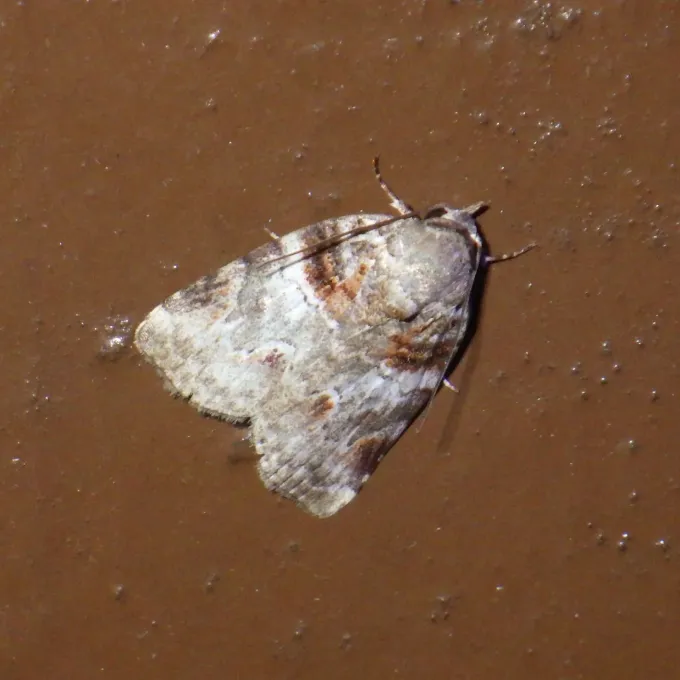
The adult moth is characterized by its distinct forewing pattern, which features brownish-grey hues accompanied by reddish-colored fringes, the primary trait behind its scientific name.
The larvae, or caterpillars, are known for their effective camouflage, blending perfectly with the foliage of their host plants, which makes them difficult to detect during early infestation stages.
The species undergoes a complete metamorphosis cycle: egg, larva, pupa, and adult. Overwintering occurs at the pupal stage, protected by resilient cocoons attached to tree bark.
Accurate species classification often involves anatomical analysis of genitalia, as this moth shares morphological similarities with other species within the Chloephorinae subfamily.
What it damages
The primary hosts for Garella ruficirra are trees belonging to the Tiliaceae family, specifically the genus Tilia (lime or linden trees).
While focused on lime trees, the larvae may occasionally infest neighboring broadleaf tree species if their primary food source is depleted or in cases of extreme population density.
The feeding activity of the larvae directly impacts the leaf surface, starting from tender new leaves and progressing to older foliage, leading to skeletonized leaves.
Significant infestations can jeopardize the health of nursery saplings and mature trees alike, reducing their photosynthetic efficiency and overall vigor.
Defoliation caused by high populations weakens the host plant, making it significantly more susceptible to secondary stressors like drought or fungal pathogens.
When it appears
Adult moths typically emerge in late spring, corresponding with the rising temperatures and the onset of the foliage growth period.
The larval stage, which is the most destructive phase, occurs during the first half of the summer, aligning with the peak growth period of the tree's leaves.
Depending on regional climatic conditions, the moth can produce one or two generations per year, escalating the risk to greenery if conditions are optimal.
Pupation generally takes place towards the end of summer, after which the insects enter a period of dormancy, remaining in their cocoons throughout the autumn and winter.
Monitoring for the start of the flight period using pheromone traps is essential for planning timely interventions before the massive hatch of larvae.
Signs of infestation
The initial signs of infestation include small, irregular holes in the leaf tissue, created by young larvae as they begin feeding on the leaf surface.
As the caterpillars grow, their feeding pattern becomes more aggressive, leaving behind only the larger veins, creating a tattered and unhealthy appearance of the canopy.
The presence of frass (caterpillar excrement) on the upper surface of lower leaves or on the ground beneath the canopy is a clear indicator of active feeding.
Severe infestations often result in the premature browning and shedding of leaves, which can be mistaken for late-season drought stress by casual observers.
In some cases, larvae may spin thin silken webs to fold or roll leaves, providing them with a secure shelter while they feed, which is a visible symptom of infestation.
Control measures
Chemical control involving systemic insecticides is most effective when applied at the onset of larval activity to prevent significant canopy damage.
Biological control using Bacillus thuringiensis sprays provides an environmentally friendly alternative, targeting the larvae while preserving beneficial insect populations.
Cultural practices, such as removing and destroying pupal cocoons from tree trunks during the dormant season, can help manage populations locally.
Encouraging the presence of natural predators, such as insectivorous birds and parasitic wasps, is a sustainable long-term strategy for population suppression.
Regular visual inspections combined with light trap monitoring allow for informed decision-making regarding the necessity and timing of pest management efforts.
Taxonomy
- Latin name
- Garella ruficirra
- Order
- Lepidoptera (butterflies)
- Family
- Nolidae
- EPPO code
- CHCMRU
Discussion
No discussions yet — be the first.