
Hazelnut moth
Garella musculana
Description
How to identify
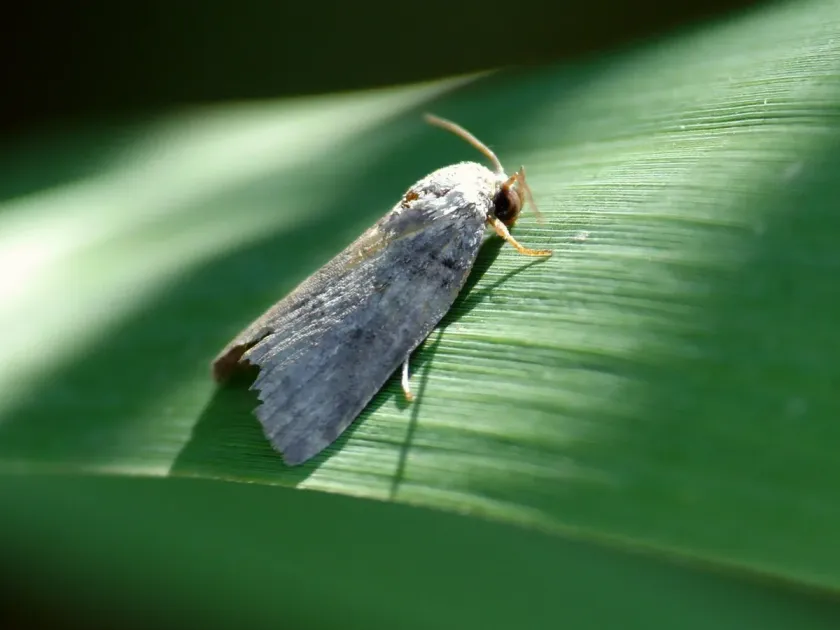
The hazelnut moth (Garella musculana, also documented in some regions as Characoma ruficirra) is a moth species belonging to the Noctuidae family. The adult moth is relatively small, with a wingspan of approximately 18–22 mm, featuring cryptic coloration that provides camouflage against the bark of host trees.
The larvae, or caterpillars, of this species are the primary stage causing damage to vegetation. They typically exhibit a yellowish-green color with longitudinal markings, which helps them blend into the foliage of hazelnut trees. They undergo multiple larval instars, growing significantly as they feed throughout the season.
The biological cycle consists of complete metamorphosis: egg, larva, pupa, and imago. The number of generations per year often depends on local climatic conditions, but in favorable areas, the moth can produce multiple broods, creating a persistent threat to nut production throughout the summer.
Pupation typically occurs in sturdy cocoons hidden in bark crevices, dry plant debris, or the topsoil under the canopy. This overwintering strategy makes the pest highly resilient to varying winter temperatures, allowing adult moths to emerge as soon as favorable weather conditions return in the spring.
Effective identification relies on monitoring adult flights. Agronomists use pheromone traps to capture male moths, allowing for an accurate determination of the pest's flight peak. This data is essential for timing insecticide applications to the most susceptible life stage of the insect.
What it damages
The hazelnut moth primarily affects trees of the Juglandaceae family, with hazelnut (Corylus avellana) being a main host. The larvae feed on both vegetative growth and reproductive parts, causing economic losses in nut orchards.
Signs of infestation
The most common sign of infestation is the presence of webbed nests on young leaves. Inside these nests, the larvae skeletonize the leaf tissue, leaving only the veins behind, which leads to leaf curling, drying, and eventual premature drop of the foliage.
When feeding on fruits, the larvae bore into the husk (involucre) of the developing hazelnut. This damage often ruins the outer shell, preventing the kernel from maturing properly. In severe cases, the affected nuts rot or fall off the branches before they can be harvested.
Significant infestations lead to visible decline in tree vigor. The loss of leaf surface reduces the plant's photosynthetic capacity, which in turn stresses the tree and can result in lower fruit production in subsequent growing seasons if the infestation is not brought under control.
Early diagnosis involves inspecting the canopy for small silken nests and larval excrement. Because the larvae are hidden within these webbed clusters, they are often overlooked until the damage to the leaves or nuts becomes significant, emphasizing the need for regular scouting.
Control measures
Cultural control measures are the first line of defense. This includes the removal and destruction of fallen leaves and pruned branches, which reduces the number of overwintering pupae in the orchard. Keeping the orchard floor clean minimizes the pest's habitat.
Biological control methods are highly effective and environmentally friendly. Releasing egg parasites like Trichogramma wasps during the moth's peak egg-laying period can drastically reduce the number of emerging larvae, often eliminating the need for intensive chemical intervention.
Chemical control is required when population levels exceed the economic threshold. Applying systemic insecticides during the peak of larval hatching is recommended. Because the larvae are often protected by webs or inside the fruit husk, systemic chemicals are generally more effective than contact ones.
For chemical management, it is crucial to maintain a rotation of different insecticide modes of action to prevent the development of resistance. Application must be timed according to local monitoring data to ensure the treatment coincides with the vulnerable stage of the pest's development.
- Use pheromone traps for flight monitoring.
- Maintain orchard sanitation to remove overwintering sites.
- Release Trichogramma wasps as a biological control agent.
- Apply systemic insecticides during critical development stages.
- Ensure compliance with harvest safety intervals for all chemical treatments.
Taxonomy
- Latin name
- Garella musculana
- Order
- Lepidoptera (butterflies)
- Family
- Nolidae
- EPPO code
- ERSHMU
Discussion
No discussions yet — be the first.