
Thekla's lark
Galerida theklae
Description
How to identify
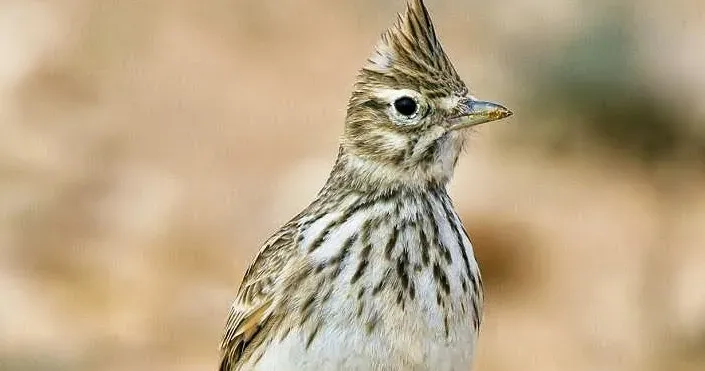
Thekla's lark (Galerida theklae) is a small passerine bird in the lark family (Alaudidae). It is morphologically similar to the crested lark, but can be distinguished by its shorter, more robust bill and specific plumage patterns adapted for arid environments.
The bird features a small crest on its head, which is often raised when the bird is alert or active. Its coloration ranges from greyish-brown to reddish-brown, decorated with darker streaks that provide excellent camouflage against rocky or bare soil.
Adult specimens measure approximately 15 to 17 centimeters in length. The wings are broad, enabling quick, agile flights over open fields, which is where this species spends the majority of its active life.
It is primarily a sedentary species, preferring open habitats, dry hillsides, and rocky plateaus, frequently occurring in agricultural areas that border these natural landscapes.
Nesting behavior is strictly terrestrial, with nests built directly on the ground. This location choice often places the birds within or adjacent to fields, providing easy access to food resources during the sowing and germination phases of crops.
What it damages
The primary damage caused by Thekla's lark occurs during the sowing season when birds consume seeds directly from the soil. They are particularly adept at spotting and digging up newly planted grain and vegetable seeds.
As crops begin to emerge, the tender seedlings become a secondary food source. The birds nip off the green sprouts, often resulting in significant thinning of crop stands and requiring farmers to re-sow the affected patches.
Damage is most severe in fields located near fallow, stony, or wild areas where the lark population finds refuge. In these proximity zones, bird density can be high enough to decimate localized patches of the crop.
Beyond seed consumption, the birds may cause indirect damage by disturbing the soil structure around the seeds, which can lead to desiccation of the soil and poor germination of the remaining seeds.
The resulting gaps in the crop rows reduce the overall canopy cover, creating opportunities for weed colonization and further complicating field management throughout the growing season.
Signs of infestation
A primary indicator of the lark's presence is the occurrence of small, shallow holes in the soil along the rows where seeds were placed. These pits are tell-tale signs of the birds foraging for the sown seeds.
Visual confirmation of damage often includes patches of missing seedlings, which leave visible gaps in the rows shortly after germination. You may find uprooted sprouts lying near the row lines.
Auditory signs include the bird's vocalizations or the sound of wings as the birds take flight when startled by agricultural machinery or human presence in the field.
The presence of droppings and molted feathers along field edges serves as further evidence of birds using the area as a resting or staging ground before entering the field to feed.
If bird activity is persistent, regular morning inspections will reveal groups of birds actively foraging, often moving in small, alert flocks that scatter upon close approach.
Control measures
Effective management requires the deployment of acoustic deterrents, such as bio-acoustic devices that broadcast predator calls or distress signals specifically calibrated to discourage lark species.
Agrotechnical practices, such as increasing the depth of seed placement (where feasible for the crop), make it more difficult for birds to reach the seeds without significantly impacting germination rates.
Applying specialized seed treatments, such as repellent-based coatings, can render the seeds unpalatable to birds, encouraging them to seek alternative food sources outside the production area.
Visual deterrents, including hawk kites or motion-activated reflective devices, can provide temporary protection during the most vulnerable post-sowing periods, though they should be moved periodically to prevent habituation.
Implementing landscape management, such as clearing scrub or tall vegetation from field borders, removes potential nesting or cover sites, thereby reducing the attractiveness of the farmland to the resident bird population.
Taxonomy
- Latin name
- Galerida theklae
- Family
- Alaudidae
- EPPO code
- GALRTH
Discussion
No discussions yet — be the first.