
Horned Lark
Eremophila alpestris
Description
How to identify
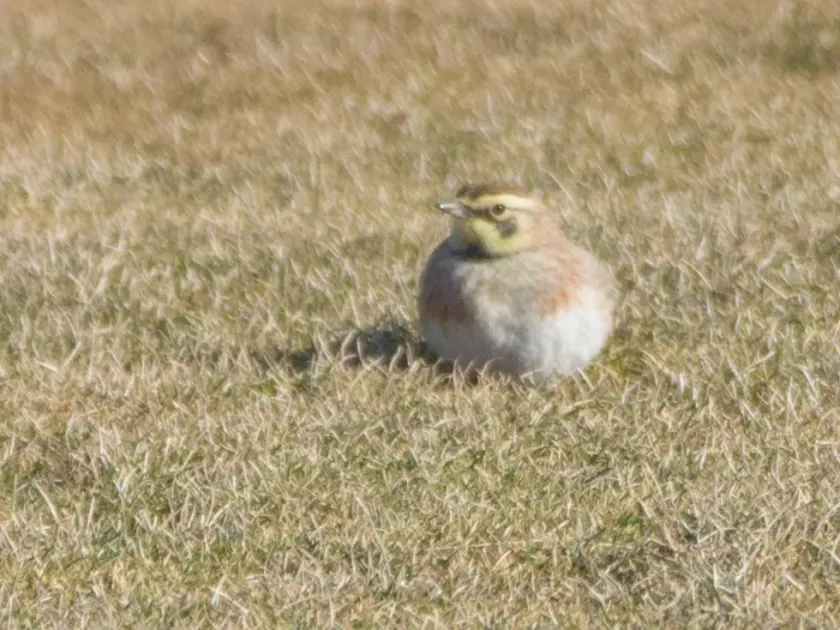
The Horned Lark (Eremophila alpestris) is a small passerine bird belonging to the lark family (Alaudidae). It is easily recognized by the small, black, feather tufts on its head, which resemble horns.
These birds possess a cryptic coloration, featuring brown, grey, and sandy tones that match open ground environments. The face is marked by a distinctive black mask and yellow or white throat, depending on the subspecies.
Typically measuring about 15–17 cm in length, they are terrestrial birds that prefer running along the ground rather than flying. Their behavior is cautious, and they often blend perfectly into bare soil or short-grass habitats.
While Horned Larks are beneficial in some ecosystems due to their consumption of insect pests, they become an agricultural nuisance when their natural food sources are scarce during migration periods.
In agro-environments, these birds congregate in flocks that can grow significantly in size, concentrating on agricultural fields where food is easily accessible during the critical germination phase of various crops.
What it damages
The primary damage caused by Horned Larks occurs during the seedling stage of grain crops such as wheat, barley, and oats. They specialize in digging up and consuming newly germinated or swelling seeds.
By extracting seeds from the soil, the birds cause severe thinning of the crop density. This reduction in stand establishment leads to patchy fields, forcing farmers to perform costly reseeding operations to ensure a profitable harvest.
In addition to cereals, Horned Larks can damage emerging vegetable sprouts. Their sharp beaks allow them to pull young plants directly out of the ground, leading to total loss of seedlings in affected areas.
Economic damage is exacerbated when adverse weather conditions delay plant growth, extending the window of vulnerability. Once the seedlings develop beyond the initial sprout stage, the birds lose interest as the seeds become inaccessible.
Field margins and areas near field entrances are often the most targeted, as these locations provide birds with better visibility and easier access for quick escapes when they feel threatened.
When it appears
The Horned Lark is most problematic during the early spring planting season. As flocks migrate north to their breeding grounds, they make stopovers in agricultural fields to feed on available seeds.
A secondary period of concern is during the autumn planting of winter grains. Migrating flocks feeding before winter are drawn to the fields by the availability of seeds near the surface.
The duration of the threat usually lasts a few weeks, depending on the speed of crop emergence. Once the plants have established a solid root system, the risk of significant economic damage decreases drastically.
Because their migration timing is somewhat consistent, farmers in prone areas can predict the periods of highest risk and prepare preventive measures ahead of the planting dates.
During the peak of the growing season, Horned Larks switch their diet to insects, weed seeds, and other natural food items, which are much more abundant and easily found in non-cropped areas.
Signs of infestation
A key indicator of Horned Lark presence is the appearance of small, conical holes in the soil surface. These holes are created by the bird's beak as it probes for germinating seeds.
Patches of missing seedlings are a clear sign of bird activity. Unlike disease or insect damage, the plants are usually removed entirely, and the soil around the site shows signs of disturbance.
Bird droppings, small tracks, and occasionally loose feathers near the edges of fields are diagnostic evidence of a flock's recent foraging activity in the area.
Since these birds are diurnal, the most effective way to detect them is through early morning field scouting, when they are actively feeding before the daily heat or human activity scares them away.
- Small probe holes in the soil rows.
- Presence of bird droppings on the field surface.
- Gaps in seedling rows.
- Disturbed soil around germinating seeds.
Control measures
The most effective preventive measure is ensuring deep and precise seed placement. Properly covered seeds are significantly harder for Horned Larks to locate and extract.
Bioacoustic bird deterrents, which broadcast predator distress calls or alarm signals, can be highly effective in keeping flocks away from vulnerable, newly planted fields.
Visual deterrents, such as scarecrows, reflective tape, or motion-activated devices, provide temporary relief and can be useful in protecting small-scale vegetable or test plots.
Some growers utilize chemical seed coatings that act as taste repellents. These coatings make the seeds unpalatable to birds, though their use must comply with local environmental and agricultural regulations.
Providing alternative feeding sites on the perimeter of the field using grain waste can distract the flock and encourage them to move away from the main crop, significantly reducing overall impact.
Taxonomy
- Latin name
- Eremophila alpestris
- Family
- Alaudidae
- EPPO code
- EREOAL
Discussion
No discussions yet — be the first.