
Eurasian skylark
Alauda
Description
How to identify
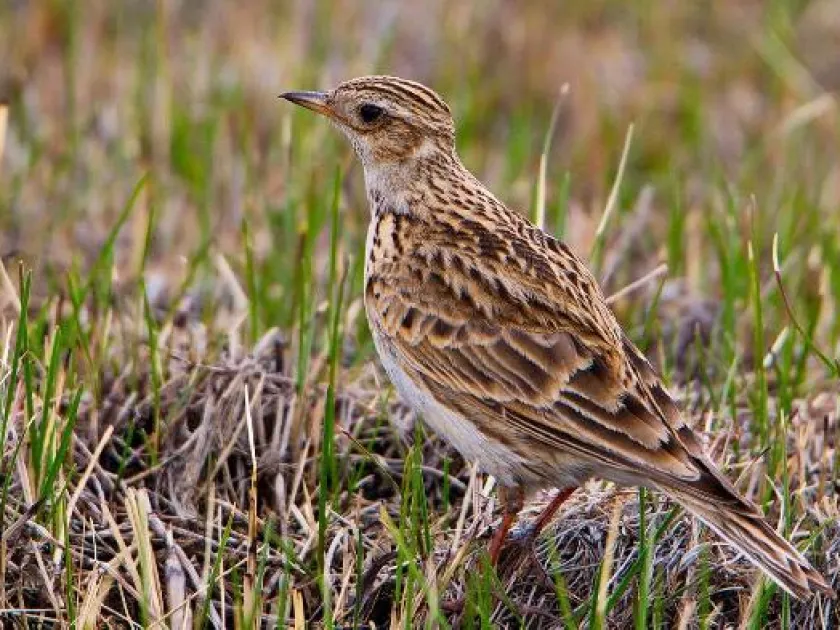
The Eurasian skylark (Alauda arvensis) is a small passerine bird from the Alaudidae family. It is known for its brownish, streaked plumage, which provides excellent camouflage against the ground and stubble.
The bird can be identified by a small crest on its head, which is often raised when it is alert. It measures about 18 centimeters in length and weighs approximately 35–45 grams.
Skylarks are primarily ground-dwelling birds that nest in small depressions in the soil within open fields. They are well-known for their melodic song during high, vertical flights.
They inhabit open agricultural landscapes, including cereal fields, fallow land, and pastures. They prefer areas with sparse vegetation where they can forage and navigate easily.
While they are considered beneficial due to their consumption of harmful insects, their behavior during the early growth stages of crops can be problematic for farmers.
What it damages
Agricultural damage occurs primarily during the early spring, coinciding with the sowing season and the emergence of crop seedlings. Birds actively target newly sown seeds.
Early spring cereals, such as wheat and barley, are the most frequent targets. The birds often peck out the swollen seeds directly from the soil furrows before germination.
In addition to cereals, skylarks may damage technical crops like sunflowers and rapeseed by pecking at seeds or tender cotyledons, leading to reduced plant density.
The severity of the damage increases when seeds are not buried deep enough, as the birds easily locate and extract them, leaving gaps in the field rows.
This feeding behavior results in uneven stands of crops, which necessitates replanting in some areas and increases the competitive pressure from weeds.
When it appears
The period of high risk for crop damage is limited to the early spring, specifically during the sowing period in March and April, before natural insect populations have peaked.
During this time, birds are under high nutritional demand due to the onset of the breeding season, causing them to exploit readily available calorie sources like crop seeds.
As the weather warms and the availability of their primary diet (insects and larvae) increases, skylarks shift their focus away from crops.
Therefore, the window of vulnerability for agricultural fields is short, lasting from the initial planting stage until the seedlings reach the 2-3 leaf stage.
After the breeding cycle and fledgling period, skylarks engage in nomadic behavior and no longer pose a threat to mature agricultural crops in the fields.
Signs of infestation
The main sign of skylark activity is the appearance of bare patches or thin spots in the rows, caused by birds pecking out seeds shortly after planting.
Footprints in the soil and the presence of bird droppings near the damaged areas are clear indicators of bird activity rather than subterranean insect pests.
Inspecting the seedlings often reveals missing cotyledons or damaged stems, which can sometimes be mistaken for the work of cutworms or other soil insects.
Observing the field in the early morning can help identify the species, as flocks of skylarks may be seen actively foraging in the affected areas.
These birds often display alert behavior, including quick movements and distinctive alarm calls, when they are disturbed while feeding on the field.
Control measures
The primary control strategy involves good agronomic practices, specifically ensuring proper and adequate depth when sowing seeds to keep them inaccessible to birds.
Visual deterrents, such as reflective tape, scarecrows, or decoys representing predatory birds, can be effective in reducing bird concentration on high-risk fields.
Acoustic deterrent systems that broadcast predator sounds or bird distress calls are useful on large fields during the critical sowing window.
Compacting the soil by rolling the field after sowing helps seal the furrows, making it more difficult for birds to access the seeds.
Chemical control against skylarks is not recommended due to ecological considerations, as these birds provide significant benefits by controlling insect pests throughout the summer.
Taxonomy
- Latin name
- Alauda
- Family
- Alaudidae
- EPPO code
- ALADSP
Discussion
No discussions yet — be the first.