
Palm squirrel
Funambulus
Description
How to identify
The palm squirrel (genus Funambulus) belongs to the order Rodentia and the family Sciuridae, commonly found in South Asian agricultural ecosystems.
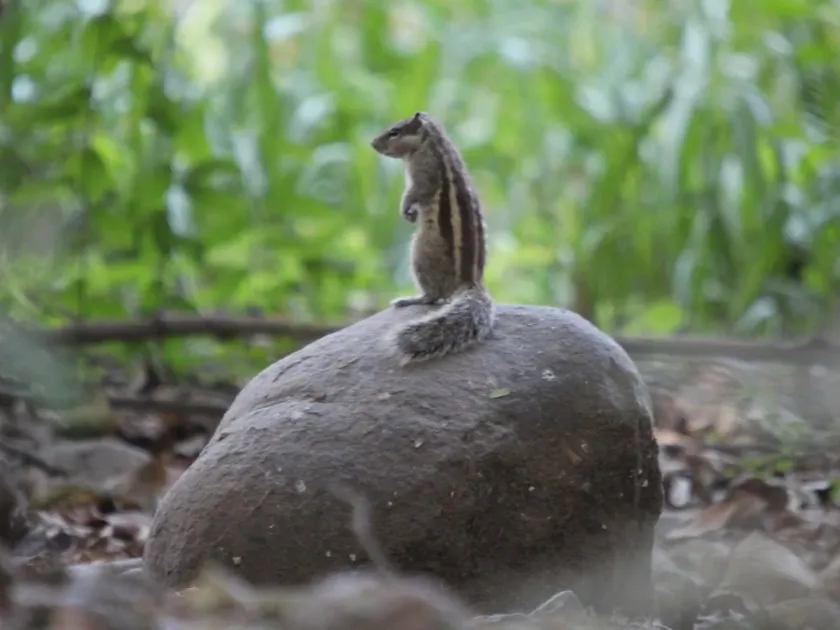
It is easily recognized by the three distinct longitudinal light stripes running along its back, which distinguish it from other local squirrel species.
These rodents are small, typically measuring about 15 cm in body length, with a bushy tail that acts as a vital organ for balance during rapid movement.
Their fur color is generally grey-brown, providing excellent camouflage against the bark of trees and dense vegetation within plantation environments.
They are highly active during daylight hours, displaying agile climbing behavior as they forage across orchards and palm trees for food sources.
What it damages
Palm squirrels primarily damage coconut palms by gnawing on young nuts and flower buds, significantly reducing total yield and harvesting quality.
Beyond coconut palms, they pose a serious threat to mangoes, cocoa, cashews, and various other fruit-bearing trees grown in tropical climates.
By chewing on the bark of younger trees, they disrupt nutrient flow, causing the plant to weaken and become susceptible to secondary infections or rot.
Their habit of feeding on seeds and immature fruits directly impacts the economic viability of plantations during the peak development stage.
They also cause indirect damage by interfering with irrigation systems, specifically by chewing through plastic tubing and hoses used for water delivery.
When it appears
The reproduction cycle of the palm squirrel is fast-paced, with females capable of producing several litters throughout the year in favorable conditions.
Maximum damage usually occurs during the fruit ripening stage, as the animals congregate on plantations to take advantage of the abundant food supply.
During the dry season, when natural food sources are scarce in wild habitats, the pressure on cultivated crops increases substantially as they forage.
Population spikes are often observed at the onset of the monsoon season, which provides lush conditions for the survival of the squirrel's offspring.
The animals remain active year-round, meaning they require consistent monitoring and proactive defense measures to prevent continuous crop loss.
Signs of infestation
Visible feeding damage on the surface of fruits, characterized by fine incisor marks and irregular holes, is a primary indicator of their presence.
Accumulated shell debris and discarded plant matter under the canopy of trees are clear signs that squirrels are using the area as a feeding site.
Damage to the inflorescences or flower stalks, which leads to premature wilting and fruit drop, is a critical warning sign for plantation owners.
High-pitched vocalizations and the sound of rustling branches during the day can help agronomists locate the presence of squirrel colonies.
- Fresh gnaw marks on the trunks of younger trees.
- Premature falling of green or partially developed fruits.
- Visible nests constructed from dry leaves and twigs in the canopy.
Control measures
Installing smooth metal bands or collars around the tree trunks prevents the squirrels from climbing up to reach the fruit-bearing canopy.
Implementing good sanitation practices, such as clearing fallen fruit and managing weeds, helps to decrease the attractiveness of the site to rodents.
Promoting the presence of natural predators, including raptors and snakes, serves as an effective ecological tool to keep squirrel populations in check.
Ultrasonic deterrent devices placed in high-risk zones can provide a non-toxic method to repel squirrels from vulnerable parts of the plantation.
Rodenticides should be utilized only as a final resort and must be handled via bait stations to ensure the safety of other non-target wildlife species.
Taxonomy
- Latin name
- Funambulus
- Order
- Rodents
- Family
- Sciuridae
- EPPO code
- FUNASP
Discussion
No discussions yet — be the first.