
Tomis earwig
Forficula tomis
Description
How to identify
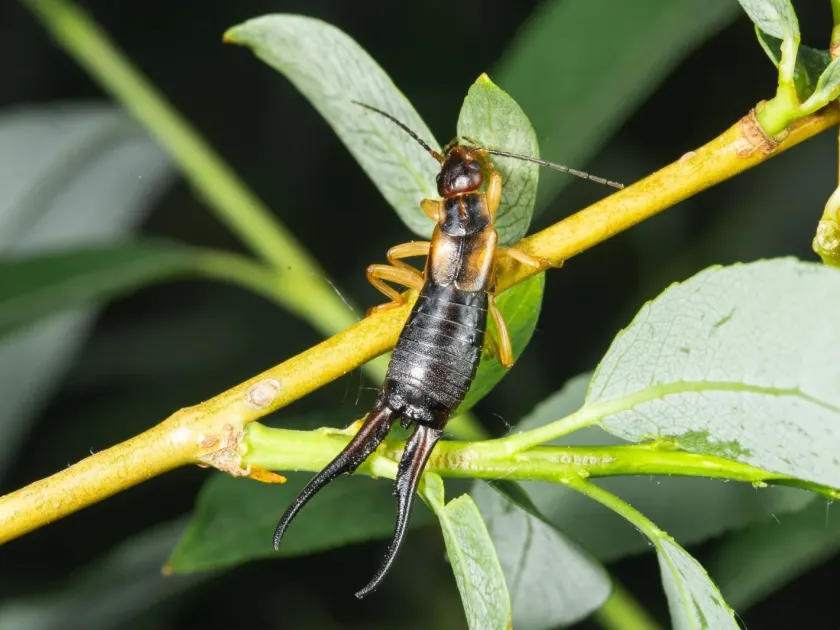
The Tomis earwig (Forficula tomis) is a member of the order Dermaptera and the Forficulidae family. These insects are characterized by their elongated, slightly flattened bodies, which are typically brown or dark mahogany in color.
A defining feature of the adults is the presence of pincer-like cerci located at the end of the abdomen. These structures are more pronounced and curved in males compared to females. They have thread-like antennae and reach a body length of 12 to 16 millimeters.
Their lifecycle is characterized by incomplete metamorphosis. Nymphs, which hatch from eggs, resemble smaller versions of adults but lack wings. They undergo several developmental stages (instars), gradually increasing in size with each molt.
Earwigs are primarily nocturnal, spending their daylight hours hidden in cool, damp, and dark environments. Common shelters include soil crevices, decaying organic matter, loose tree bark, and dense vegetation, which provide necessary humidity.
The population size is heavily dependent on environmental moisture levels. Reproduction typically occurs once a year, with the female exhibiting maternal care by guarding the clutch of eggs in soil burrows until they successfully hatch.
What it damages
As polyphagous insects, Tomis earwigs feed on a wide variety of plant and organic matter, making them a persistent threat to diverse agricultural and garden crops. They are particularly attracted to tender plant tissues.
During the harvest season, earwigs pose a significant risk to ripening fruits and berries. They chew holes into strawberries, raspberries, and peaches, often burrowing deep into the flesh, which compromises the harvest and invites rot.
Vegetable crops are equally susceptible; earwigs frequently feed on the young, delicate leaves of cabbage, lettuce, and various flower varieties. Intense grazing by these pests can severely deform young plants and stunt their growth.
Mass infestations can drastically reduce the commercial value of crops. Beyond physical feeding damage, earwigs contaminate the plants with their excrement, which can render fruit unmarketable and susceptible to secondary fungal pathogens.
Both nymphs and adults contribute to the damage, with activity levels peaking in the second half of the summer. During this time, the availability of succulent, ripening fruit makes gardens especially prone to earwig outbreaks.
Signs of infestation
The earliest signs of infestation are small, irregular holes with chewed edges found on leaves and flower petals. This type of damage often gives foliage a ragged, skeletonized appearance when feeding is severe.
On ripening fruit, you may observe small, deep punctures or bored holes. The tissue surrounding these marks often darkens as a result of feeding damage, providing an entry point for gray mold and other decay-causing fungi.
Seedlings and young vegetable transplants are highly vulnerable. If you see entire sections of cotyledons or stems consumed near the soil line, it is a strong indicator that earwigs have been active in the area overnight.
Because they are nocturnal, they are rarely seen during the day. However, checking underneath plant debris, stones, or thick mulch often reveals resting clusters of these insects, confirming their presence in your garden.
Using makeshift traps—such as moist, rolled-up newspapers or pieces of corrugated cardboard—is a highly effective way to monitor their population. If these items are found with earwigs hiding inside the next morning, it confirms an active infestation.
Control measures
Effective management of the Tomis earwig requires a multi-pronged approach that focuses on reducing their habitat and utilizing traps to manage population density without excessive chemical use.
- Regular soil cultivation in garden beds to disturb breeding sites and expose eggs to predators.
- Removal of debris, weeds, and decaying organic matter that serves as daytime hiding spots.
- Installation of corrugated cardboard traps to capture and subsequently remove the pests from the site.
- Use of adhesive barriers on fruit tree trunks to prevent earwigs from climbing into the canopy.
- Applying biological insecticides or natural repellents in the evening when the insects are most active.
Taxonomy
- Latin name
- Forficula tomis
- Family
- Forficulidae
- EPPO code
- FORFTO
Discussion
No discussions yet — be the first.