
Common earwig
Forficula auricularia
Description
How to identify
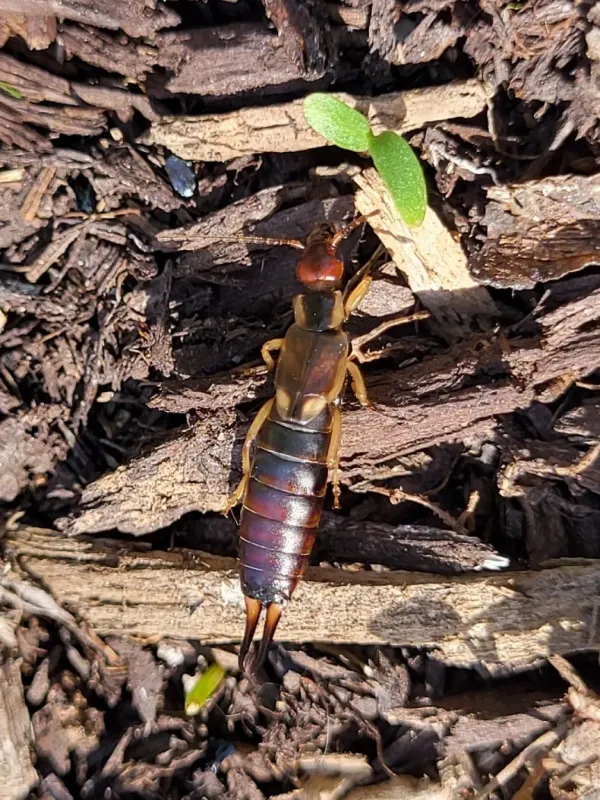
The common earwig (Forficula auricularia) is a member of the order Dermaptera. Adult insects typically measure 10–16 mm in length and are characterized by their dark brown, flattened, and elongated bodies.
The most distinctive feature of the earwig is the pair of pincer-like appendages at the end of the abdomen, known as cerci. Males possess larger, more curved cerci, while females have straighter, smaller ones.
Although they possess wings, earwigs rarely fly, preferring to crawl across the ground or on host plants. They are nocturnal insects, typically seeking dark, damp, and secluded places to hide during daylight hours.
Earwig nymphs are similar in appearance to adults but are smaller, wingless, and lighter in color. They undergo incomplete metamorphosis, passing through several nymphal stages before reaching adulthood.
The female displays maternal care, guarding her eggs in underground nests until they hatch, which significantly increases the survival rate of the offspring in the garden environment.
What it damages
Earwigs are generalist feeders and can cause substantial damage to a wide range of horticultural crops. They frequently attack vegetables like cucumbers, lettuce, cabbage, and potatoes, especially during the seedling stage.
The primary damage consists of ragged holes in foliage, often leaving only the veins of the leaves. Seedlings may be completely consumed, resulting in total loss of the crop in small gardens.
Fruit and berry crops are also major targets. Earwigs often bore into ripe fruits, such as peaches, strawberries, plums, and grapes, making them unsellable and unappealing to consumers.
Beyond physical damage, the wounds created by earwigs serve as entry points for various fungal and bacterial pathogens, which lead to fruit rot and reduced storage life of the harvest.
Ornamental plants are also vulnerable. Earwigs often infest flower buds and petals, particularly in dahlias, marigolds, and roses, destroying the aesthetic quality of the blooms.
When it appears
The common earwig typically completes one generation per year. Adults often overwinter in the soil, under plant debris, or within protected crevices of structures.
In spring, as temperatures rise, overwintered females lay eggs in soil burrows. Nymphs begin active feeding in early summer, coinciding with increased humidity and vegetative growth.
The peak of earwig activity generally occurs in July and August, when summer fruits ripen and garden plants are at their most succulent, making them attractive food sources.
Earwigs thrive in warm and moist conditions. In years with frequent rainfall during the summer, the population can explode, leading to widespread damage across the garden.
As autumn approaches and temperatures drop, the insects begin seeking sheltered sites for hibernation, effectively concluding their primary cycle of damage for the season.
Signs of infestation
The most common sign of an earwig infestation is the presence of irregular, ragged holes in the leaves of host plants. These holes often appear overnight due to the insect's nocturnal feeding habits.
Small, deep cavities or holes in ripe fruit, accompanied by the presence of dark frass (droppings), are clear indicators of earwig activity within the garden.
Finding groups of earwigs during the day under mulch, stones, wooden boards, or in pots is a sure sign of a local population, as these areas provide the necessary cover for their survival.
Damage to seedlings and young transplants is often noticed in the morning, indicating that the pests were active during the night when the plants were most susceptible.
The presence of chewed flower petals or damaged flower buds is another common indicator of an earwig infestation, particularly in dense or poorly ventilated plant groupings.
Control measures
Good sanitation is essential for earwig control. Removing piles of leaves, boards, rocks, and other debris eliminates the cool, moist hiding places that earwigs rely on during the day.
Trapping is a highly effective, non-chemical method. Damp rolled-up newspapers or short sections of hose placed in the garden can trap many earwigs, which can then be emptied into soapy water.
Tilling the soil in the fall and early spring disrupts the nesting sites and exposes the overwintering adults and eggs to predators and harsh weather, reducing the next year's population.
Encouraging natural predators such as birds, toads, and ground beetles can provide biological control and keep the earwig population at a manageable level without using toxic chemicals.
If chemical intervention becomes necessary, use baits or insecticides specifically labeled for earwigs, ensuring that they are applied according to the manufacturer's directions to protect the environment.
Taxonomy
- Latin name
- Forficula auricularia
- Family
- Forficulidae
- EPPO code
- FORFAU
Discussion
No discussions yet — be the first.