
Forest earwig
Chelidurella acanthopygia
Description
How to identify
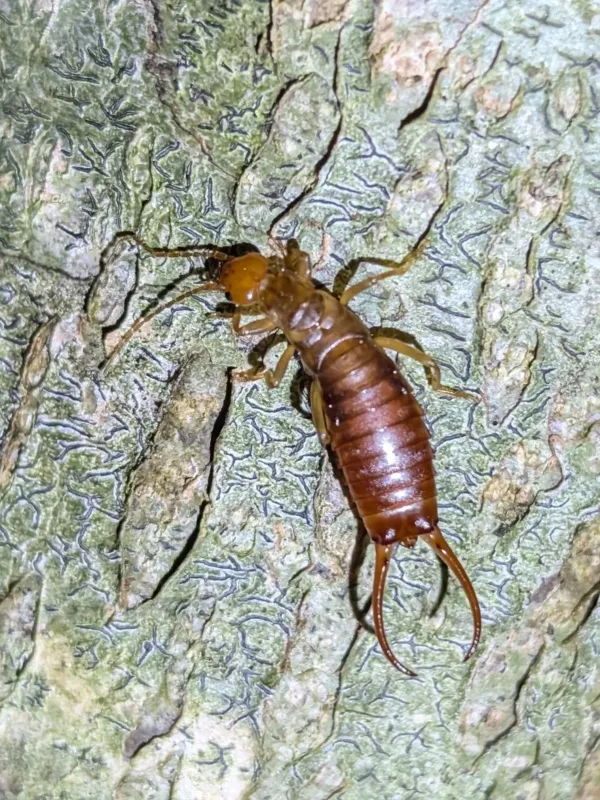
The forest earwig (Chelidurella acanthopygia) is a wingless insect species belonging to the Dermaptera order. It typically reaches a length of 10-15 mm and has a dark brown, elongated body.
The most distinctive morphological features are the forcep-like appendages, known as cerci, located at the end of the abdomen, which vary in shape depending on the sex of the insect.
These insects are strictly nocturnal, spending their daylight hours hidden in moist, dark crevices, beneath decaying wood, or within forest leaf litter.
Unlike some other earwig species, the forest earwig is well-adapted to cooler and more shaded environments, often becoming a nuisance in home gardens located near woodland areas.
Their life cycle involves hemimetabolous development, with nymphs resembling smaller versions of adults, and they typically overwinter as adults or late-stage nymphs in protected subterranean chambers.
What it damages
The forest earwig is considered an opportunistic pest in horticultural settings, where it feeds on tender plant parts including young leaves, buds, and delicate flowers.
In vegetable gardens, they are known to damage the soft tissues of ripening fruits like strawberries, often leaving behind unsightly holes and inviting secondary rot.
Young seedlings are particularly vulnerable, as earwig feeding on the stem or terminal bud can significantly stunt growth or result in total plant mortality.
Ornamental plants often suffer from foliage damage, where the insects eat irregular-shaped holes, negatively impacting the plant's aesthetic value and photosynthetic capacity.
While they are omnivorous and also prey on other small insects, their preference for young plant material during periods of high population density makes them a concern for gardeners.
Signs of infestation
Evidence of infestation is often identified by ragged, irregular holes in leaves that appear overnight, as the insects hide during the day.
A simple inspection of the garden bed at night using a flashlight will often reveal the insects actively feeding on plants.
Finding clusters of these insects in moist spots, under flower pots, or underneath mulching material is a clear indicator of a resident population.
Chewed buds and wilted flowers are diagnostic symptoms, particularly when the injury patterns cannot be attributed to caterpillars or snails.
The presence of dark, granular excrement around the base of plants or inside damaged fruit tissue serves as a secondary sign of their recent activity.
Control measures
Effective management begins with sanitation: clearing away wood piles, debris, and excessive leaf litter eliminates the humid refuges that these insects require.
Trapping is a highly recommended non-chemical control method; placing damp, rolled newspapers or corrugated cardboard boards in the garden overnight effectively attracts and traps the pests.
Physical barriers such as diatomaceous earth or wood ash applied around the base of susceptible plants can deter earwigs from climbing onto the foliage.
If infestations are persistent, targeted applications of organic-approved baits or registered insecticides can be used to reduce population numbers during peak feeding times.
Encouraging biological diversity by protecting local birds, frogs, and predatory ground beetles can lead to a long-term natural suppression of the forest earwig population.
Taxonomy
- Latin name
- Chelidurella acanthopygia
- Family
- Forficulidae
- EPPO code
- CHEDAC
Discussion
No discussions yet — be the first.