
Southern earwig
Forficula decipiens
Description
How to identify
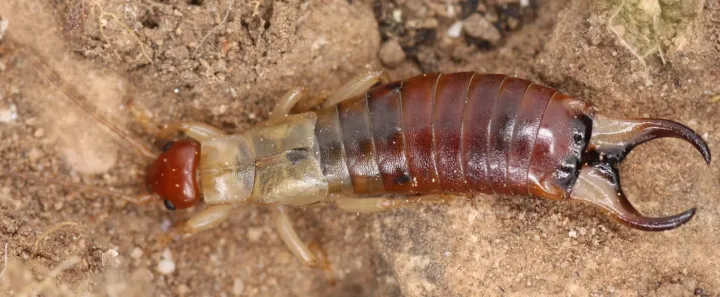
The southern earwig, Forficula decipiens, belongs to the Dermaptera order. These insects are easily identifiable by their brownish, elongated bodies and a pair of pincers (cerci) at the end of their abdomen, which are used for defense and prey capture.
This species is highly adapted to warmer, Mediterranean-type climates but can thrive in various agricultural settings. They have a flattened body shape that enables them to hide in extremely tight spaces like tree bark, crevices, or between dense foliage.
Their life cycle consists of incomplete metamorphosis, meaning there is no pupal stage. Nymphs resemble miniature versions of adults, allowing them to start feeding on host plants shortly after hatching from eggs laid by the female.
Female earwigs show advanced parental care, guarding their eggs and early-stage nymphs until they are mature enough to forage independently. This behavior significantly improves survival rates during the breeding season.
They are primarily nocturnal, remaining hidden in dark, moist environments during daylight hours. This behavior makes it difficult to detect an infestation until significant damage to the host plant has already occurred.
What it damages
As polyphagous pests, southern earwigs attack a wide variety of crops, including vegetables, fruits, and flowers. They cause damage by using their chewing mouthparts to create holes in plant tissues.
The most noticeable damage occurs on leaves, where the pests consume the tissue between veins, resulting in ragged edges and large, irregular holes. In severe cases, this can lead to partial defoliation of seedlings.
Fruits, particularly those touching the ground like strawberries or tomatoes, are highly susceptible. Earwigs create deep cavities in the fruit, which often become secondary infection sites for mold and decay-causing pathogens.
Flower blossoms are also frequently targeted, with earwigs feeding on petals and stamens. This destroys the aesthetics of ornamental plants and can prevent proper pollination if the reproductive parts of the flower are damaged.
Early-stage damage to shoots and buds can stunt plant growth, leading to reduced yield and poor overall plant health. Their presence is often a significant concern in both home gardens and commercial nurseries.
When it appears
Overwintering occurs in the adult or late-nymphal stage within the soil or protected organic debris. As temperatures rise in early spring, they emerge and begin searching for food sources to fuel their reproductive cycle.
The peak activity period typically occurs during mid-summer, when the environmental conditions—high humidity and warm temperatures—are optimal for the development of subsequent generations of nymphs.
Depending on the region, the southern earwig may complete one or more generations annually. This can cause the population to grow rapidly if the summer is particularly long and favorable for egg incubation.
As autumn approaches, the adults seek protected sites for hibernation. During this transition period, they may move into greenhouses, storage sheds, or even residential areas to avoid the coming cold weather.
Rainy summer seasons significantly boost earwig population levels due to their preference for moist habitats. Gardeners should pay extra attention to plant monitoring following periods of high rainfall and humidity.
Signs of infestation
The presence of irregular, ragged holes on leaves is the most common diagnostic sign of earwig activity. Because they feed at night, the damage is often discovered in the morning without the culprit being visible.
Deep feeding pits on fruits and berries are another strong indicator. These damage spots often show signs of secondary decay, which differentiates them from cleaner feeding marks made by other insect types.
Small, dark, pellet-like excrement left on leaves or inside flower heads serves as a clear indication of a resident earwig population. These signs are particularly common in sheltered areas of the plant.
Disrupted or damaged flower buds that fail to open correctly are common signs of infestation. In ornamental crops, this type of damage is often the primary reason for economic loss and reduced product quality.
Finding groups of insects under mulch, pots, or garden debris is the most reliable way to confirm an infestation. A nighttime inspection with a flashlight will typically reveal them active on the plant foliage.
Control measures
Cultural control is the first line of defense; this includes removing garden debris, tall weeds, and wood piles that provide essential shelter for earwigs during the day. Keeping the area clean significantly reduces their survival.
Trap-cropping or using simple traps, such as rolled-up wet cardboard or corrugated paper, is highly effective. These traps are placed in the garden at night and collected in the morning, followed by the destruction of trapped insects.
For organic management, products containing diatomaceous earth or natural pyrethrins can be applied. These substances are generally effective when they come into direct contact with the insects during their active feeding hours.
Chemical control should be reserved for severe outbreaks. Insecticides with contact and stomach action are preferred, focusing on areas where the earwigs aggregate, such as soil surfaces and plant bases.
Deep tilling of the soil in late autumn is an excellent practice to destroy overwintering sites. By disrupting the soil environment, gardeners can drastically reduce the number of earwigs that survive to start the next season.
Taxonomy
- Latin name
- Forficula decipiens
- Family
- Forficulidae
- EPPO code
- FORFDE
Discussion
No discussions yet — be the first.