
European earwig
Forficula
Description
How to identify
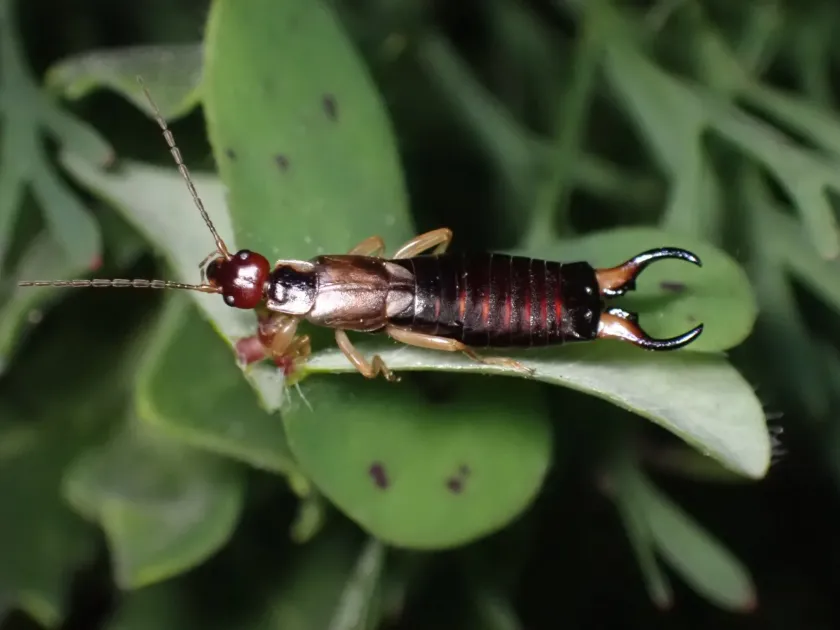
The European earwig Forficula auricularia belongs to the Dermaptera order. Adults are 10–16 mm long, brownish, and easily identified by the pair of forceps-like cerci on their abdomen.
Although they possess wings, earwigs are poor fliers and rarely take to the air. Nymphs resemble adults but are paler and lack developed wing covers.
They are primarily nocturnal insects that seek out dark, moist environments during the day. Common daytime shelters include crevices in tree bark, decaying organic matter, and dense foliage.
A unique biological trait is the maternal care provided by the female, who guards her eggs and early-stage nymphs, ensuring high survival rates during the breeding season.
The life cycle involves incomplete metamorphosis. While usually having one generation per year, environmental factors can occasionally lead to a second generation in warmer climates.
What it damages
Earwigs are omnivorous pests known for feeding on a wide variety of plant species. They pose a significant threat to stone fruits, berries, and ornamental garden flowers.
They cause damage by chewing irregular, jagged holes in leaves, petals, and fruit skins. In stone fruits like peaches or apricots, they often tunnel deep into the flesh, causing rot.
Mass infestations can be devastating to seedlings and young plants, potentially destroying an entire crop in the early growth stages.
The feeding damage creates entry points for fungal diseases and secondary pests, significantly reducing the market value and health of the plants.
- Stone fruits (peaches, apricots)
- Strawberries and small fruits
- Vegetable crops
- Flowers (dahlias, chrysanthemums)
When it appears
Earwigs overwinter as adults or nymphs in the soil or under debris. Activity begins in early spring as temperatures rise, typically around May in temperate regions.
Peak activity and damage occur during mid-summer. This period aligns with the hatching of nymphs and their rapid growth phase, which requires significant feeding.
Late summer through early autumn is critical for crop protection, as earwigs migrate toward ripening fruits to feed before seeking hibernation sites.
Climate factors such as humidity levels influence their distribution. They thrive in damp conditions and are often more prevalent in irrigated gardens or during rainy seasons.
As autumn cools down, earwigs become less active and retreat into protected underground chambers or structures to survive the winter months.
Signs of infestation
The most common sign is the appearance of ragged, irregular holes in leaves. These look somewhat like caterpillar damage but with more erratic, non-smoothed edges.
Deep, hollowed-out cavities in soft fruits like strawberries or the flesh of stone fruits are classic indicators of earwig activity.
Daytime sightings of the insects in tightly curled leaves, flower heads, or damp garden mulch are direct evidence of a localized infestation.
The presence of tiny black droppings in the vicinity of feeding damage is another diagnostic clue for identifying the presence of these pests.
Inspecting gardens at night with a flashlight is the most reliable way to confirm an infestation, as you will see them actively foraging on plants.
Control measures
Cultural control involves maintaining garden sanitation. Remove debris, weeds, and decaying wood piles that provide ideal daytime shelters for earwigs.
Mechanical trapping is highly effective. Place rolled-up damp newspapers, corrugated cardboard, or pots filled with wood shavings in the garden overnight to capture them for disposal.
Chemical control should be used as a last resort. Use approved insecticides specifically labeled for earwigs and apply them around the base of plants or target areas during the evening.
Encouraging natural predators such as birds, toads, and ground beetles can help keep earwig populations in balance within an organic garden setting.
Regular soil cultivation helps disrupt their nesting sites and destroys overwintering individuals, significantly reducing the pest pressure for the following season.
Taxonomy
- Latin name
- Forficula
- Family
- Forficulidae
- EPPO code
- FORFSP
Discussion
No discussions yet — be the first.