
Ferdinandea cuprea
Ferdinandea cuprea
Description
How to identify
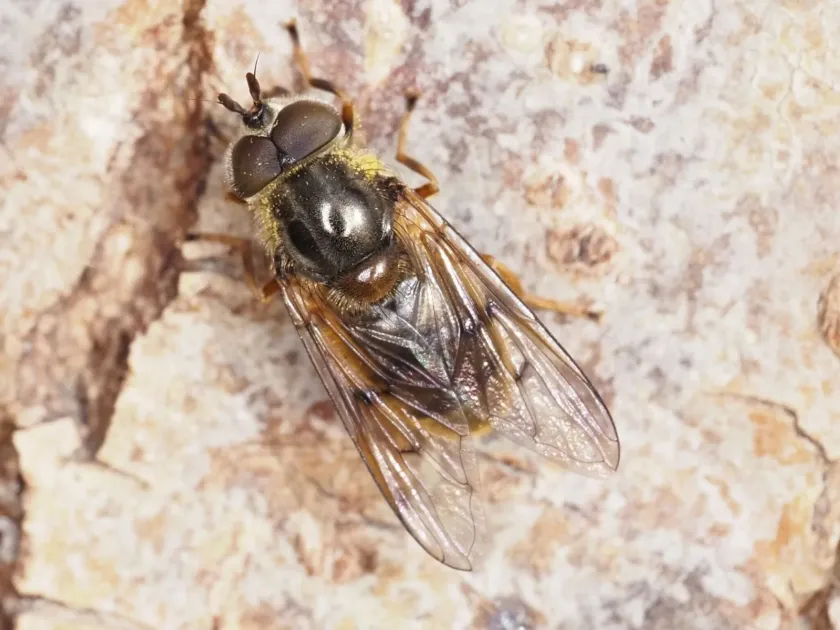
Ferdinandea cuprea is a hoverfly species belonging to the family Syrphidae. The adult fly is known for its metallic, coppery sheen, which provides camouflage and serves as a characteristic feature for identification among the diverse family of hoverflies.
Measuring between 10 and 12 mm in length, the adult has a body covered in sparse hairs, closely mimicking the appearance of some Hymenoptera. However, the presence of a single pair of wings confirms its classification as a true fly within the order Diptera.
The larvae of this species are generally translucent and legless, well-adapted for living in semi-liquid organic matter or within the bark tissues of woody plants, where they feed on sap and decaying organic substances.
Identifying this species requires expertise in morphology, specifically examining the wing venation, antenna structure, and the pattern of the abdominal segments to distinguish it from beneficial predatory hoverflies.
In the field, it is often confused with other species of Syrphidae. Recognizing that not all hoverflies are beneficial is essential for integrated pest management in orchards and agro-ecosystems.
What it damages
The damage caused by Ferdinandea cuprea is primarily associated with its larvae, which colonize weakened or damaged parts of fruit trees. They thrive in areas with sap leakage or necrotic tissues, often exacerbating existing injuries.
By feeding within the bark and cambium layers, the larvae prevent the natural healing process of wounds, such as sunscalds, frost cracks, or mechanical damage caused by pruning and machinery.
Their presence creates an environment conducive to secondary infections by pathogens, including bacteria and fungi, which can lead to larger necrotic areas and permanent structural damage to the tree.
While usually considered a secondary pest, high populations on stressed trees can contribute to significant physiological decline, potentially leading to the death of individual limbs or twigs over time.
The impact is often cumulative; as the tree's health declines due to other factors, the attractiveness of the tree to these flies increases, creating a cycle of infestation and further decay.
When it appears
Adult flies are typically active from late spring through mid-summer, generally between May and August. This period corresponds with the bloom of many fruit trees, providing the adults with vital nectar and pollen resources.
Mating and oviposition occur throughout the active season, with the flies seeking out moist, damaged bark or wood to lay their eggs. This ensures that the hatching larvae have immediate access to their food source.
The life cycle encompasses several larval instars, a pupal stage (puparium), and the adult phase. Depending on the climatic region, the species may complete one or two generations per year.
Winter is typically spent in the larval or pupal stage, hidden deep within tree crevices or under thick layers of loose bark, providing protection from harsh environmental conditions.
The development speed is heavily dependent on ambient temperature; warmer seasons accelerate larval maturation, which can lead to increased pest pressure during the peak summer months.
Signs of infestation
The most visible sign of infestation is the presence of sap flow or "weeping" wounds on the tree trunk and primary branches. This exudate is often a result of larvae feeding under the bark.
Dark, discolored patches on the bark, sometimes accompanied by a distinctive smell of fermentation, suggest the presence of larval colonies beneath the surface.
Upon removing dead or loose bark from injured areas, one can often find white or yellowish larvae grouped in the moist, decaying tissue.
Early leaf yellowing or premature wilting of specific branches can indicate that larval feeding has disrupted the vascular flow in that portion of the tree.
- Moist exudate on the bark surface.
- Necrotic spots or sores on the trunk.
- Presence of larvae under loosened bark.
- Increased activity of hoverflies around damaged trees.
- Branch dieback without obvious signs of drought.
Control measures
Preventative measures are the most effective strategy. Maintaining tree vigor through proper pruning, balanced fertilization, and adequate irrigation reduces the likelihood of successful infestation.
Timely repair of mechanical wounds and treatment of pruning cuts with wound dressings prevent the development of ideal habitats for Ferdinandea cuprea larvae.
Sanitation is crucial; removing severely infested or dead wood and clearing away loose, decaying bark denies the larvae their essential food source and nesting sites.
In cases of severe infestation, trunk painting with lime-based washes containing fungicides can deter adults from laying eggs and help disinfect surface injuries.
Integrated pest management should focus on preserving the overall tree health, as healthy trees are naturally more resistant to colonization by secondary sap-feeding insects.
Taxonomy
- Latin name
- Ferdinandea cuprea
- Order
- Diptera (flies)
- Family
- Syrphidae
- EPPO code
- FERDCU
Discussion
No discussions yet — be the first.