
Ferdinandea
Ferdinandea
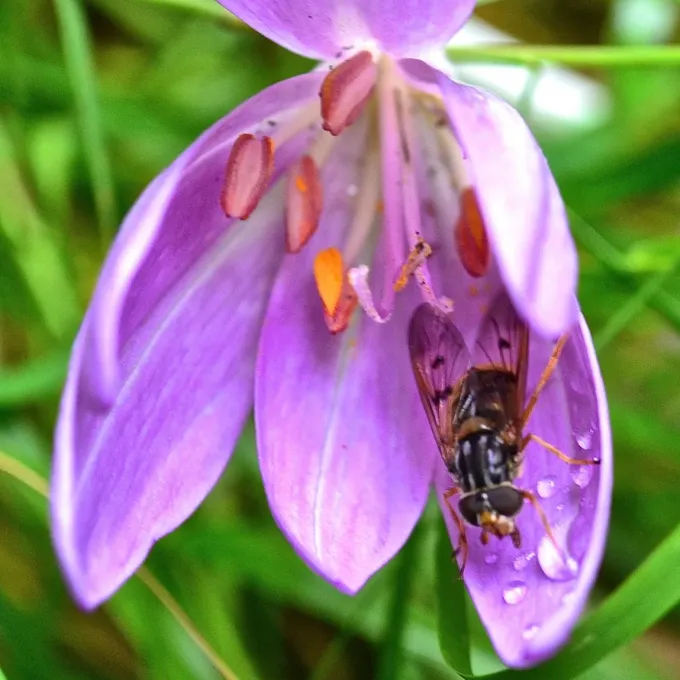
Description
How to identify
The genus Ferdinandea belongs to the hoverfly family (Syrphidae) within the order Diptera. Adults mimic bees or wasps in their appearance, featuring yellow and black markings, although they are harmless and possess no stingers.
Adult flies are known for their distinctive flight pattern, which includes the ability to hover in one spot. They have large compound eyes and a body covered with fine hairs.
The larvae, often referred to as rat-tailed, possess a long, snorkel-like respiratory siphon on their posterior end. This specialized structure allows them to breathe while submerged in wet, decaying organic matter.
While many hoverflies are beneficial pollinators, the genus Ferdinandea is ecologically linked to tree sap flows and decaying wood, making them distinct from the aphid-eating species.
Proper identification of the larvae requires observation of the respiratory siphon and the habitat in which they are found, typically inside necrotic wood or deep sap leaks.
What it damages
Damage is caused by the larvae, which inhabit wounds or decaying areas in the bark and wood of trees. They thrive in environments where tree sap is fermenting or leaking.
The larvae feed on decaying plant tissue, which often leads to an expansion of the necrotic area. This facilitates the penetration of fungi and bacteria, further compromising the tree structure.
Orchard trees that have suffered from winter injury, sunscald, or mechanical damage are the most susceptible to colonization by Ferdinandea larvae.
Although they are secondary pests, their presence serves as an indicator of an underlying tree health issue. They do not typically initiate damage but exacerbate existing wounds.
Continued infestation may reduce the overall vitality of the tree, leading to decreased fruit yield and potential long-term damage if the primary health issue is not addressed.
When it appears
Adult activity begins in the spring as temperatures rise, matching the flowering period of many fruit trees. They feed on nectar and begin their search for suitable egg-laying sites.
Egg-laying is triggered by the presence of sap flows. These flows provide the necessary moisture for the development of the next generation of larvae.
The lifecycle occurs throughout the summer months. Larvae feed continuously, gradually progressing through their developmental stages within the tree's wood.
Overwintering usually takes place in the larval or pupal stage. They hide deep within crevices of the bark or under the leaf litter at the base of the tree to survive cold temperatures.
Monitoring for adults is most effective during late spring, while inspections for larval activity should be conducted regularly whenever signs of sap leakage are noticed.
Signs of infestation
The most prominent sign is the presence of dark, moist patches on the trunk from which sap is leaking. These areas often emit a noticeable fermented odor.
Close inspection of these areas reveals small, tube-like holes through which the larvae breathe. Excrement or dark frass may also be visible near these entry points.
Trees affected by larvae may show signs of slow growth, premature yellowing of leaves on specific branches, or extensive bark cracking near the wound site.
Birds frequently pecking at specific areas on the trunk can be a warning sign, as they are often hunting for the larvae hidden underneath the bark.
Early diagnosis through regular orchard patrols is essential to prevent the larvae from expanding into healthy wood and becoming a persistent problem.
Control measures
The primary control strategy involves good orchard hygiene. Regularly inspect trunks for wounds and treat them immediately to prevent colonization by pests.
Sanitary pruning should be performed to remove dead or diseased branches, especially those showing signs of decay or deep cracking, which attract these insects.
Application of horticultural sealants (grafting wax or dedicated tree paints) to wounds creates a physical barrier that prevents larvae from accessing or remaining in the damaged tissues.
Protecting trees from sunscald using white latex paint or specialized tree wraps is a crucial preventive measure, as sunscald is a major entry point for Ferdinandea.
Maintaining tree vigor through proper fertilization, irrigation, and disease management is the best long-term defense, as healthy trees are naturally more resistant to colonization.
Taxonomy
- Latin name
- Ferdinandea
- Order
- Diptera (flies)
- Family
- Syrphidae
- EPPO code
- FERDSP
Discussion
No discussions yet — be the first.