
Pebble Hook-tip
Falcaria lacertinaria
Description
How to identify
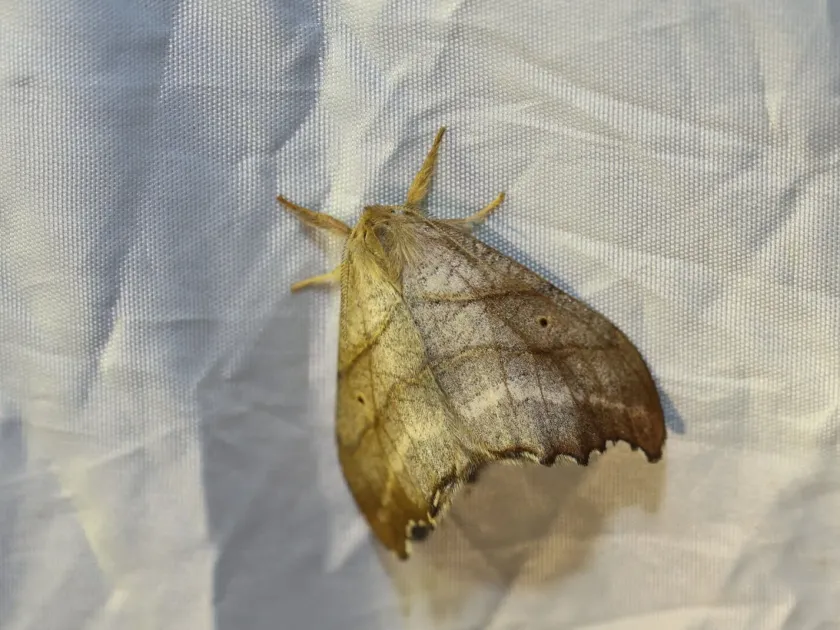
The Pebble Hook-tip (Falcaria lacertinaria) is a moth of the family Drepanidae, well-known for its extraordinary ability to camouflage as a dead leaf.
The wingspan of this moth typically ranges from 27 to 35 mm, with a sandy or light brown coloration decorated with two prominent dark cross-lines.
The tip of the forewing is curved, which provides the common name "hook-tip" and helps the insect blend into the twigs of its host trees perfectly.
The larvae are equally specialized, featuring a tapering body with small humps that mimic the shape and texture of budding or drying birch twigs.
Their coloration is highly variable, often matching the specific shades of the leaves they consume, making them extremely difficult to spot for predators.
What it damages
The primary host plant for the Pebble Hook-tip is the birch tree (Betula), though it is also frequently found feeding on alder (Alnus) leaves.
Larval feeding activity causes damage to the leaf tissue, leading to irregular holes and eaten edges that affect the overall health of the foliage.
While a few individuals rarely cause lethal damage, heavy infestations can lead to significant defoliation, especially in younger, vulnerable trees.
This loss of foliage reduces the photosynthetic capacity of the tree, potentially causing stress and reducing growth rates throughout the season.
Repeated yearly defoliation can weaken trees, making them more susceptible to subsequent attacks by other pests or opportunistic fungal pathogens.
When it appears
In most regions, this species completes two generations per year, with moths emerging in the spring and again in mid-summer for reproduction.
The first generation of moths is typically active from April to June, laying eggs on the undersides of leaves to ensure a food supply for hatchlings.
A second generation of adults emerges later, from July to August, continuing the life cycle before the larvae prepare for the upcoming winter.
Larvae develop throughout the summer, spinning silk cocoons within folded leaves to protect themselves during the vulnerable pupation stage.
The species overwinters in the pupal stage, hidden within these secure silk cocoons until warmer temperatures trigger the emergence of the spring brood.
Signs of infestation
The most reliable sign of a Pebble Hook-tip presence is the observation of nibbled leaf margins or large, irregular holes within the leaf blades.
Searching for leaves that have been deliberately folded or rolled and secured with silk is a key indicator of where the larvae are hiding.
Small deposits of frass (larval waste) on the leaves or the ground beneath the canopy are typical indicators of an active feeding population.
Premature browning and drying of leaves on the tree are common symptoms when a large number of larvae are present on a single branch or crown.
In advanced cases, the overall aesthetic quality of the tree declines, with the canopy appearing sparse and riddled with damaged, necrotic tissue.
Control measures
Integrated pest management suggests promoting natural predators, such as insectivorous birds and parasitic wasps, which keep populations in check.
In garden settings, manual removal of infested leaves where caterpillars are known to reside is the most effective and eco-friendly control measure.
If chemical intervention becomes necessary, targeted biological control agents or soft insecticides are preferred to minimize harm to beneficial insects.
Proper landscape maintenance, including the disposal of fallen leaves in late autumn, can help reduce the number of pupae surviving the winter season.
Monitoring the tree canopy during early spring and summer is essential to catch early signs of infestation before it reaches an economic threshold.
Taxonomy
- Latin name
- Falcaria lacertinaria
- Order
- Lepidoptera (butterflies)
- Family
- Drepanidae
- EPPO code
- FLCRLA
Discussion
No discussions yet — be the first.