
Exoprosopa jacchus bee fly
Exoprosopa jacchus
Description
How to identify
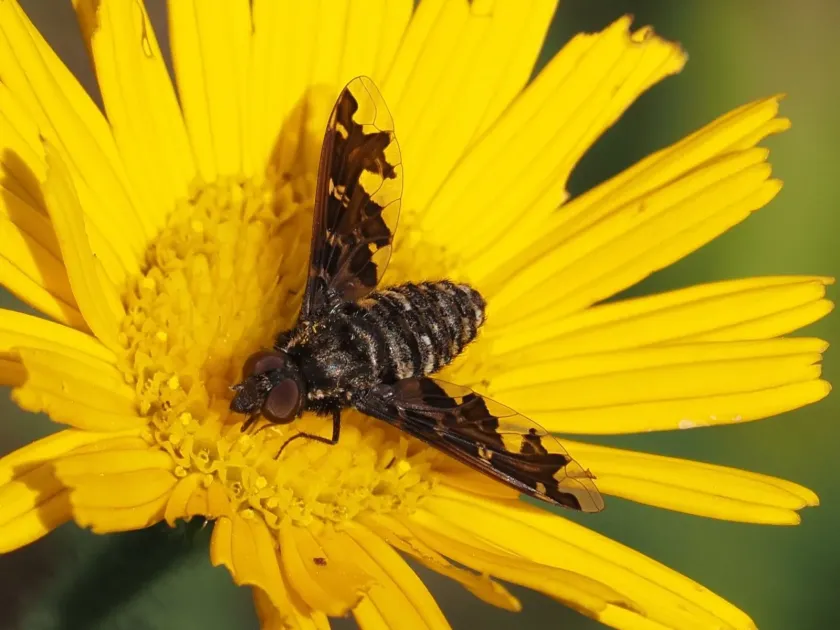
The Exoprosopa jacchus is a species of bee fly belonging to the family Bombyliidae. Adults are notable for their dense, bumblebee-like fuzz and distinct wing patterns that serve as a key identification mark.
They possess a long, rigid proboscis used exclusively for nectar feeding from flowers. This feature makes them excellent pollinators while in the adult stage.
The body structure is compact and adapted for rapid flight in warm, open environments. They are most active during sunny days, frequenting meadows and field edges.
Larvae have a specialized morphology, often hidden within the nests of other insects, where they lead a parasitic life cycle.
Their large size relative to other flies and their unique buzzing sound during flight earned them the common name of bee flies.
What it damages
While adults are beneficial pollinators, the larvae of Exoprosopa jacchus act as parasitoids. They target the larvae of various solitary bees and other beneficial insects.
The reduction in the population of these pollinators can have an indirect negative effect on the yields of entomophilous crops.
In agricultural settings, the parasitism of beneficial insects can disrupt the natural balance required for integrated pest management programs.
There is no direct damage to plant tissues, as the insect does not consume leaves, fruits, or stems at any stage of its life cycle.
The economic impact is characterized by the loss of natural ecosystem services rather than direct destruction of harvestable crops.
When it appears
The flight period of adult Exoprosopa jacchus occurs during the peak of the summer months, typically mid-to-late summer.
Climate factors such as high temperature and dry weather are essential for their metabolic activity and reproductive success.
They typically produce one generation per year, with the larval stage often overwintering within the nesting chambers of their hosts.
The emergence of adults in early summer coincides with the activity of the host species they depend on for reproduction.
As the season approaches autumn, adult numbers dwindle as the reproductive phase of the species concludes.
Control measures
Direct control measures are rarely implemented because the species provides pollinator benefits that balance out its status as a parasitoid.
Conservation of pollinator habitats is the best strategy to manage the ecological impact without resorting to chemical interventions.
Avoiding broad-spectrum insecticides is crucial to protect the natural predator-prey balance in agricultural fields.
Maintaining high biodiversity in the field margins helps create a resilient environment where both pollinators and their natural enemies can coexist.
- Reduce chemical use during the peak blooming season.
- Protect nesting sites for solitary bees.
- Encourage local bird populations that may prey on adult bee flies.
Taxonomy
- Latin name
- Exoprosopa jacchus
- Order
- Diptera (flies)
- Family
- Bombyliidae
- EPPO code
- EXPRJA
Discussion
No discussions yet — be the first.