
Siberian chipmunk
Eutamias
Description
How to identify
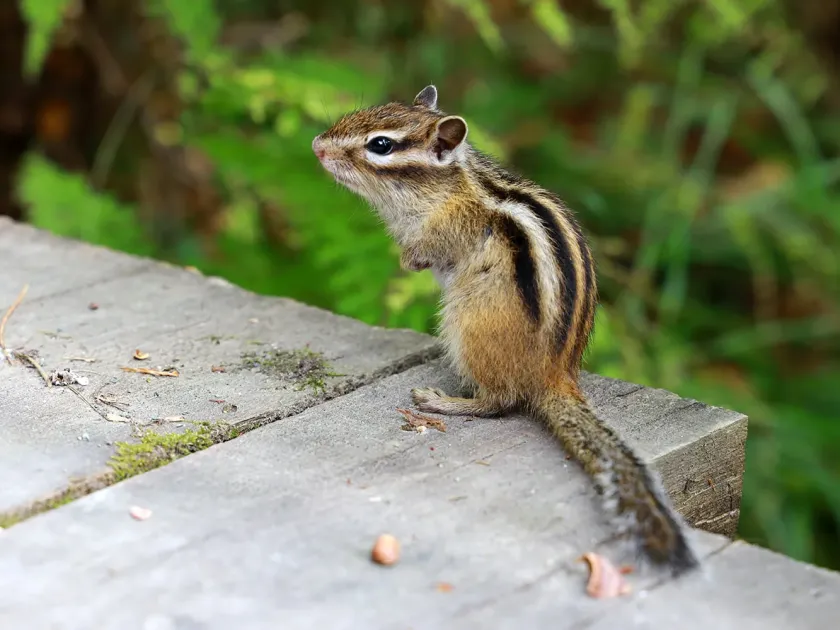
The Siberian chipmunk (Latin: Eutamias sibiricus) belongs to the order Rodentia, family Sciuridae. It is a small rodent with five distinct black stripes along its back and a bushy tail.
Adults typically measure 15–17 cm in body length, with an additional tail length of about 10–12 cm, weighing between 80 and 120 grams.
These rodents are primarily diurnal and terrestrial, but they are also agile climbers, capable of navigating through trees and shrubs with great ease.
A notable feature is their large cheek pouches, which they use to carry food supplies back to their burrows, significantly impacting crop yields.
They establish dens in burrows, under tree roots, or inside hollow logs, where they remain when they are not actively foraging for food.
What it damages
The Siberian chipmunk is a notorious pest that targets various agricultural crops, particularly cereals like wheat, oats, barley, and corn.
They frequently disrupt vegetable gardens by digging up seeds immediately after planting and consuming young seedlings, resulting in crop thinning.
In orchards and berry patches, they consume strawberries, raspberries, and stone fruits, leading to significant commercial losses for growers.
A major aspect of their damage is their habit of hoarding large amounts of food for the winter, often removing far more than they consume.
This predatory behavior toward agricultural resources makes them a persistent nuisance during the harvest season when crops are most vulnerable.
When it appears
Chipmunk activity begins in early spring, as soon as the snow melts and the ground begins to warm up sufficiently for them to forage.
The peak season for crop damage occurs during the summer months, aligning with the ripening phase of most vegetables and cereals.
By late summer and early autumn, their activity intensifies as they frantically gather food reserves to store for the upcoming winter hibernation.
Once winter temperatures arrive, the chipmunks retreat to their underground dens and enter a state of hibernation, pausing their destructive behavior.
The cycle repeats annually, with the damage to spring-planted crops being particularly problematic for maintaining consistent agricultural production.
Signs of infestation
Presence of chipmunks is identified by numerous small, shallow pits in the soil where they have dug up newly sown seeds or bulbs.
Bite marks on ripening fruits, vegetables, and the stems of plants provide clear evidence of their foraging activity within the garden area.
The discovery of hidden food caches filled with seeds, nuts, and grains under structures or near fence lines confirms their occupancy.
Observing the animals darting between garden rows or climbing up plants is a definitive sign of an active infestation that requires management.
Accumulated husks and debris around entry holes to dens serve as indicators of where the animals are storing their stolen harvest materials.
Control measures
Ultrasonic pest repellers are often employed to create a hostile environment for chipmunks, effectively deterring them from staying in garden beds.
Physical exclusion methods, such as using mesh screens or protective covers, provide a barrier that prevents rodents from accessing vulnerable crops.
Proactive agricultural practices, such as prompt harvesting and clearing away potential food sources, help reduce the attraction of your plot.
Live traps can be used for the humane capture and relocation of chipmunks to areas far away from commercial or private agricultural fields.
Landscaping maintenance, including the removal of wood piles, stone heaps, and debris, eliminates potential nesting sites and discourages colonization.
Taxonomy
- Latin name
- Eutamias
- Order
- Rodents
- Family
- Sciuridae
- EPPO code
- EUTASP
Discussion
No discussions yet — be the first.