
Pest · Hemiptera (bugs, aphids, leafhoppers)
Mustard beetle (Rapeseed bug)
Eurydema oleraceum
Description
How to identify
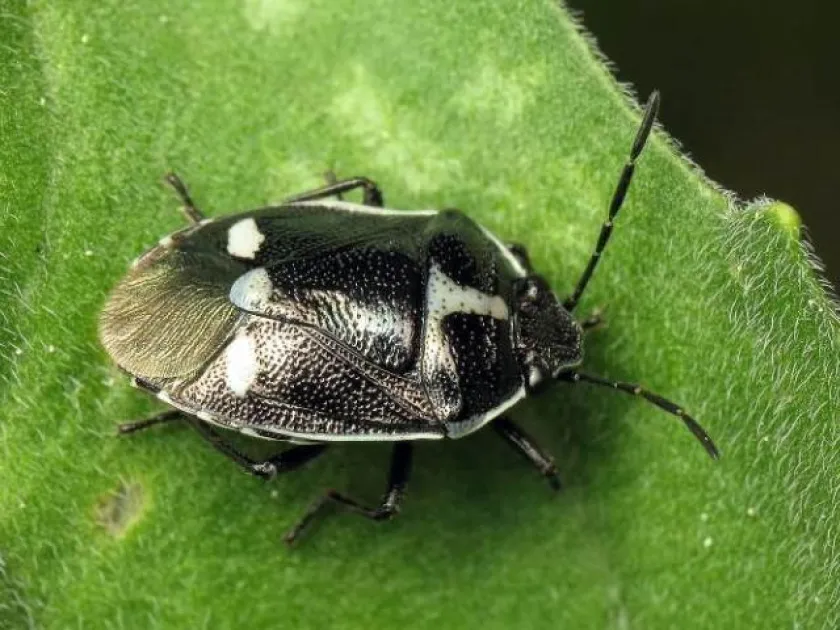
The mustard beetle, or rapeseed bug (Eurydema oleraceum), belongs to the order Hemiptera and the family Pentatomidae. These insects are known for their striking appearance, featuring a metallic sheen with red, yellow, or white markings on a dark background.
Adult bugs typically grow between 5 and 7 millimeters in length. Their most prominent physical feature is the large scutellum, a hardened plate that covers most of their back, which is a signature characteristic of shield bugs.
The eggs are barrel-shaped and light in color with darker spots, laid in neat, rhythmic rows on the undersides of leaves. This organized laying pattern helps differentiate them from other bug species.
Nymphs go through five developmental stages (instars) before reaching maturity. While they resemble adults, they lack fully developed wings and their colors are less defined during the early stages of their growth.
Life cycles are dictated by temperature; they overwinter as adults in leaf litter, debris, or sheltered spots, emerging in early spring as soon as temperatures rise to find their primary host plants.
What it damages
This pest targets cruciferous crops primarily, including oilseed rape, cabbage, radishes, turnips, and mustard. They also readily feed on common weeds belonging to the Brassicaceae family.
Both adults and nymphs cause damage by using their piercing-sucking mouthparts to puncture plant tissues. They inject saliva containing enzymes that digest plant cells before consuming the liquid nutrients.
Young plants and seedlings are the most vulnerable. During early growth stages, a heavy infestation can cause rapid wilting and the total collapse of the crop stands, leading to significant yield losses.
Feeding disrupts the plant's vascular system, leading to stunted growth, reduced vigor, and the development of necrotic lesions. In mature crops, feeding on pods can ruin the quality of the harvest.
The physiological stress caused by these insects makes the crops more susceptible to secondary infections, such as fungal or bacterial pathogens, which gain easy entry through the puncture wounds.
Signs of infestation
The first signs of an infestation are small, pale spots on the leaves. Over time, these spots turn brown or grayish and may become brittle, often resulting in small holes as the damaged tissue dies and breaks away.
Leaves tend to curl and become deformed. If the bugs feed on the developing flower stalks, it leads to premature bud drop and prevents the plant from forming seed pods, effectively destroying the yield potential.
Clutches of eggs on the undersides of leaves are a primary diagnostic sign. Spotting these early allows for precise intervention before the nymphs emerge and begin causing more widespread damage.
In hot weather, the bugs may hide within the dense parts of the plant canopy or inside flower heads, making them harder to spot during brief field inspections, despite their bright colors.
Plants affected by a large population of bugs will show a characteristic "shot-hole" pattern on leaves, often surrounded by a chlorotic halo, indicating the systemic impact of the bug's saliva on plant cells.
Control measures
Cultural control is highly effective; eliminating cruciferous weeds around field margins removes the primary food source and breeding grounds for the bugs before crops are even planted.
Deep plowing after harvest helps disrupt the lifecycle by burying or destroying the overwintering adults residing in plant debris, significantly reducing the population for the following season.
Maintaining a strict crop rotation and providing adequate spatial isolation between current fields and previous year's cruciferous crops is a key preventive strategy in integrated pest management.
Chemical control should be considered only when the pest population exceeds the economic threshold. Use selective contact insecticides to minimize impact on beneficial insects within the field.
- Regular field monitoring during the seedling stage.
- Targeted edge-of-field applications to stop migrations.
- Use of pheromone traps if available for population tracking.
Content graph
Connections · Mustard beetle (Rapeseed bug)
Most often together:
Marketplace
Products · 1
Biology
Taxonomy
- Latin name
- Eurydema oleraceum
- Order
- Hemiptera (bugs, aphids, leafhoppers)
- Family
- Pentatomidae
- EPPO code
- EURDOL
Community
Discussion
No discussions yet — be the first.