
Southern green stink bug
Acrosternum
Description
How to identify
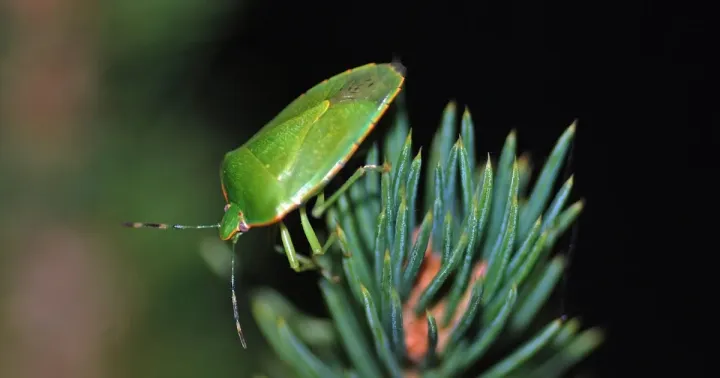
The Southern green stink bug (Acrosternum hilare or similar species) is a member of the Pentatomidae family. These insects are easily recognized by their shield-like body shape and bright green coloration, which serves as excellent camouflage against green foliage.
Adult insects typically measure between 13 and 18 mm in length. They are highly mobile, equipped with fully functional wings that allow them to fly between fields and different host plants throughout the growing season.
The lifecycle includes several nymphal stages. Unlike adults, nymphs often display varying patterns of spots or stripes, making their identification slightly more complex during early development.
Eggs are barrel-shaped and are usually deposited in neatly arranged clusters on the underside of leaves. This precise placement is a distinct behavioral trait that helps protect the brood.
The mouthparts consist of a piercing-sucking proboscis designed to penetrate plant tissues, allowing the bug to extract vital sap and nutrients from seeds, fruits, and stems.
What it damages
This pest is a major polyphage, meaning it attacks a wide variety of crops including soybeans, cotton, tomatoes, and various legumes. It is particularly destructive during the seed development and fruiting stages.
In orchards, these bugs are known to pierce young fruits, causing them to develop deformations, sunken spots, or hard corky areas inside the pulp, which significantly reduces commercial value.
Cotton production is heavily affected as the bugs pierce the bolls, often leading to boll rot or malformed fibers. This can cause the bolls to drop prematurely, severely reducing overall crop yield.
On grain crops, they target the developing kernels. The damage results in reduced seed weight and poor grain quality, which can make the entire harvest unsuitable for storage or processing.
The bugs inject saliva containing enzymes into the plant tissue, which causes local necrosis and triggers the development of fungal infections in the damaged areas, worsening the physical damage.
When it appears
The activity of these bugs is heavily dictated by temperature. Overwintering adults emerge in the spring when temperatures consistently rise, moving to weeds and early-season crops to feed.
During the peak of the summer, high temperatures and the abundance of fruiting crops lead to rapid population growth. Multiple generations can occur in warmer climates within a single year.
As the season progresses, adults and late-stage nymphs are found in large numbers on almost all types of agricultural produce, causing cumulative damage as the season nears the harvest.
Autumn brings a transition period where the bugs prepare for hibernation. They seek shelter in leaf litter, debris, or protected areas, making late-season sanitation efforts highly critical.
Environmental conditions such as excessive rainfall or drought can fluctuate the success of each generation, making seasonal monitoring an essential part of an integrated pest management program.
Signs of infestation
Visual identification starts with spotting the bugs directly on the foliage. They often hide on the undersides of leaves or within dense canopy, especially during the hottest hours of the day.
Evidence of feeding is visible as tiny discolored spots or punctures on the surface of fruits and vegetables. These spots are often surrounded by a small halo of tissue damage or necrosis.
Malformed fruit, such as unevenly shaped tomatoes or dimpled pods, is a clear indicator that the sap-sucking activity has disrupted the plant's nutrient distribution channels.
Premature drop of buds, flowers, or small fruits often occurs when a colony is feeding on the stems or pedicels, starving the reproductive organs of the necessary moisture and nutrients.
The presence of fecal spots on leaves is another sign of an infestation. These spots often look like tiny, dark, or reddish stains, signaling that a bug colony is present in the immediate vicinity.
Control measures
Sanitation is the first line of defense. Removing weeds and cleaning up plant debris significantly limits the available sites where these bugs can shelter during the winter months.
Chemical control with systemic or contact insecticides is recommended when population densities exceed economic thresholds. Timing the application to the nymphal stages is usually most effective.
Biological control agents, such as egg parasitoids (e.g., Trissolcus or Telenomus wasps), are excellent natural regulators of stink bug populations and should be preserved whenever possible.
Pheromone traps are highly effective for monitoring. They allow growers to detect the arrival of the bugs early and make data-driven decisions about when and where to apply corrective actions.
Maintaining healthy, vigorous crops through proper fertilization and irrigation can help plants better tolerate low-level infestations, though intensive management is still required for high-value produce.
Taxonomy
- Latin name
- Acrosternum
- Order
- Hemiptera (bugs, aphids, leafhoppers)
- Family
- Pentatomidae
- EPPO code
- ACSTSP
Discussion
No discussions yet — be the first.