
Aelia cognata
Aelia cognata
Description
How to identify
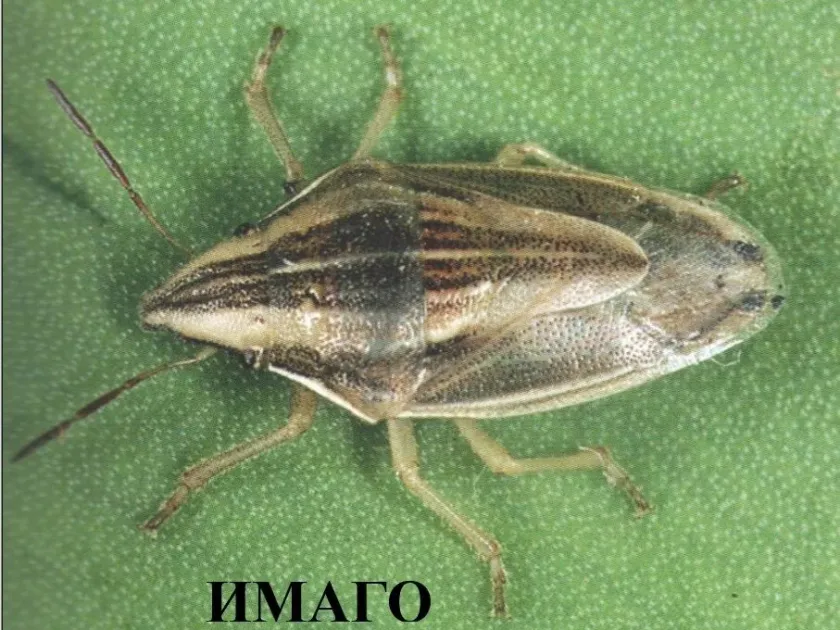
Aelia cognata is a species of stink bug (family Pentatomidae) known for its distinct elongated, pointed head. These insects are commonly referred to as shield bugs due to their body shape.
The adult bugs are typically straw-yellow to brown in color, characterized by dark longitudinal stripes running across the pronotum and scutellum, which provides excellent camouflage.
Adults possess fully developed wings, enabling them to migrate over significant distances between overwintering sites and grain fields during the spring and autumn periods.
The nymphs go through five distinct instars, gradually increasing in size and developing wing pads as they mature into adults, while maintaining similar morphological features.
The insect follows a hemimetabolous development cycle, with a single generation per year in most temperate regions, heavily reliant on the phenology of wild and cultivated grasses.
What it damages
Aelia cognata is a notable pest of cereal crops, including wheat, barley, rye, and oats. It feeds by piercing plant tissues with its specialized mouthparts to extract sap.
The most severe damage occurs when the pest feeds on developing grain. During the milk and dough stages, the bugs inject digestive enzymes into the kernel, which break down gluten proteins.
This feeding behavior results in grain shriveling, significant loss of nutritional value, and a drastic reduction in the technological properties of the grain for baking.
Feeding on vegetative parts of the plant, such as stems and leaves, can cause plant stress, stunted growth, and in severe cases, the death of individual stems or entire tillers.
In addition to cultivated crops, the bug thrives on wild grasses like Elytrigia repens, which act as secondary hosts and sustain population numbers throughout the season.
When it appears
Adults emerge from hibernation sites in the spring as temperatures rise, typically migrating toward winter cereal fields when the weather stabilizes.
The peak feeding and mating period occurs during the stem elongation and heading stages of cereals, which coincide with the optimal conditions for reproduction.
Oviposition occurs over several weeks, leading to a staggered emergence of nymphs, which often necessitates prolonged monitoring by farmers during the growing season.
By late summer, after the harvest of cereal crops, the new generation of adults begins searching for sheltered environments for the upcoming winter period.
Hibernation takes place under plant debris, in forest edges, or within dense grass cover, where the insects remain dormant until the following spring cycle.
Signs of infestation
Visual confirmation of the pest is the primary indicator of infestation, often involving checking the stalks and spikes during the early morning hours.
Small, discolored, or white punctured spots on the grains are classic signs of feeding, which are often accompanied by a loss of kernel weight.
Plants may show signs of stress, such as yellowing of the leaves or white-headed spikes caused by damage to the vascular system of the cereal stem.
- Presence of egg batches on the undersides of leaves.
- Visible puncture marks on developing kernels.
- Stunted or deformed cereal ears.
- Reduced grain quality (shriveled kernels).
- High bug counts per square meter of the crop field.
Regular field scouting and sweep-net sampling are essential to detect early outbreaks and prevent the population from reaching economic injury levels.
Control measures
Integrated Pest Management strategies begin with proper agronomic practices, including the destruction of weeds and volunteer crops that harbor overwintering populations.
Early harvest of crops can significantly reduce the number of bugs that reach maturity, effectively disrupting their life cycle and reducing future population pressure.
Chemical control should be applied based on economic thresholds; targeting the edge of fields can often provide control while minimizing the impact on non-target species.
Conserving natural enemies, such as parasitic wasps like Telenomus species, is a key component of sustainable management, as they regulate egg populations.
Deep plowing of field edges and stubble after harvest helps to eliminate hibernation sites, thereby reducing the survival rate of the adults during the winter months.
Taxonomy
- Latin name
- Aelia cognata
- Order
- Hemiptera (bugs, aphids, leafhoppers)
- Family
- Pentatomidae
- EPPO code
- AELICO
Discussion
No discussions yet — be the first.