
Aelia
Aelia
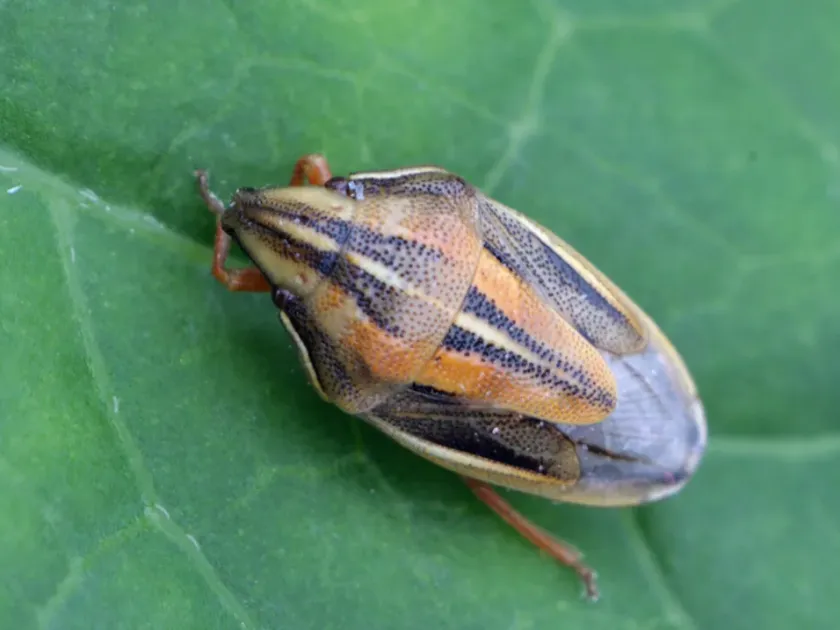
Description
How to identify
Aelia is a genus of stink bugs belonging to the family Scutelleridae, known for causing significant damage to cereal crops across various regions.
These insects are typically 8 to 12 mm long, characterized by an elongated body shape and pale, longitudinal stripes along their dorsal side.
The head of an Aelia bug is distinctively triangular and elongated, a feature that helps agronomists distinguish them from other common cereal bugs.
The scutellum, which is a shield-like structure on their back, covers the entire abdomen and wings, providing effective camouflage against the dry stems of grain.
The life cycle involves an egg stage, five nymphal instars, and the adult stage; nymphs often resemble adults but lack functional, fully developed wings.
What it damages
Aelia bugs primarily infest various cereal crops, including winter and spring wheat, barley, rye, oats, and millet, causing substantial yield loss.
By piercing the stems and grain heads with their mouthparts, they extract essential plant sap, which stunts growth and reduces grain weight.
During the grain-filling stage, the damage is most severe, as the bugs inject saliva containing enzymes that break down the internal structure of the grain.
This biochemical alteration leads to poor gluten quality, which renders the harvested grain largely useless for high-quality baking and flour production.
Heavy infestations can result in whitehead formation, where the entire head turns white and empty, leading to total yield destruction in affected areas.
When it appears
Aelia bugs overwinter as adults, finding shelter in leaf litter, shrubbery, and forest belts, where they remain dormant during the colder months.
They migrate back to cereal fields in the spring once temperatures consistently reach approximately 15°C, seeking out fresh young crops to feed upon.
The period of peak activity occurs during the stem-elongation phase and the subsequent grain-filling stage, which are the most critical times for crop protection.
As summer draws to a close and crops mature, the new generation of adults migrates back to their overwintering sites, completing their annual cycle.
Meteorological conditions, particularly spring rainfall and temperature fluctuations, are major determinants of population density for the upcoming season.
Signs of infestation
One of the primary indicators of a pest presence is the appearance of whiteheads in the crop, caused by the interruption of nutrient flow to the grain.
Inspectors may observe small dark spots or lesions on the stems and grain heads, which indicate sites where the insect has pierced the plant tissue.
In infested fields, one may notice the characteristic presence of bugs on the stalks, especially during the early morning or late evening hours.
Yellowing or premature withering of the upper leaves is another common symptom, resulting from the bug feeding on the vascular system of the stalk.
During harvest, a high percentage of shriveled, deformed, or discolored kernels in the combine tank is a clear sign of severe Aelia pressure.
Control measures
Agricultural control includes strict adherence to crop rotation, which limits the available host plants and disrupts the insect's life cycle.
The removal of grassy weeds from field margins and the management of nearby forest belts are essential to reduce overwintering populations.
Chemical control involving insecticides is utilized when insect counts exceed the economic threshold, ensuring cost-effective application.
- Biological control using parasitic wasps (egg parasitoids)
- Early harvest to minimize crop exposure duration
- Regular field scouting using entomological sweeps
- Use of pest-resistant cereal varieties
- Fall tillage to disturb and destroy overwintering locations
Taxonomy
- Latin name
- Aelia
- Order
- Hemiptera (bugs, aphids, leafhoppers)
- Family
- Pentatomidae
- EPPO code
- AELISP
Discussion
No discussions yet — be the first.