
Acledra
Acledra
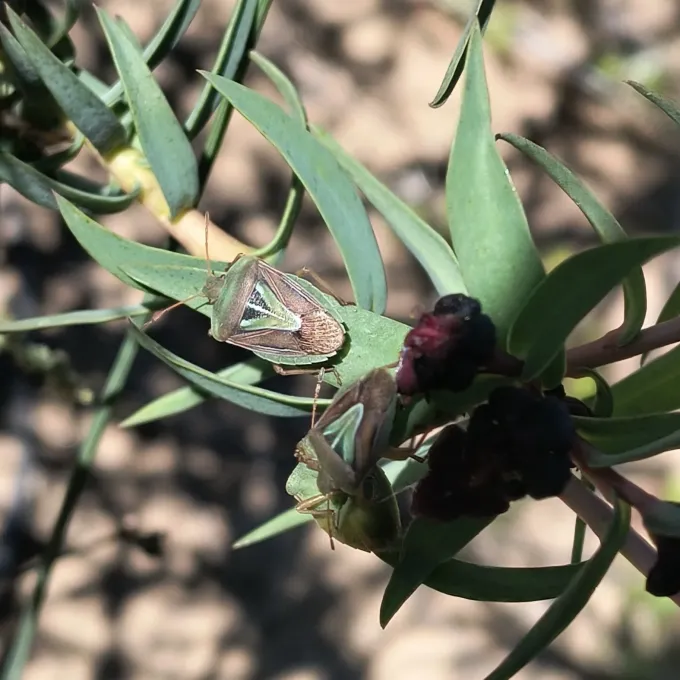
Description
How to identify
Acledra is a genus of insects belonging to the Pentatomidae family, commonly known as shield bugs or stink bugs. These insects are characterized by their distinct shield-shaped bodies, often featuring cryptic coloration that provides camouflage within dense vegetation.
Adult specimens possess well-developed wings, enabling them to migrate actively between host plants. Their head is relatively small, equipped with a specialized piercing-sucking mouthpart designed to feed directly on plant sap and nutrients.
The life cycle of Acledra follows incomplete metamorphosis, progressing through egg, nymph, and adult stages. Nymphs resemble miniature, wingless adults and undergo several molting stages, gradually increasing in size with each instar.
Accurate species identification often requires microscopic examination of genital structures or specific morphological markers. However, agronomists can generally identify the genus in the field by observing the typical shield bug morphology and host plant associations.
These insects exhibit significant environmental plasticity, which allows them to maintain stable populations across diverse climatic zones, wherever their primary host plants are present.
What it damages
Acledra species are known polyphages that affect a wide range of agricultural crops. The most vulnerable plants include cereals, legumes, various vegetable species, and certain ornamental plants.
The pest feeds primarily on the sap of young tissues, developing buds, and immature fruits or seeds. During feeding, salivary enzymes are injected into plant cells, which disrupt normal physiological processes and cellular structure.
Feeding damage on cereal crops significantly reduces harvest quality and impairs the milling and baking properties of the grain. The bugs cause "shriveled" grains by draining nutrients during the crucial kernel-filling stage.
In vegetable crops, damage manifests as leaf deformation, premature drop of flowers and fruits, and stunted overall growth. Puncture sites often serve as entry points for secondary fungal or bacterial pathogens.
The most severe economic impact occurs during massive population outbreaks, where high insect density results in substantial yield loss and a significant reduction in the profitability of affected agricultural operations.
When it appears
The active season for Acledra begins in early spring when temperatures consistently rise above a specific threshold. Overwintered adults emerge from hiding sites to begin feeding on early weeds and available crop sprouts.
Reproduction and egg-laying typically occur from late spring through early summer. This period is the most critical for monitoring, as first-instar nymphs are highly localized and vulnerable to initial control efforts.
The summer months are characterized by peak activity and feeding intensity across all life stages. The damage levels usually correlate with the flowering and fruit-setting phases of various host agricultural plants.
As autumn approaches, feeding activity declines as the insects prepare for hibernation. Adults migrate to shelter areas such as field margins, leaf litter, or topsoil, where they remain dormant throughout the winter months.
The number of generations per year is highly dependent on local climatic conditions; in warmer regions, Acledra may produce multiple generations, which significantly increases the complexity and duration of necessary control measures.
Signs of infestation
The presence of Acledra in a field can be identified by characteristic white spots on leaves, resulting from localized sap extraction. Over time, these spots may become necrotic and fall out, leaving small "shot-hole" patterns.
Field inspections often reveal egg clusters, which are typically deposited in compact, organized rows on the underside of leaves. These eggs have a distinct barrel-shaped appearance typical of many shield bug species.
Fruit damage is evidenced by irregular, angular deformation and the presence of hard, suberized spots within the plant tissue. In cereals, common indicators include grain shriveling and the presence of "whiteheads" in specific field sectors.
General plant stress, such as stunted growth, loss of turgor pressure, and chlorotic discoloration, is common in areas of high infestation. Severe pressure may even lead to the premature death of individual shoots or entire plants.
Professionals use sweep nets or direct visual inspection in the early morning hours, when insects are less active, to monitor population density and determine the necessity of intervention.
Control measures
Agrotechnical management includes strict weed control, as these plants often serve as early-season reservoirs for Acledra. Deep soil cultivation after harvesting helps eliminate overwintering adults residing in the soil.
Crop rotation is essential for breaking the pest's cycle and reducing population build-up in a specific field. Avoiding the proximity of attractive host crops can prevent the formation of massive feeding corridors throughout the growing season.
Biological control focuses on conserving and augmenting natural predators and parasitoids, such as Telenomus egg parasitoids. The use of microbial biopesticides based on fungi or bacteria can be effective if applied during early nymphal stages.
Chemical intervention is recommended upon reaching defined economic thresholds. Effective options include contact and systemic insecticides such as pyrethroids, organophosphates, or neonicotinoids, applied according to strict local regulations.
- Implement regular field scouting during critical crop growth stages.
- Eliminate weed reservoirs along field boundaries promptly.
- Apply insecticides during early morning or evening to optimize efficacy and safety.
Taxonomy
- Latin name
- Acledra
- Order
- Hemiptera (bugs, aphids, leafhoppers)
- Family
- Pentatomidae
- EPPO code
- ACDRSP
Discussion
No discussions yet — be the first.