
Eupeodes hoverfly
Eupeodes
Description
How to identify
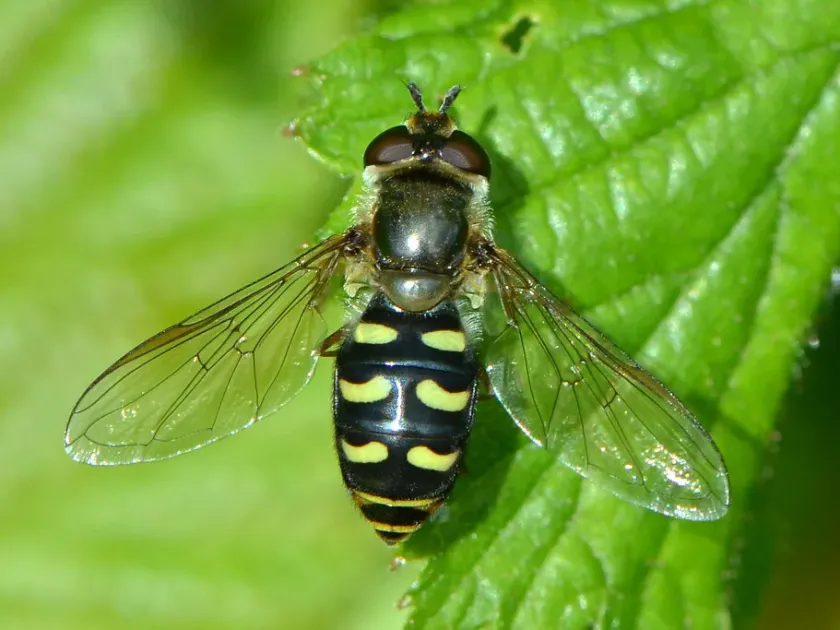
Eupeodes is a genus of hoverflies belonging to the family Syrphidae in the order Diptera. These insects are well-known for their mimicry of wasps and bees.
Adults exhibit distinctive hovering flight behavior, which allows them to stay in one place in the air before darting off at high speed.
The larvae are slug-like or maggot-like in appearance, usually lacking distinct legs, and often exhibit a pale green or yellowish coloration.
The body surface of the larva is typically wrinkled, and the head end is tapered, enabling them to navigate efficiently through dense aphid colonies.
Identifying them is crucial for farmers and gardeners, as they are often mistaken for pests despite being highly beneficial predators in the garden ecosystem.
What it damages
Eupeodes species are not plant pests; they are actually some of the most important natural predators of aphid populations in agriculture and horticulture.
Adults consume nectar and pollen from various flowering plants, which aids in the cross-pollination of many different crops and wildflowers.
The larvae are voracious predators that feed on aphids, mites, and other soft-bodied insects, playing a vital role in natural pest suppression.
There is no evidence that Eupeodes species cause any damage to vegetation, meaning they do not threaten the yield or the health of the plants.
In fact, the presence of these hoverflies often indicates a balanced, healthy ecosystem where biological pest control is actively taking place.
When it appears
Adult hoverflies emerge in early spring, seeking out the first sources of nectar to fuel their activity and begin the breeding cycle.
The lifecycle is highly synchronized with the availability of aphid populations, which serve as the primary food source for the developing larvae.
During the summer months, reproduction speeds up significantly, allowing for multiple generations to occur if environmental conditions remain favorable.
As autumn approaches, the adults seek out sheltered areas to overwinter, such as leaf litter, tree bark, or other protected spaces in the field.
The total number of generations produced per year can vary significantly depending on the local climate and the abundance of aphid prey.
Signs of infestation
A key indicator of their presence is a natural decline in aphid colonies on the underside of leaves without any human-led intervention or spraying.
Observing larvae actively feeding on aphids is a clear sign that Eupeodes hoverflies are successfully establishing themselves in your planting area.
Adults are frequently spotted hovering over Apiaceae plants like dill, fennel, or parsley, which are among their preferred sites for foraging.
Empty aphid skins scattered on leaves are evidence of the larvae’s hunting success, demonstrating the effective reduction of the pest population.
The presence of these hoverflies serves as a biological indicator of the health of your vegetable garden or agricultural field.
Control measures
To support Eupeodes populations, you should minimize the use of broad-spectrum insecticides, which are highly lethal to these beneficial hoverflies.
Implementing integrated pest management (IPM) practices allows these predators to thrive and naturally keep aphid numbers below economic thresholds.
Planting a variety of nectar-rich flowers provides the necessary food sources for adult hoverflies, ensuring they remain in the area throughout the season.
Creating floral corridors or strips around crop fields helps concentrate these beneficial insects near vulnerable plants, enhancing natural control.
Educating growers on the importance of distinguishing Eupeodes from actual pests prevents unnecessary and harmful pesticide applications in the garden.
Taxonomy
- Latin name
- Eupeodes
- Order
- Diptera (flies)
- Family
- Syrphidae
- EPPO code
- EPDSSP
Discussion
No discussions yet — be the first.