
Belemia white
Euchloe belemia
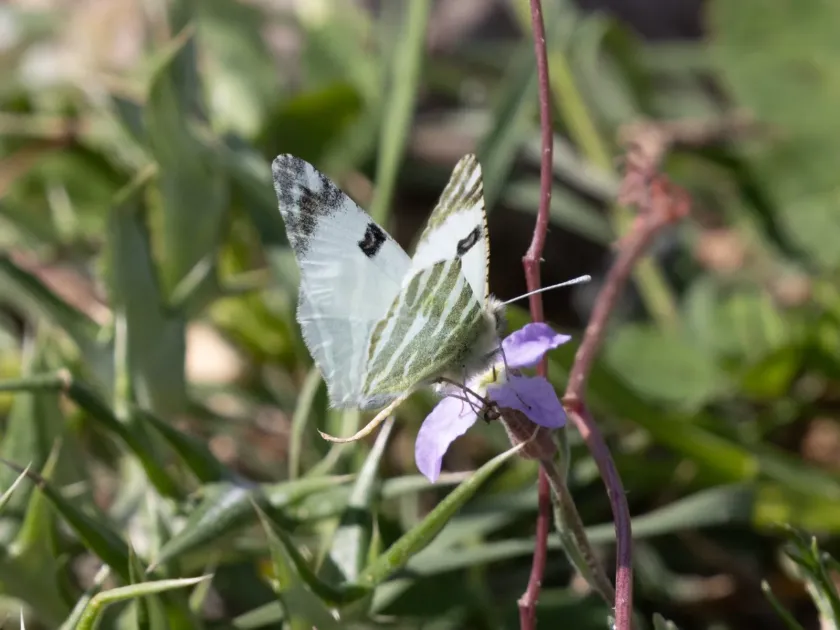
Description
How to identify
The Belemia white (Euchloe belemia) is a butterfly species belonging to the family Pieridae, order Lepidoptera, known for its distinctive appearance.
The adult butterfly is characterized by white wings with dark apical markings and a unique marbled pattern on the underside of the hindwings, aiding camouflage.
The larvae (caterpillars) of this species are specialized feeders on plants within the Brassicaceae family, mirroring the distribution of their host plants.
They are primarily found in arid and semi-arid environments, where they have evolved to complete their life cycle during favorable weather conditions.
The butterfly's morphology is highly adapted to its desert and Mediterranean habitat, allowing it to navigate and reproduce in environments with sparse vegetation.
What it damages
The primary damage is caused by the larval stage, which feeds voraciously on the foliage and buds of various cruciferous plants.
Key crops at risk include canola, mustard, cabbage, and other related vegetables that are essential for agricultural production.
Larval feeding results in defoliation, which reduces the plant's ability to photosynthesize and stunts overall growth and development.
Heavy infestations can lead to significant biomass loss and, in extreme cases, total failure of young crop seedlings or reduced market quality.
Beyond leaf tissue, the larvae may consume floral structures, directly impacting the reproductive success of the plant and seed production.
When it appears
The emergence of adults typically occurs in early spring, coinciding with the first flush of growth in host vegetation following seasonal rains.
The life cycle is often univoltine or bivoltine, depending on the climatic severity of the region and the availability of host plants.
Larval activity is most intense during the vegetative phase of crops, requiring proactive monitoring to mitigate potential damage.
During the peak of summer or drought conditions, pupae may enter a state of diapause, a biological mechanism to survive periods of extreme stress.
A second wave of activity may occur in late summer or autumn if climatic conditions allow for the regrowth of host plants.
Signs of infestation
Visual symptoms of infestation include irregular holes in leaves, often characterized by the removal of significant amounts of leaf tissue.
The presence of frass (larval droppings) on the leaves or at the base of the plant is a primary sign of active feeding in the vicinity.
Stunted growth or wilting of individual leaves due to extensive chewing damage provides clear evidence of a pest presence.
Direct sightings of caterpillars on the underside of leaves or within floral clusters indicate an established population on the crop.
Thinning of plant stands and reduced vigor in comparison to neighboring healthy crops are common indicators during larger infestations.
Control measures
Implementing a strict crop rotation program helps disrupt the life cycle of the pest by removing its consistent food source.
Sanitation practices, including the removal of cruciferous weeds near production fields, significantly reduce the availability of breeding sites.
Chemical control via selective insecticides should be reserved for periods of high pressure, strictly following integrated pest management guidelines.
Biological control using microbial insecticides like Bacillus thuringiensis can effectively manage caterpillar populations without harming beneficial insects.
Soil cultivation post-harvest is a vital mechanical practice to disrupt the pupation stage and prevent the successful emergence of next-generation adults.
Taxonomy
- Latin name
- Euchloe belemia
- Order
- Lepidoptera (butterflies)
- Family
- Pieridae
- EPPO code
- EUOEBE
Discussion
No discussions yet — be the first.